
Computer :The Brain of Modern Technology
Transforming the World Through Speed, Logic and Innovation

Auther Name Hazratullah
The computer is one of the greatest inventions of the modern age, often described as the “electronic brain” of humanity. From its early beginnings as a bulky machine used for calculations to the sleek devices we carry in our pockets today, computers have completely changed the way we live, work, and communicate. The story of the computer is not just about technology—it is about human curiosity, creativity, and the unstoppable desire to make life easier and more productive.
In the early 20th century, people relied on manual machines like typewriters, calculators, and telegraphs to complete daily tasks. These devices were useful but limited in function. Then came the first generation of computers, huge machines that filled entire rooms and consumed enormous amounts of electricity. They worked with vacuum tubes and could only perform basic operations. Although simple compared to today’s standards, those machines laid the foundation for a digital revolution.
The second generation introduced transistors, which replaced vacuum tubes and made computers smaller, faster, and more reliable. This breakthrough gave rise to more practical uses of computing in industries, banks, and government offices. The third generation brought integrated circuits, and with them, the ability to process larger amounts of data with higher efficiency. By the time microprocessors appeared in the 1970s, the personal computer had been born, and technology started reaching ordinary households.
Today, computers are no longer limited to desktops. They exist in many forms: laptops, tablets, smartphones, and even smartwatches. These devices are powerful tools that connect people across continents, process millions of instructions in seconds, and store libraries of information in digital memory. Modern computers are not just calculating machines—they are creative partners in art, design, education, and communication.
One of the most remarkable impacts of computers is in communication. Email, social media, and instant messaging have replaced traditional letters and long-distance phone calls. People can now connect with friends, family, and colleagues in seconds, no matter where they live. Video conferencing has changed the way businesses operate, allowing teams from different countries to collaborate without the need for expensive travel.
Education has also been transformed by computers. Virtual classrooms, online courses, and digital libraries make learning accessible to millions of students worldwide. A child in a remote village can now attend lectures from world-class universities, something unimaginable just a few decades ago. Computers have also become vital tools for teachers, who use interactive software, simulations, and presentations to make lessons more engaging and effective.
In the field of medicine, computers play a life-saving role. From diagnosing diseases using artificial intelligence to performing robotic surgeries, technology has given doctors powerful tools to save lives. Patient records are stored digitally, reducing errors and improving treatment. Research in genetics, vaccines, and new medicines would not be possible without the speed and accuracy of computer simulations and data analysis.
The business world, too, has been revolutionized by computers. Companies rely on them for accounting, data management, marketing, and customer service. Online shopping platforms allow consumers to buy products from anywhere in the world with just a few clicks. Banking has become faster and safer with the introduction of digital transactions, reducing the need for physical cash and paperwork.
Another area where computers have shown their strength is entertainment. Video games, music streaming, movies, and social media platforms are all powered by computing technology. The digital entertainment industry is now one of the largest in the world, employing millions of people and providing joy to billions. Graphic design, film production, and animation all depend on high-powered computers to create realistic visuals and immersive experiences.
Computers are also at the heart of scientific exploration. Astronomers use them to study distant galaxies, while climatologists rely on them to predict weather patterns and understand global warming. Engineers design advanced aircraft, vehicles, and buildings using computer simulations. Even space exploration, including missions to Mars and beyond, would not be possible without the precision and intelligence of computer systems.
Artificial intelligence (AI) is the latest stage in this journey. Computers are now capable of learning, analyzing, and making decisions almost like humans. From self-driving cars to voice assistants like Siri and Alexa, AI is changing how we interact with machines. While some fear that AI might replace jobs, others believe it will create new opportunities and help solve problems that humans alone cannot manage.
Despite all these benefits, computers also bring challenges. Cybercrime, online addiction, and the spread of misinformation are real dangers of the digital age. Hackers can steal personal information, and too much screen time can affect physical and mental health. It is important for society to use technology responsibly, balancing innovation with ethics and safety.
The future of computers seems limitless. Quantum computing, which promises unimaginable processing power, is already being developed. This technology could unlock answers to problems in medicine, climate science, and artificial intelligence that current computers cannot handle. As computers become more advanced, they will continue to shape economies, societies, and even human relationships.
In conclusion, the computer is more than just a machine; it is the backbone of modern civilization. It has transformed every aspect of life—education, health, business, entertainment, and science. The journey from giant machines of the past to pocket-sized smartphones of today reflects the power of human innovation. As we step into the future, computers will continue to act as the brain of modern technology, guiding humanity toward new discoveries, new opportunities, and a world more connected than ever before.
About the Creator
Keep reading
More stories from Asmatullah and writers in Education and other communities.
The Power of the Brain
Auther Name (Hazratullah) The human brain is one of the most astonishing creations in existence. Although it weighs only about three pounds, it directs every function of the body, manages our thoughts, builds our emotions, and shapes our personalities. Scientists have often described it as the command center of life, but the truth is that its depth goes far beyond ordinary comprehension. The brain is not only a biological organ; it is also the foundation of creativity, intelligence, memory, and consciousness.
By Asmatullah6 months ago in Education
A Historic Declaration
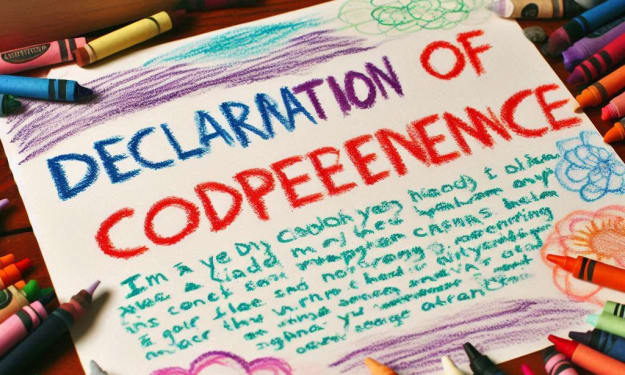
We the People of the Husbands of the United States of America, in Order to form a more perfect Union, and I mean you...with me...establish Justice, insure domestic Tranquility, provide for the common defence, promote the general Welfare, and secure the Blessings of Liberty to ourselves, after Puberty, do ordain and establish this Declaration of Co-Dependence.
By Gerard DiLeo4 days ago in Humans


Comments
There are no comments for this story
Be the first to respond and start the conversation.