
Columbia police and community members to visit National Civil Rights Museum
The Museum
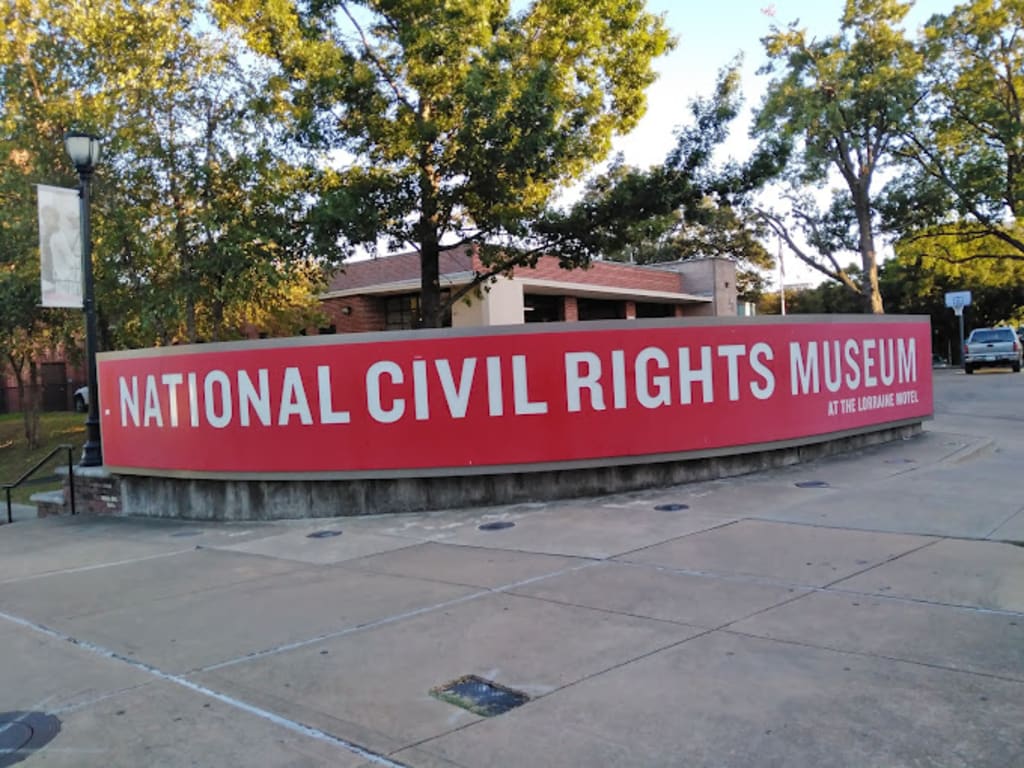
With hopes of empowering "our community by broadening perspectives on the pursuit of civil rights," 36 community members set out Tuesday for Memphis on a trip to visit the National Civil Rights Museum, according to a Columbia City Council memo.
Five high school students, at least five Columbia Public Schools faculty, 16 Police Department staff, four city employees, and six community members will attend the trip hosted by the Columbia Police Department.
Those invited by the Police Department to go on the trip are members of organizations such as the NAACP and Columbia Public Schools. For future trips, Police Chief Geoff Jones said that he hopes the department expands its reach and gets more people to take part in the Memphis visit.
In 2019, the department took the same trip and this year, the trip will last three days instead of two to allow for longer museum visits.
“After feedback from that trip, almost everyone involved that I talked to wanted to have more time in the Civil Rights Museum,” Jones said at the Oct. 3 council meeting.
Jones said the trip will cost $18,000 to pay for the hotel rooms for city employees, transportation, and meals during the bus rides for all attendees. Jones said $6,000 in funding for the trip had been raised through donations from those who thought the Police Department should continue hosting the trip.
The trip focuses on making an effort to improve community policing in Columbia, according to Lieutenant Clinton Sinclair, who went on the trip in 2019. He said that the trip changed his perspective on policing and his line of work.
“I think the people that went on that trip really understand the purpose of it and the mission and are really trying to live it out in what we're doing every day,” Sinclair said.
Sinclair said that he learned a lot about the history of civil rights in America through attending the Memphis museum visit.. He said that he takes everything that he learned from the trip and applies it to his position, such as when he marched with protesters in uniform as a community outreach officer after the murder of George Floyd in 2020.
“I think understanding the history of some of the groups that we're policing is important for us to effectively do our job.”
Success! An email has been sent with a link to confirm the list signup.
Error! There was an error processing your request.
Anne Whitt, a district coordinator for a multicultural program for Columbia Public Schools, also attended the 2019 Memphis trip. She said that the trip was important for the police officers because every Black person has to be given “the talk.”
The talk, according to Whitt, is the conversation that a lot of Black people have with their parents about how to speak to cops not if, but “when you get stopped by the police.”
“It goes deeper than just, you know, I got stopped by police,” Whitt said. “Because what happens is, you've been trained to protect yourself. For us, it’s life and death.”
The approval for the trip was received pushback from City Council because it wanted to make sure that the $18,000 would actually benefit the community.
Whitt said the trip does yield positive results for the community, saying “the more people that go and get that experience, they're going to be talking about that. And that's going to infiltrate our communities, our schools, our police stations, and all of that."
Toni Dukes-Larkins, a representative for the police chief's vehicle stops committee, said she wants others to go on the trip because the more people that can overcome their misinformation and limited education on civil rights and racism, the better policing can be.
“When you combat those implicit biases with an actual understanding, that’s the beginning of starting to eliminate the problem that’s widespread,” Dukes-Larkins said.
Dukes-Larkins said that the community will be stronger if there is trust between the people and law enforcement. She said the only way to make the change would be to start small, educating people one at a time.
“If one person is enlightened by seeing the history of African Americans in America,” she said, “then that’s a victory.”
About the Creator
Keep reading
More stories from Sohail Ahmad and writers in Education and other communities.
Demon-Box: Adding Some Mystery To Life
Over the years, there has been a massive rise in popularity for mystery boxes, and many people are opting for mystery boxes of different kinds to give themselves a wonderful surprise. These mystery boxes can also be used as items of a gift for near and near ones. One such name that has created an be excellent reputation with its mystery boxes is Demon-box. The website has over 1 million registered users.
By Sohail Ahmad3 years ago in Education
Tech on the Move: How Mobile Response Technology Transforms Disaster Relief Operations
Disaster relief operations have always required speed, accuracy, and adaptability. Yet as emergencies grow more frequent and more complex, traditional relief methods often fall short. Communities face collapsing infrastructure, mass displacement, communication failures, and urgent medical needs. In this challenging environment, mobile response technology has emerged as a game-changer. From mobile command centers to portable medical units and satellite-based communication tools, these technologies bring critical support directly into disaster zones. Their mobility and advanced capabilities are reshaping how responders work, strengthening coordination, and accelerating recovery.
By Convoy of Hopeabout 14 hours ago in Education



Comments
There are no comments for this story
Be the first to respond and start the conversation.