
Color Palette Secret in Adobe Illustrator
You can thank me later!

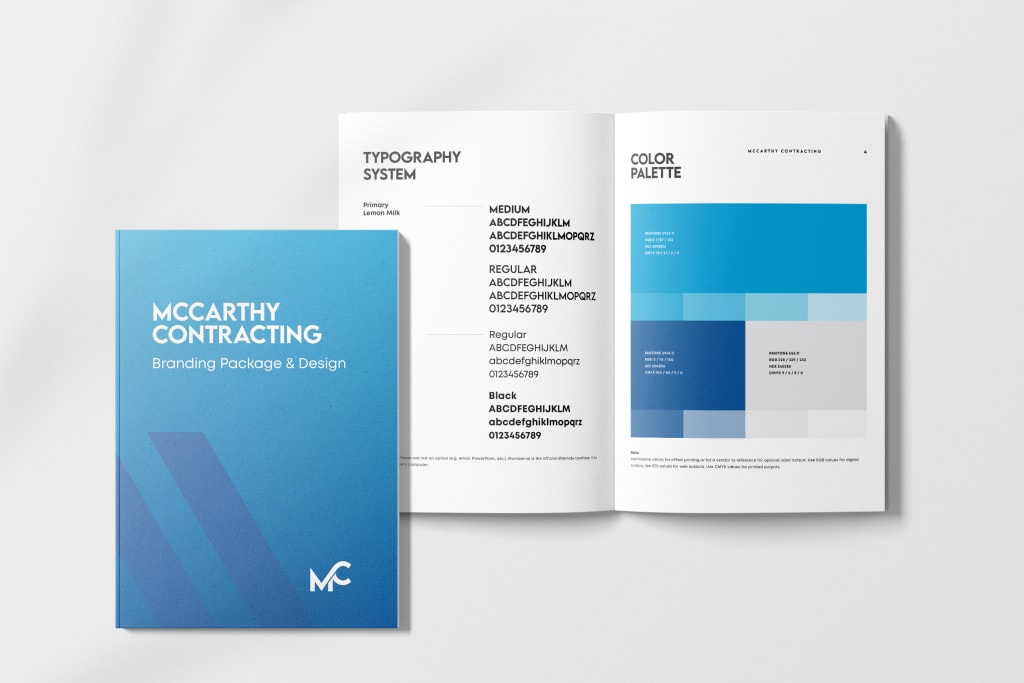
The design process is exactly as it sounds; it’s a process. You start a project, discuss goals with your client and then start designing. Whether the project involves branding or rebranding a company, illustrating a book, or creating a flyer, the design development will involve the creation of a color palette.
The color palette you create matters! Color psychologically influences our decisions and the emotions evoked by seeing different colors. I won’t waste your time in this article telling you why color is essential for every part of a design; instead, I will share a fun tip you can use in Illustrator to generate your own color palette.
You can look at the reference pictures or follow along in Illustrator with me! If you’re following along go ahead and get up Illustrator, this will be fun I promise! Let's get started.
Step 1 - Pick Two Colors
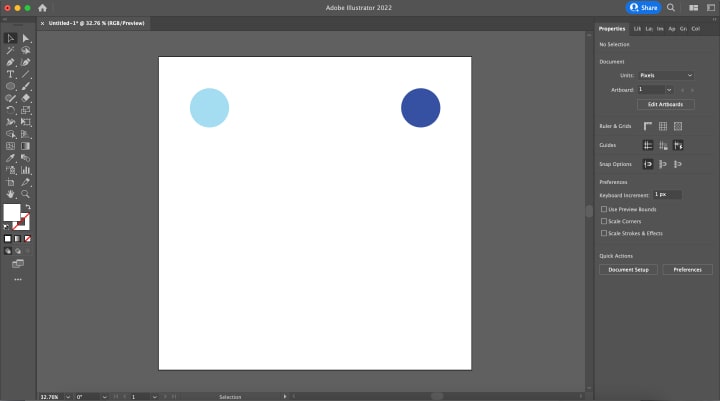
I’m going to start with some example colors. If you’re following along, pick one light color and one darker color. The colors do not need to match, although I suggest choosing similar colors for a better result. For example, you could select one light shade of pink, one dark shade of pink, etc. I’m going to start with one light blue on the far left side of the artboard and one dark blue on the far right side.
Step 2 - Find Your Blending Options
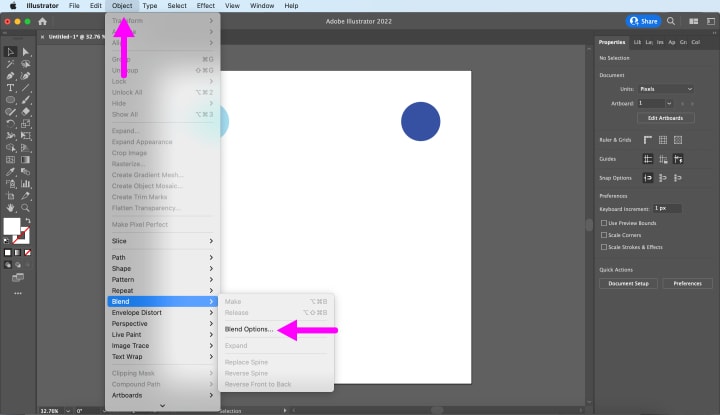
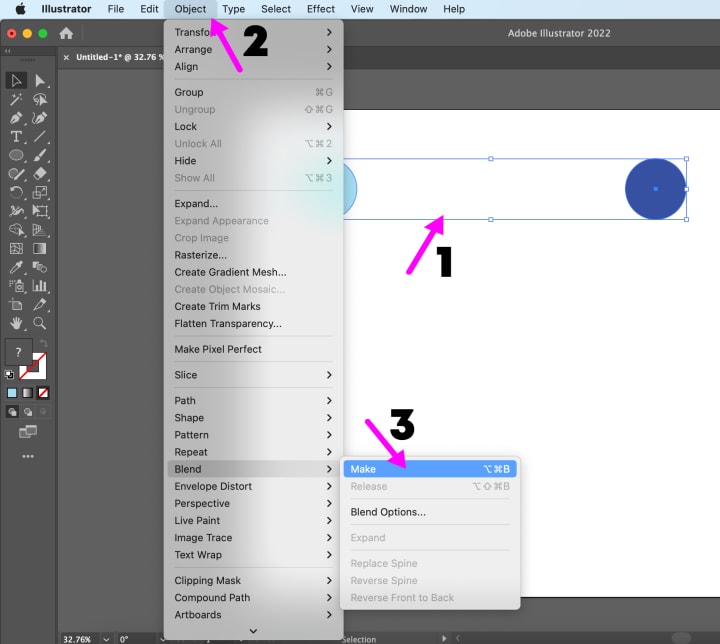
Now that we have two colors, let’s take a look at your blend setting options! Click “object” at the top of the page; you will see this window. Hover your mouse over the “blend” section and click “blend options.” This will pull up a grey options box where you can personalize blend option settings.
Step 3 - Change Your Blending Settings
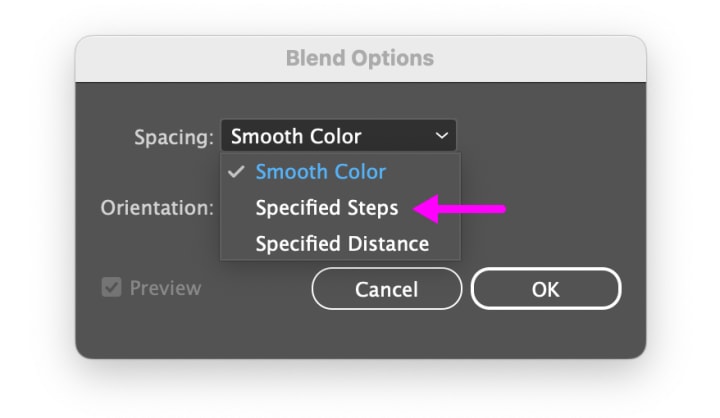
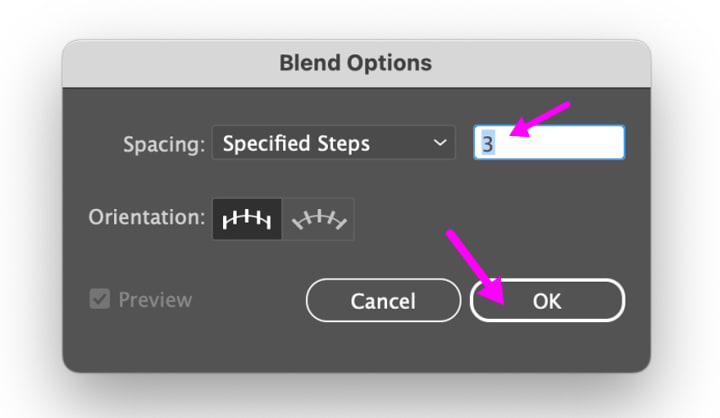
When you click “blend options,” it will default select “smooth color” (unless you have previously changed the blend option settings). We don’t want to smooth the color; we want to figure out what color exists between the two we selected. Click the drop-down menu and choose “specified steps.”
Step 4 - Choose the Amount of Colors You Want to See
After clicking “specified steps,” you can select the number of “steps” between the colors you want to see. I want to see three steps. After you input the number of steps, click “ok,” at the bottom. Hang in there because this is not the last step, we have one more!
Step 5 - One More Step
Are you frustrated because nothing happened? We are not done yet! We just told Illustrator what it needs to do the next time we use the blending option settings. This step is where the magic happens. First, use the selection tool and select both of your colors. Next, go back to the top and click “object.’ Hover your mouse over “blend.” Finally, click “make.” I hope you are ready for the final reveal, you will be amazed.
The Final Reveal - WOW, Right!
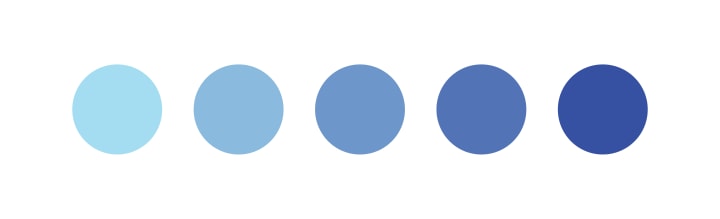
Now look at your colors; it’s the final reveal! Illustrator shows you the colors that exist between the two colors you chose. The number of steps we decided on in the blending options gave us a color palette based on our original colors. Below is my final result. You can see the light blue that I started with on the left and the darker blue on the right. Look at the beautiful shades in between.
You can use the blending tool to create color palettes, blend two objects together, and so much more. There are endless possibilities with this tool, take some time to play around with it! For those of us who are not necessarily, “color whisperers,” the ability to generate color palettes in Illustrator is a MAJOR game changer! I would love your thoughts on this exercise or any remaining questions.
Want to SEE more? Visit my website: http://katfitchdesign.com/home/
Want to LEARN more? Visit: http://katfitchdesign.com/home/news
Connect with me on LinkedIn, Behance, or Instagram!
About the Creator
Kat Fitch
I'm a communications and graphic design professional with a B.A. Comm. and pending M.A. My work is rooted in communication, design, and illustration, to educate, inform, and inspire others to build healthier and stronger communities.
Wuthering Heights uni module given content warning for students"
The 1847 novel Wuthering Heights has long been considered one of the most intense works in English literature. Written by Emily Brontë, the book explores obsession, revenge, cruelty and emotional torment on the Yorkshire moors. Now, nearly two centuries after its publication, the novel has become the center of a modern academic debate after a university module introduced a content warning for students studying the text.
By Fiaz Ahmed 4 days ago in Education
EdTech for Early Childhood Market to hit USD 55.6 Bn By 2034
EdTech for Early Childhood Market Overview The EdTech for Early Childhood Market was valued at USD 13.4 billion in 2024 and is projected to reach approximately USD 55.6 billion by 2034, expanding at a CAGR of 15.30% from 2025 to 2034. The increasing integration of digital learning tools into early childhood education is supporting this expansion. Educational technology platforms designed for young learners are helping educators deliver interactive learning experiences through digital content, educational games, and adaptive learning applications that support cognitive and language development.
By Roberto Crumabout 6 hours ago in Education




Comments
There are no comments for this story
Be the first to respond and start the conversation.