
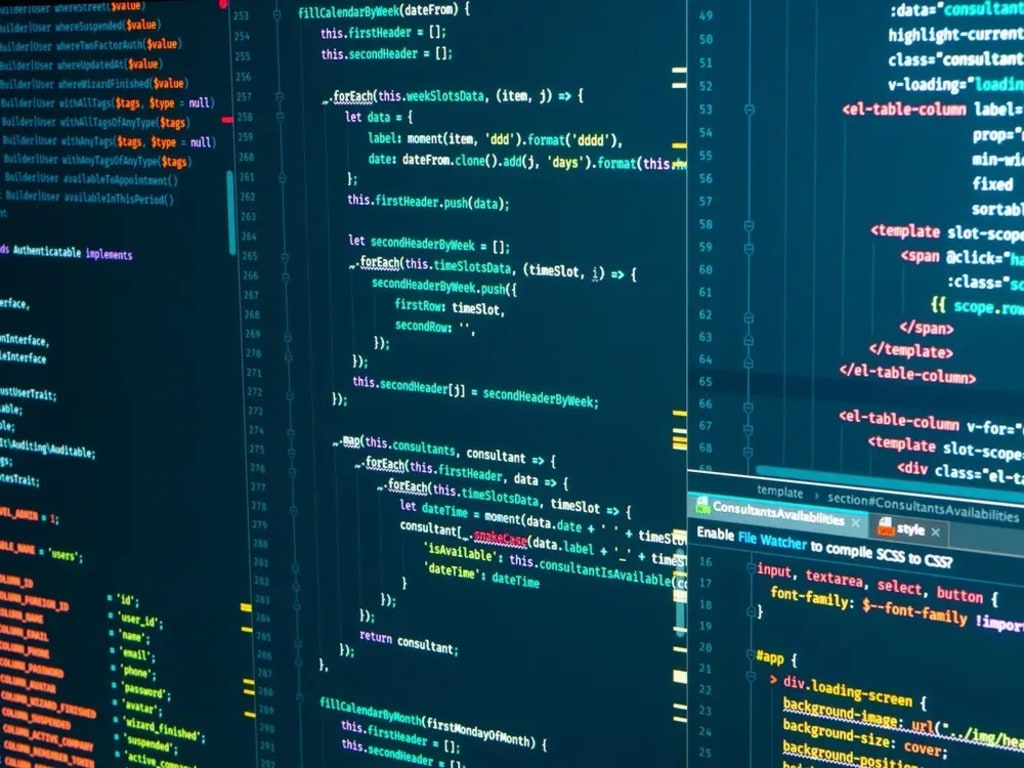
Learning how to code can be a rewarding and fulfilling experience, opening up opportunities for personal growth and career advancement. Whether you're just starting out or looking to expand your knowledge, there are many resources available to help you learn to code. Here's a comprehensive guide to get you started on your journey:
Choose a programming language: The first step in learning to code is to choose a programming language. Some of the most popular programming languages include Python, Java, C++, JavaScript, and Ruby. Each language has its own strengths and weaknesses, and the best one for you will depend on your goals and what you want to build. For example, Python is a good choice for beginners and is commonly used for data analysis and machine learning, while Java is popular for building enterprise-level applications. Consider your goals, the job market, and what you enjoy working on to choose the right language for you.
Set up a development environment: Once you've chosen a programming language, you'll need to set up a development environment. A development environment is the place where you write, run, and test your code. This can be a code editor like Sublime Text or Atom, an Integrated Development Environment (IDE) like Eclipse or Visual Studio Code, or a web-based platform like Repl.it. Choose a development environment that you're comfortable with and that supports the programming language you've chosen.
Learn the basics: Start by learning the syntax and basic constructs of your programming language. This will include things like variables, data types, loops, and functions. Understanding these fundamental concepts is crucial to your success as a programmer. You can find many tutorials and online courses that will help you get started with the basics.
Practice coding: The best way to learn to code is to actually write code. Start with simple problems and work your way up to more complex projects. Try to write code every day, even if it's just for a few minutes. You can find many online resources and coding challenges that will help you practice your skills.
Use online resources: There are many online resources available to help you learn to code, including tutorials, videos, forums, and communities. Sites like Codecademy, Udemy, and Coursera offer comprehensive courses on a variety of programming languages. Stack Overflow is a popular Q&A site where you can ask and answer questions about coding. Joining a coding community like Reddit or GitHub can also be a great way to connect with other programmers and get support and feedback on your work.
Build projects: As you gain experience, try building your own projects. This could be anything from a simple web page to a more complex application. Building projects will help you solidify your skills and give you the confidence to tackle more challenging problems. You can also add your projects to your portfolio to demonstrate your abilities to potential employers.
Stay up to date: Technology and programming languages are constantly evolving, so it's important to stay up to date with the latest developments and best practices. Read blogs and articles, attend workshops and conferences, and participate in online communities to keep yourself informed and inspired.
Collaborate with others: Collaborating with other programmers is a great way to learn and grow as a coder. You can work on open-source projects, join a coding club or hackathon, or team up with a partner on a project. Collaborating with others can help you learn from different perspectives and approaches, and you can also make valuable connections in the tech community.
In conclusion, learning to code takes time and practice, but with dedication and hard work, anyone can learn how to code. The most important thing is to choose a programming language
About the Creator
Keep reading
More stories from writers in Education and other communities.
Designing a Meaningful Future: Strategic Planning for Mission-Focused Entrepreneurs
In today’s evolving business landscape, entrepreneurs are increasingly motivated by more than financial success. Many are building companies around a mission to create social, environmental, or community-driven impact. While passion and vision ignite these ventures, strategic planning transforms purpose into a lasting, scalable business. For mission-focused entrepreneurs, planning is not about restriction but about clarity, alignment, and sustainable growth.
By Mario Payne2 days ago in Education
Why Did Einstein Dislike Quantum Mechanics? The Greatest Scientific Disagreement Ever
Einstein Helped Create Quantum Mechanics It is often forgotten that Einstein was a pioneer of quantum physics. In 1905, Einstein proposed that light comes in discrete packets called photons. This explained the photoelectric effect and earned him the Nobel Prize. His work was one of the pillars of quantum theory.
By shahkar jalal6 days ago in Education


Comments
There are no comments for this story
Be the first to respond and start the conversation.