
Clinical Manifestations and Complications of Enterovirus Infection:
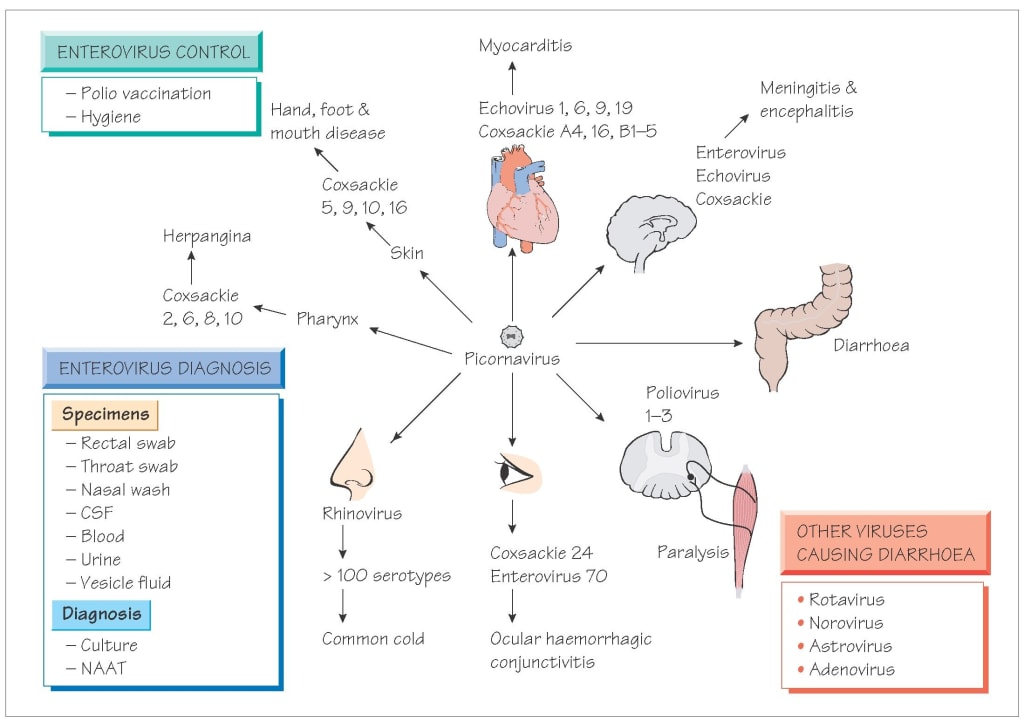
An exploration of the various clinical presentations of enterovirus infections, ranging from mild respiratory symptoms to severe complications such as meningitis, encephalitis, and myocarditis
Introduction:
Enteroviruses are a diverse group of viruses that belong to the Picornaviridae family. They are small, non-enveloped viruses with a single-stranded RNA genome. Enteroviruses are known to cause a wide range of human illnesses, including mild respiratory and gastrointestinal infections, as well as more severe diseases such as meningitis, encephalitis, and myocarditis.
These viruses are highly contagious and can be transmitted through various routes, including respiratory droplets, fecal-oral transmission, and contact with contaminated surfaces or objects. Enteroviruses are capable of surviving in the environment for extended periods, allowing them to spread easily.
There are several types of enteroviruses, with the most well-known being the polioviruses, coxsackieviruses, and echoviruses. Polioviruses specifically target the nervous system and can cause paralysis, while coxsackieviruses and echoviruses primarily affect the gastrointestinal tract and can also lead to complications involving other organs.
Enteroviruses often exhibit seasonal patterns, with higher infection rates occurring in the summer and early fall. Common symptoms of enterovirus infection include fever, headache, muscle aches, sore throat, and gastrointestinal disturbances such as nausea, vomiting, and diarrhea. In more severe cases, neurological symptoms may develop, including stiff neck, sensitivity to light, and changes in mental status.
Enterovirus infections can present with a wide range of clinical manifestations, varying from mild respiratory symptoms to severe complications. Here's an exploration of the various clinical presentations and potential complications associated with enterovirus infections:
Mild Respiratory Symptoms: Many enterovirus infections manifest as mild respiratory illnesses, resembling the common cold or flu. Symptoms may include a runny or stuffy nose, sneezing, cough, sore throat, and low-grade fever. These mild respiratory symptoms are often self-limiting and resolve within a few days.
Hand, Foot, and Mouth Disease (HFMD): Enterovirus infections, particularly those caused by enterovirus species such as Coxsackievirus A16 and Enterovirus 71, can result in HFMD. This condition is characterized by fever, sore throat, and the development of small, painful blisters or ulcers on the hands, feet, and inside the mouth.
Viral Meningitis: Enteroviruses are a common cause of viral meningitis, which is an inflammation of the protective membranes surrounding the brain and spinal cord. Symptoms of viral meningitis include fever, headache, stiff neck, sensitivity to light (photophobia), nausea, vomiting, and fatigue. Most cases of enteroviral meningitis are mild and self-limiting, with a favorable prognosis.
Encephalitis: In rare cases, enterovirus infections can lead to encephalitis, which is inflammation of the brain. Encephalitis can cause symptoms such as high fever, headache, neck stiffness, confusion, seizures, and focal neurological deficits. Severe cases may lead to altered consciousness, coma, or even long-term neurological complications.
Myocarditis: Enteroviruses can infect the heart muscle, resulting in myocarditis. Myocarditis can cause symptoms such as chest pain, shortness of breath, fatigue, rapid or irregular heartbeat, and swelling in the legs or abdomen. Severe cases of enteroviral myocarditis can lead to heart failure and potentially life-threatening complications.
Other Manifestations: Enterovirus infections have been associated with a variety of other clinical presentations and complications, including respiratory illnesses like pneumonia, acute flaccid paralysis (AFP), pericarditis (inflammation of the heart lining), and hepatitis (inflammation of the liver).
It's important to note that the severity and specific symptoms of enterovirus infections can vary depending on the viral strain, individual immune response, and other factors. If you suspect an enterovirus infection or are experiencing concerning symptoms, it is advisable to consult a healthcare professional for an accurate diagnosis and appropriate management.
Diagnosis and prevention
Diagnosis of enterovirus infections typically involves laboratory testing of samples such as throat swabs, stool samples, or cerebrospinal fluid. Treatment for enterovirus infections is mainly supportive, focusing on managing symptoms and complications. Vaccines are available for polioviruses and have been successful in controlling polio in many parts of the world.
Prevention and control of enterovirus infections involve practicing good hygiene, such as regular handwashing, proper sanitation, and avoiding close contact with infected individuals. Prompt medical attention should be sought for suspected enterovirus infections, especially if severe symptoms or complications arise.
About the Creator
Keep reading
More stories from ransome suh ngwaforbin and writers in Education and other communities.
Variants and Mutation Monitoring, Safeguarding Public Health in the Face of Emerging Variants
In the bustling city of Phnom Penh, Cambodia, a dedicated team of scientists and healthcare professionals worked tirelessly at the forefront of viral research. Their mission: to monitor and understand the emergence and spread of new variants of influenza and the SARS-CoV-2 virus. Their work held the key to protecting public health and ensuring the effectiveness of vaccines.
By ransome suh ngwaforbin3 years ago in Education
✅ Mismatch: Life Skills of Learning to Walk and Mastering Writing, Fight Bullies ✅
✅ How can I become a better writer? ✅ It starts with mindfulness, , , Every year, many people go to the Emergency Room because they have fallen inside their own house, and for some elderly people a broken bone is a very serious matter; however, if you take a grappling art like Judo or Aikido, the first thing you learn is to fall, and the first part of mastering that lesson is to relax.
By SAMURAI SAM AND WILD DRAGONS8 days ago in Education
Why Are Coffee Beans More Than Just a Morning Habit?
Coffee is one of the most widely consumed beverages in the world, enjoyed daily by millions of people across cultures and continents. At the heart of every cup of coffee lies the coffee bean, a small but powerful ingredient that defines flavor, aroma, and quality. Coffee beans are not just agricultural products; they represent culture, lifestyle, and a major economic activity for many countries.
By Rohit Shah5 days ago in Education
The Devil's Triangle
The sails ruffled in the breeze as we cruised along. The Sea Breeze was a mid-size catamaran that sailed out of Royal Naval Dockyard in Bermuda. We had booked this trip weeks in advance and were now looking at our Captain, Spike and two boat hands. Paddy and Wilson seemed like nice guys, joking around with the passengers and telling us some stories about Bermuda that only locals would know. Their island accents sounded almost British but they were pleasant to listen to.
By Barbara Gode Wilesabout 5 hours ago in Fiction




Comments
There are no comments for this story
Be the first to respond and start the conversation.