
Citizenship and International Human Rights
By: Langston Morrison
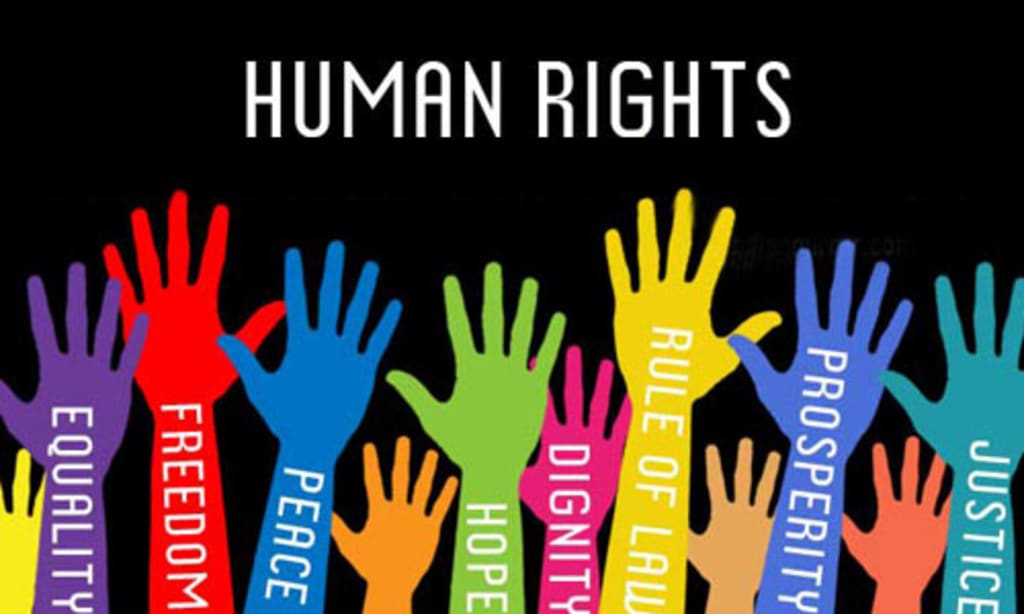
Citizenship. What is it? Nationality. What is it? Are both terms synonymous or is there something that makes them different? Is there something irregular about them that is deeply sickening and threatening to the life force of community healing and restoration? Is it possible that both terms are threats to Maat?
According to Cambridge Dictionary, citizenship is “the state of being a member of a particular country and having rights because of it.” Other definitions include: (1) “the state of having the rights of a person born in a particular country;” (2) “citizenship is also carrying out the duties and responsibilities of a member of a particular society;” and (3) “the state of being a member of a country, and having legal rights because of this.” Nationality, in contrast, is either (1) “the official right to belong to a particular country” or (2) “a group of people of the same race, religion, traditions, etc..” In this piece, I consider all of these definitions in arguing that citizenship is a threat to international human rights when it prevents certain communities, particular communities of color, from accessing basic human rights.
INTRODUCTION
Before turning to the question of the limitations of citizenship and nationality, it is useful, in showing how citizenship contributes to settler colonialism, to examine the history of America’s founding. In her magisterial text An Indigenous Peoples’ History of the United States, Roxanne Dunbar-Ortiz writes:
The history of the United States is a history of settler colonialism—the founding of a state based on the ideology of white supremacy, the widespread practice of African slavery, and a policy of genocide and land theft…Orgin narratives form the vital core of a people’s unifying identity and of the values that guide them. In the United States, the founding and development of the Anglo-American settler-state involves a narrative about Puritan settlers who had a covenant with God to take the land. That part of the origin story is supported and reinforced by the Columbus myth and the “Doctrine of Discovery.” According to a series of late-fifteenth-century papal bulls, European nations acquired title to the lands they “discovered” and the Indigenous inhabitants lost their natural right to that land after Europeans arrived and claimed it.
Here, Professor Dunbar-Ortiz is urging us to reconsider the narrative around America’s founding, challenging the myth that Christopher Colombus “founded America” in 1492. The violence in that narrative traumatizes indigenous communities and serves as a form of erasure - a refusal to recognize and acknowledge the humanity and personhood of first nations people. They, consequently, are displaced, alienated from society, and relegated to the status of second class citizens with no rights. Only those rights that the white colonizer recognizes are the ones that are deemed as truly legitimate. This is the story of America’s founding. This is the Coming.
Part I provides a brief history of the founding of America, debunking the often promoted myth of white saviors needing to go to America “to civilize the savages.” Part II puts that history in conversation with the concepts of citizenship and nationality, and how they are, in essence, a continuation of that settler colonial project in depriving human beings of their basic human rights and fundamental freedoms. It further discusses how citizenship laws and social rules in the United States and Jamaica can impact access to basic human rights stemming from international law doctrine and treaties. Finally, Part III looks at Maat-centered solutions and what can be done now to reshape the terms and conditions that come with nationality and the acquisition of citizenship.
THE WEAPONIZATION OF CITIZENSHIP: EXCLUSION, DEPRIVATION, AND STATELESSNESS
A. The United States
American citizenship, and citizenship more broadly, functions as a discriminating tool that disproportionately impacts and harms communities of color. Citizenship, as defined above, is chiefly about deciding who gets to have access to a unique set of rights and responsibilities. Once that is decided, the next step is what I call integration - being invited into a community with other individuals who share those same expressed rights and responsibilities. This invitation implies that some will be included and some will be excluded. Some rights will not extend to those who are not “citizens.”
In many European languages, the word for “right” is the same as the word for “law.” In Spanish, for example, one does not say voy a la escuela de ley. No. In contrast, one would confidently say voy a la escuela de derecho. The words derecho and ley both mean “law” but for some reason “ley” speaks to a specific aspect of law - the rules themselves as opposed to a more broad understanding of a legal system dealing with one’s rights. Derecho means “right” but it also means “law.” The same thing occurs in French, Portuguese, and Italian, with the words droit, direito, and diritto. So, what, then, is the connection between “rights” and the law? Simple. Rights are those set of normative rules, entitlements, and principles that the law presumably grants one access to vis a vis his/her/their status as an alleged “member of a particular society.” Essentially, one’s rights are only those dictated by the law of the land. The founding documents of a country, thus, play a pivotal role in shaping the vision of a future society and who belongs in it. If the Constitution provides:
Only American citizens shall have access to the right of education. Aliens and illegal immigrants are barred from the free exercise of such a right and any person found to be openly enjoying without proper documentation, shall upon discovery, be deported and sent back to their native country.
Obviously this is hyperbole and I am overexaggerating the express language of the vast majority of constitutions around the world. But, I do not think I am overexaggerating the problem. In practice, this actually happens and is currently happening!
According to the United States Constitution, incarcerated individuals can legally be reduced to second class citizenship and deprived of their ability to exercise their right to vote. The Thirteenth Amendment provides:
Neither slavery nor involuntary servitude, except as a punishment for crime whereof the party shall have been duly convicted, shall exist within the United States, or any place subject to their jurisdiction.
Individuals, convicted of a crime, are thus subject to this provision and as a matter of law may be enslaved and relegated to a subordinate position. When this happens, they are effectively stripped of their rights, stigmatized, and subsequently excluded from American society. This functions as one of the uses of law as it is practiced in the United States - to deny people access to opportunity. This is in stark alignment with the country’s founding and is not an aberration. It is as American as apple pie.
Donald Trump (“Trump”) is the sitting President of the United States (“U.S.”). Recently, Trump has been reversing a lot of the progress initiated by previous administrations that were designed to protect some marginalized groups from violence, racism, discrimination, and more. On March 1, 2025, Trump designated English as the official language of the United States. This mandate “rescinds a Clinton-era mandate that required agencies and recipients of federal funding to provide extensive language assistance to non-English speakers.” This order is a step in the wrong direction in depriving people of their basic universal human right to speak their own language. Article 2 of the Universal Declaration of Human Rights (“the UDHR”) provides:
Everyone is entitled to all the rights and freedoms set forth in this Declaration, without distinction of any kind, such as race, colour, sex, language, religion, political or other opinion, national or social origin, property, birth or other status. Furthermore, no distinction shall be made on the basis of the political, jurisdictional or international status of the country or territory to which a person belongs, whether it be independent, trust, non-self-governing or under any other limitation of sovereignty.
The UDHR expressly provides for language rights. According to the U.S. Mission To International Organizations In Geneva on the commitments and pledges of the United States of America:
The United States is also strongly committed to continue our longstanding work to combat discrimination based on race, color, age, national origin, religion, gender, familial status, sexual orientation, gender identity, health status, and disability in various sectors in our society. Certain statutes also protect individuals who are members of language minority group or reside in institutions. Despite the achievements of the civil rights movement and many years of striving to achieve equal rights and equal opportunity for all, invidious discrimination still exists in our country and we continue to fight it through enforcement of myriad federal civil rights statutes, including the Civil Rights Act of 1964, the Voting Rights Act, the Fair Housing Act, Section 1557 of the Affordable Care Act, and numerous others.
The U.S. and the Trump Administration has, thus, committed itself to protecting and safeguarding people’s linguistic rights. In a world where English now becomes the official and majority language and all other languages are considered “minority languages”, the Government now has the burden of instituting policy changes to reflect that change. Now, it should as a matter of its express commitments, create more opportunities for “minority groups” (often communities of color) to ensure greater access to English language resources.
But also, another aspect of this policy is the symbolic nature of it and in envisioning what American identity really is. In other words, to be American means to speak English. The corollary to that would be - if you do not speak English, you are not an American, which means you cannot enjoy the same rights and freedoms that an American would. Making English the official language of the United States, as a result, signals a return to a time when communities of color were discriminated against and viciously tortured for speaking their native languages. This will be a return to language death and cultural erasure. This will be a return to slavery and enslavement.
B. Jamaica
The Jamaican national motto is “Out of Many One People,” based on the population’s multiracial roots. But what do you do in a society when that pride in one’s country’s multiracial identity is equated with there being an absence of racism and peoples’ unique racial identities and differences? What happens when a country chooses to be colorblind and not see race and the various legacies of racism? The refusal to see or recognize race is an act of violence in itself. To pretend to live in a colorblind society where racism is not an issue is a racializing act. To what extent does being a Jamaican citizen violate basic human rights and international law principles?
Jamaica is definitely not a colorblind society where racism and racial difference do not exist. Both are very much alive and well. The impulse for why it is so easy for people to say that they don’t exist can be articulated in the following statement: “We don’t have a race problem because everyone is Black. Our problem is more of a class problem as opposed to a racial one.”
In her article titled “Examining Race in Jamaica: How Racial Category and Skin Color Structure Social Inequality,” Monique D.A. Kelly challenges long-held assumptions that marginalize race with regards to social inequality in Jamaica. In reviewing data from 2014, Dr. Kelly found that by looking beyond the single racial category of “Black,” there are significant differences in the way people identify themselves by skin color. And those identifications can “shape a person’s access to household amenities and educational attainment.” Results showed that in comparison to Blacks, people who self-identified as racially “other” had 48% more household amenities. Further, those with darker skin had fewer household amenities than their lighter-skinned counterparts. With education, Dr. Kelly found that racial categories showed no difference in education however skin color was “negatively and significantly associated with educational attainment.” On average, those with lighter skin color received two more years of education than their counterparts with darker skin.
Based on Dr. Kelly’s research, we can confidently say that Jamaican society is not colorblind. It is colorblind in name only.
Being designated a Jamaican citizen and being proud of your ties to the island is not the issue. It is rather being a Jamaican citizen and using that designation to ignore the underlying racial problems in the society. It is a well established principle of international law that no one shall be prevented from enjoying their culture. It is also true that international treaties and declarations have recognized a non-discrimination principle as an essential value in working for a better future society. That act of ignoring race and racism and subsuming everyone into the “Jamaican” bucket is actually worse than the actual racism itself because you refuse to even see it. That is discrimination on the basis of race.
The truth is that Jamaica has a race problem. The “Out of Many One People” motto that individuals love to uplift is a beautiful aspirational goal, but only to the extent that it celebrates the multiethnic and multiracial identity of Jamaica. It should not be used to ignore the problems of race and racism within the country. Colorism is a huge problem in Jamaica that affects many segments of society. It is intertwined with race, racism, and class. Studies and research on intersectionality are particularly useful in showing how “the interaction and cumulative effects of multiple forms of discrimination” affect the daily lives of individuals, particularly women of color. More generally, it refers to an “intellectual framework for understanding how various aspects of individual identity—including race, gender, social class, and sexuality—interact to create unique experiences of privilege or oppression.”
Thus, based on Kimberlé Crenshaw and Kelly’s research, an acknowledgement of a class issue necessarily says that one acknowledges a racial problem as well. Race and class cannot be separated. They work in tandem.
Describing everyone simply as “Jamaican” does not provide room for people to get to know each other beyond their Jamaicanness. It puts everyone into one bucket and discriminates by ignoring the uniqueness of each and every individual outside of their shared identity and culture. At this moment, there is a certain level of cultural erasure - erasing and not seeing the other person for who they are, where they come from, what their heritage is, and what their history and experiences are like. It is not because one says they are racist or do things that clearly manifest their racism or racial intent that makes one racist in this context. It is not because of expressed racial animus or hatred to another group of people that makes someone racist in Jamaican society. Racism, here, is most clearly visible to the naked eye in one’s refusal to care about racial difference at all - a social violence.
This case study of Jamaica is one dealing with the problems of nationality and citizenship. Pursuant to international law doctrine and its corresponding treaties and declarations, the freedom to self-identify—self-determination—is a right that shall not be abridged or infringed upon. Forcing someone into a citizenship class without asking them for permission is legalized racial violence. Forcing someone to be a Jamaican or an American just because they were born on that soil is deeply problematic and an affront to the sanctity and dignity of the human person. It is a violation of international law.
MAAT AS A PATHWAY TO INCLUSIVE CITIZENSHIP
One should not have to be anything other than a human being to acquire basic human rights. The terms and conditions should be changed to codify and enforce this basic principle.
Indigenous societies around the world have always respected and deeply cared for community. For many, “community” transcended human relationships and included non-human entities like plantlife, animal life, and every other aspect of creation. No society is perfect, but these societies come the closest at recognizing and providing for the most basic fundamental rights of all. The ancient Kemetic principle of Maat, represented by a woman and an ostrich feather, is just one example of that deep care for community. Maat is about balance and harmony. The use of the ostrich feather is particularly illuminating because it represents symmetry. If you were to fold back the ostrich feathers, they swing right back into place. It symbolizes rejuvenation, symmetry, balance, harmony, restoration, reciprocity, truth, and more. It is a cosmic concept that transcends human beings and life as it exists on earth.
When countries adopt new citizenship laws and amend new nationality requirements, what they should consider is the impact of those requirements on other aspects of creation and segments of society. They should apply a multifaceted approach in drafting the provisions and language to be included within their constitutions. In essence, it must be holistic.
One simple way to recognize the humanity of each and every individual is expanding the requirements for the successful acquisition of citizenship by assigning specific circumstances in which individuals seeking asylum have an easier process and opportunity to access those fundamental basic human rights of the host country. In other words, to enter the host country, one would not have to be a Jamaican or an American citizen. They will be seen as a human being escaping a violent and traumatic regime and, as a result, simultaneously treated as such. Threats to national and international security are very real which is why it is important that cross-country collaborations and talks are held for successful implementation of this program. Working with other countries to develop models of good governance is an example of allyship. Countries should not be arrogant to think that their model of governance is the best and that they do not need to learn from other systems. Again, these historical and contemporary examples of societies that overwhelmingly succeed in facilitating access to human rights can provide a wealth of knowledge to their cousins just getting started and learning.
In examining models from other countries and enforcing nationality laws, the effects of inviting people from different countries on other aspects of creation should also be considered. The goal and solution here is to find ways to be more inclusive of everyone and also to recognize that “everyone” is not specific to human beings alone. Striking a balance between these two things can be found in Maat that systematizes and concretizes this idea. Centering Maat and considering new citizenship laws and models that are more inclusive and Ubuntu-led is the work of dreamers. Thus, to quote Adelle Blackett, Senior Advisor to the Director-General of the International Labour Organization, “we should dream a little.”
Sources:
1. The word “Maat” is a political, spiritual, and cosmic term in mdw ntr (erroneously called “hieroglyphs”) that refers to a way of living for the benefit of all including: plants, animals, human beings, the ntrw and their aspects. It can be usefully translated as “truth, justice, harmony, balance, reciprocity.” The source for this definition can be found in a variety of texts, including but not limited to: Asa G. Hilliard, III, SBA: THE REAWAKENING OF THE AFRICAN MIND (1997); Jacob H. Carruthers, MDW NTR: DIVINE SPEECH: A Historiographical Reflection of African Deep Thought from the Time of the Pharaohs to the Present (1995); James P. Allen, Middle Egyptian: An Introduction to the Language and Culture of Hieroglyphs (2014). The term Maat is used here as opposed to “justice” because I have found that the term is limiting and does not capture the essence of what is really needed in the advancement of freedom for all of humanity [and other aspects of nature]. When rendering justice for humanity, judges should think about Maat and what the consequences of their decisions are for other segments of our world — what effects do our decisions have on indigenous communities, on “wildlife” [both plant and animal], on families?
2. See Cambridge Dictionary, https://dictionary.cambridge.org/us/dictionary/english/citizenship#google_vignette.
3. See Roxanne Dunbar-Ortiz, An Indigenous Peoples’ History of the United States 2,3 (2014). Roxanne Dunbar-Ortiz is Professor Emerita in Ethnic Studies at California State University, Hayward, and lectures widely on topics concerning title, land rights, indigenous sovereignty, and more.
4. I borrow this language from Daniel Black’s magnificent text The Coming, which provides a brilliant historical-fictional account of Black people’s forced removal from their homelands in Afrika and their sojourn to the Americas. See Daniel Black, The Coming: A Novel (2015).
5. Translation: “I go to law school” or alternatively “I am going to law school.”
6. Derecho means “right” in the sense of a right hand, right elbow, right side, human rights, etc. It does not follow, however, that it refers to something that is correct, morally acceptable, or on the right side of justice.
7. See supra note 2.
8. This is an example created by the author to emphasize how explicit and urgent the need to solve this citizenship problem is.
9. See NATIONAL ARCHIVES, https://www.archives.gov/milestone-documents/13th-amendment.
10. See generally Michelle Alexander, The New Jim Crow: Mass Incarceration in the Age of Colorblindness (speaking on social exclusion and “state control outside of prison walls” where after post-conviction and post-incarceration, a stigmatization emerges that is visible in parole, probation, and discrimination in housing, employment, education, etc.).
11. See “Fact Sheet: President Donald J. Trump Designates English as the Official Language of the United States”, THE WHITE HOUSE, https://www.whitehouse.gov/fact-sheets/2025/03/fact-sheet-president-donald-j-trump-designates-english-as-the-official-language-of-the-united-states/.
12. See Universal Declaration of Human Rights, U.N., https://www.un.org/en/about-us/universal-declaration-of-human-rights.
13. See U.S. Mission To International Organizations in Geneva, Human Rights Commitments And Pledges of the United States of America, https://geneva.usmission.gov/2016/02/24/human-rights-commitments-and-pledges-of-the-united-states-of-america/.
14. I have selected Jamaica as the next case study because I am of Jamaican background and heritage, so it is one of the contexts I am most familiar with in terms of this citizenship, nationality, and identity question.
15. https://opm.gov.jm/symbols/coat-of-arms/.
16. See generally Monique D.A. Kelly, Examining Race in Jamaica: How Racial Category and Skin Color Structure Social Inequality”, Vol. 12 RACE & SOC PROBL 12, 300-312 (2020), DOI: https://doi.org/10.1007/s12552-020-09287-z; https://socialscience.msu.edu/news-events/news/archives/2020/2020-10-13.html. Dr. Monique D.A. Kelly received her PhD in 2019 from University of California Irvine. Her research broadly focuses on racial and ethnic identities, attitudes, and inequality, as well as on immigration processes connected to those social dynamics. Her current research agenda uses both qualitative and quantitative methods to investigate race, colorism, stratification, and inequality comparatively within the Anglo-Caribbean and the larger black diaspora.
17. This language of being “colorblind in name only” was taken from a Critical Race Theory course the author took with Tanya K. Hernández of Fordham University School of Law.
18. See generally https://www.britannica.com/topic/intersectionality.
19. See id.; see also “Kimberlé Crenshaw on Intersectionality, More than Two Decades Later” (2017), https://www.law.columbia.edu/news/archive/kimberle-crenshaw-intersectionality-more-two-decades-later.
20. There’s a lot of helpful academic research on racial capitalism available that speaks to this point. See Manning Marable, How Capitalism Underdeveloped Black America (2015); Donna Murch, Assata Taught Me: State Violence, Racial Capitalism, and the Movement for Black Lives (2022); Cedric J. Robinson, Cedric J. Robinson: On Racial Capitalism, Black Internationalism, and Cultures of Resistance (Black Critique).
21. To clarify, I am not saying that because someone is born on U.S. soil that that does not make them American. The Constitution articulates the principle of jus soli clearly and precisely. What Trump is currently doing in deporting people who were born on U.S. soil is unconstitutional. Also, the people who came to this country voluntarily are not who I am talking about and why this statement was made. Instead, I am thinking about the Republic of New Afrika and their work in attempting to create a nation within a nation, expressing their right to self-determination and sovereignty over themselves. See “New Afrikan Declaration of Independence”, chrome-extension://efaidnbmnnnibpcajpcglclefindmkaj/https://www.freedomarchives.org/Documents/Finder/DOC513_scans/NAPO/513.NAPO.NewAfrikanDec.pdf.
22. See supra note 1.
23. Here, I do not use the term “wildlife” because according to whose paradigm are these plants and animals “wild”? It is fascinating that, according to the Western paradigmatic framework, anything in its natural state is considered “wild.”
24. I use the sociological language of “host country” to mean the country where the person seeking asylum is traveling to as opposed to “home country” meaning the country of origin.
About the Creator
Langston Morrison
Hello! My name is Langston Morrison and I write on language learning, international law, human rights, issues facing people of African descent, short stories, poems, and song lyrics and raps.
Keep reading
More stories from Langston Morrison and writers in Education and other communities.
Lyft, Lies, and Lost Phones
The Incident: A Night Out Gone Wrong Okay. So, I left my phone in the Lyft after going to a party in Harlem, New York. I went home, got out the lyft, and noticed as I entered my space that I didn't have my phone. So, I quickly telephoned a friend who was still at the party in Harlem to inquire about the whereabouts of the phone and he said he didn't see it but that he will ask the owner of the club to ask where it is. I decided fi drop a sleep and wait until the morning fi see wah gwaan. Meanwhile, before I go to sleep too, I message Lyft to ask about the phone and to see if they can get in contact with the driver and they are so unresponsive. They didn't reply to me for a while. Then, the next day when I'm in class I text my friend on iMessage on my computer and ask him fi check di phone location. So, he replied back to me and told me that my phone location says it's in the Bronx in some apartments on Kingsbridge Ave. Him gimme di address and a seh it deh inna one apartment building pon di right side.
By Langston Morrison11 months ago in Humor
7 Online Skills That Can Change Your Financial Future in 2026
7 Online Skills That Can Change Your Financial Future In today’s digital world, one skill can completely transform your life. Just a decade ago, making money online sounded unrealistic to many people. Today, thousands of people are building careers, businesses, and even financial freedom using only their laptops and internet connections. The truth is simple: the internet has created opportunities that never existed before. But the biggest mistake most people make is waiting for the “perfect moment” to start learning. The reality is that learning just one valuable online skill can open doors to income streams you never imagined. Here are seven powerful online skills that can truly change your financial future. 1. Content Writing Content writing is one of the easiest online skills to start with. Every website, blog, and online business needs high-quality content to attract readers and customers. If you can write helpful, interesting, or informative articles, you already have the foundation for this skill. Content writers earn money by writing: Blog posts Website content Product descriptions News articles Platforms like freelance marketplaces, blogging websites, and digital publications are always looking for good writers. With practice, many writers turn this skill into a full-time career. 2. Graphic Design In the online world, visuals matter. Businesses need logos, social media graphics, advertisements, and brand designs to attract attention. Graphic design allows creative people to turn their imagination into income. Even beginners can start by learning simple tools and gradually improving their skills. Graphic designers can work with: Small businesses Online brands Content creators Marketing agencies A single well-designed logo or brand package can sometimes earn more than weeks of traditional work. 3. Video Editing Video is the most powerful form of content on the internet today. From social media platforms to online courses, videos dominate the digital world. But most creators don’t have the time or skill to edit their own videos. This is where video editors come in. If you learn how to cut clips, add music, create smooth transitions, and improve video quality, you can become extremely valuable. Video editors are needed by: YouTubers Businesses Online educators Social media influencers The demand for video editing continues to grow every year. 4. Social Media Management Millions of businesses rely on social media to reach customers. But many business owners don’t know how to grow their pages, create content, or engage with their audience. Social media managers help brands: Plan content Post regularly Respond to followers Grow their audience With the right strategy, social media managers can manage multiple accounts and earn steady monthly income. This skill combines creativity with marketing knowledge, making it highly valuable. 5. Digital Marketing Digital marketing is one of the most powerful online skills you can learn. It involves promoting products, services, or brands through online channels such as search engines, social media, and email. Digital marketers help businesses get: More website visitors More customers More sales Companies are willing to pay well for people who can increase their revenue. Learning digital marketing can open doors to freelance work, remote jobs, or even your own online business. 6. Web Development Every business needs a website. But building a professional website requires technical skills. Web developers create and maintain websites using coding languages and development tools. Although this skill takes more time to learn than others on this list, it is also one of the highest-paying online skills. Many web developers work remotely and build websites for clients all around the world. Once you gain experience, the opportunities become endless. 7. AI Content Creation Artificial intelligence is rapidly changing the online world. Many creators and businesses now use AI tools to produce content faster and more efficiently. AI content creators use technology to generate: Articles Images Videos Marketing content People who understand how to use AI tools effectively have a huge advantage in the modern digital economy. Instead of replacing creativity, AI often amplifies it. Those who learn how to combine creativity with technology will be ahead of the curve. Final Thoughts The internet has made it possible for anyone, anywhere in the world, to build valuable skills and create new income opportunities. But knowledge alone is not enough. The real difference comes from taking action. Pick one skill from this list and start learning today. Practice consistently. Improve a little every day. Over time, that single skill could become the foundation of a completely different financial future. Because sometimes, all it takes is one skill to change everything.
By Baseer Shaheen 8 days ago in Education



Comments
There are no comments for this story
Be the first to respond and start the conversation.