
Chromate Conversion Coating Mechanism: What Happens at the Surface?
Understanding the mechanism of chromate conversion coating—particularly what happens at the surface—is key to leveraging its benefits for corrosion resistance, adhesion, and performance.
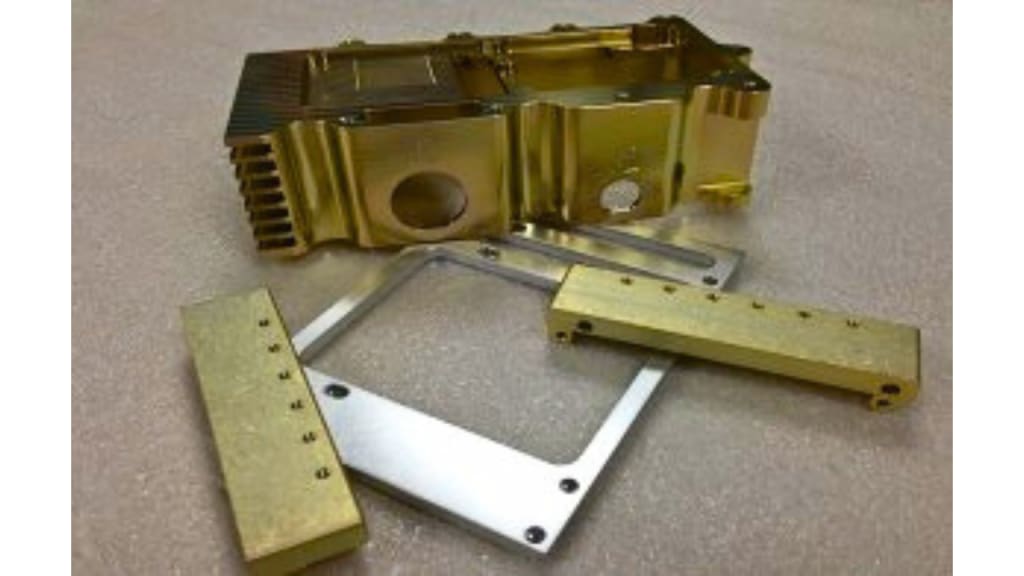
Chromate conversion coating is a widely used surface treatment that enhances corrosion resistance, promotes paint adhesion, and extends the life of metal components. But what exactly happens at the microscopic level when a chromate conversion coating is applied? Understanding the mechanism of chromate conversion coating—particularly the reactions that take place at the surface—can help manufacturers and engineers select the right treatment for their components and ensure optimal performance.
In this article, we’ll explore the detailed mechanism of chromate conversion coating, focusing on the surface-level interactions, and how companies like Advanced Surface Technologies (AST) provide high-quality chromate conversion services that meet rigorous industry standards.
What Is Chromate Conversion Coating?
Chromate conversion coating is a type of chemical conversion coating applied to metals such as aluminum, magnesium, and zinc. It is commonly used in industries such as aerospace, defense, automotive, and electronics for its ability to resist corrosion and enhance the adhesion of paints and primers.
There are two main types of chromate conversion coatings:
- Hexavalent chromate conversion coating (Cr⁶⁺)
- Trivalent chromate conversion coating (Cr³⁺), a more environmentally friendly alternative
The Surface Chemistry of Chromate Conversion Coating
The chromate conversion process involves immersing the metal part in a chemical solution that contains chromium compounds (usually chromic acid or chromium salts). The process initiates a series of chemical reactions on the metal surface, forming a thin, protective film. Here's what happens in more detail:
1. Oxidation of the Metal Surface
The first stage in the mechanism is the oxidation of the metal substrate. For example, in aluminum alloys, the aluminum reacts with the acidic solution, releasing electrons and forming aluminum ions (Al³⁺). This reaction creates a mildly etched surface, removing any native oxides or contaminants.
Al → Al³⁺ + 3e⁻
This step is critical for proper adhesion of the chromate coating and sets the stage for the film formation.
2. Reduction of Chromium Ions
As aluminum is oxidized, the chromium in the solution—particularly hexavalent chromium (Cr⁶⁺)—is reduced at the surface. The Cr⁶⁺ ions gain electrons and are reduced to Cr³⁺, which precipitates as chromium hydroxide and chromium oxide on the surface.
Cr₂O₇²⁻ + 14H⁺ + 6e⁻ → 2Cr³⁺ + 7H₂O
This reaction is a classic redox process: the metal is oxidized while the chromium ions are reduced.
3. Formation of a Complex Oxide-Hydroxide Film
The Cr³⁺ and Al³⁺ ions then form an amorphous gel-like layer of mixed metal oxides and hydroxides. This layer includes:
- Chromium oxide (Cr₂O₃)
- Chromium hydroxide (Cr(OH)₃)
- Aluminum oxide (Al₂O₃)
- Aluminum hydroxide (Al(OH)₃)
This protective film is typically 0.1 to 1 micron thick, translucent, and slightly iridescent, depending on its composition and thickness.
4. Self-Healing Properties
One unique feature of chromate conversion coatings—especially hexavalent types—is their self-healing capability. Small amounts of unreacted hexavalent chromium remain trapped in the coating. If the coating is scratched or damaged, these reserves can migrate to the affected area and re-passivate the surface, offering continued protection against corrosion.
This self-healing property is a key advantage over other types of conversion coatings.
Surface-Level Changes and Benefits
At the microscopic level, the chromate conversion coating:
- Fills surface micro-voids and smoothens irregularities
- Creates a chemically bonded layer with excellent corrosion resistance
- Enhances the adhesion of paints, sealants, and adhesives
- Acts as an insulating layer in electronic and aerospace applications
- Resists oxidation in aggressive environments
These benefits are why chromate conversion coating commonly specified in military (MIL-DTL-5541) and aerospace standards.
Trivalent vs. Hexavalent Chromate Mechanisms
While both trivalent and hexavalent systems form similar oxide-hydroxide films, the mechanisms differ slightly:
- Hexavalent systems rely on redox reactions involving Cr⁶⁺ ions.
- Trivalent systems use pre-formed Cr³⁺ compounds and typically require accelerators or catalysts to facilitate coating formation.
Trivalent coatings are safer for the environment and workers, and many companies—including AST—offer RoHS-compliant trivalent chromate coatings for customers who require environmentally responsible alternatives.
Why Choose AST for Chromate Conversion Coating?
Advanced Surface Technologies (AST) is a leader in precision metal finishing services, including chromate conversion coating for aluminum, magnesium, and other metals. With over 35 years of experience, AST delivers:
- MIL-DTL-5541-compliant coatings (Types I and II)
- Both hexavalent and trivalent chromate options
- In-house quality control and testing
- Superior corrosion protection and paint adhesion performance
- Quick turnaround for aerospace, defense, and OEM clients
AST's expertise ensures a uniform, high-quality coating that meets the strictest engineering specifications. Whether you're working with machined aluminum components or die-cast parts, their team understands the critical surface preparation and process controls needed for reliable results.
Final Thoughts
Understanding the mechanism of chromate conversion coating—particularly what happens at the surface—is key to leveraging its benefits for corrosion resistance, adhesion, and performance. From the initial oxidation of the metal to the formation of a durable oxide-hydroxide film, each step plays a crucial role in delivering a high-performance surface finish.
If you're looking for a trusted partner for chromate conversion coating services, AST offers both the technical capability and customer-focused service needed to deliver coatings that meet and exceed industry standards.
About the Creator
Advanced Surface Technologies
AST is a high-quality metal finishing company that specializes in electroless nickel plating, gold plating, silver plating, magnesium plating, tin plating, electrolytic nickel plating, passivation and chemical conversion coating.
Keep reading
More stories from Advanced Surface Technologies and writers in Education and other communities.
Best Silver Plating Service in Colorado: Why Advanced Surface Technologies Stand Out
When it comes to precision metal finishing, silver plating remains one of the most essential processes in various industries—from aerospace and medical to electronics and telecommunications. In Colorado, where high-tech manufacturing and innovation are growing rapidly, the need for reliable, high-quality silver plating services is more crucial than ever. Among the many providers in the region, Advanced Surface Technologies (AST) clearly stands out as the best silver plating service in Colorado.
By Advanced Surface Technologies9 months ago in Education
How Intentional Listening Transforms Leadership and Team Excellence
Leadership has long been associated with decisiveness, direction, and the ability to articulate vision. While these qualities remain essential, the most effective leaders today are distinguished by a different capability: their ability to listen with intention. As workplaces become more collaborative and knowledge-driven, leadership success increasingly depends on understanding people rather than simply directing them. Intentional listening allows leaders to grasp not only what is being said, but also what remains unspoken. This deeper understanding strengthens relationships, improves decision-making, and fosters trust. In high-performing teams, listening is not passive but strategic, shaping how leaders connect with individuals and guide collective effort.
By Thomas Kuriakose, MD6 days ago in Education



Comments
There are no comments for this story
Be the first to respond and start the conversation.