
Choices, actions, and consequences in an essay analyzing ethical decision-making
Believe what you do and do what you believe

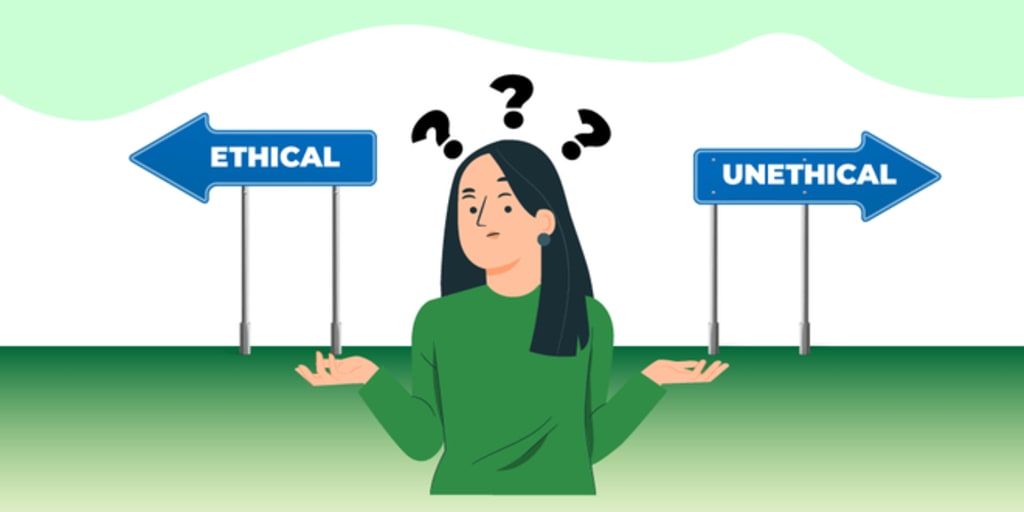
Making choices is a big part of life, but what we sometimes forget is that every choice we make has consequences, not just for us but for everyone around us too. That's where personal responsibility comes in. It's all about understanding that our actions have effects, and it's up to us to take ownership of those effects, whether they're good or bad.
Think about it this way: when we make decisions, we're not just thinking about ourselves. We're also thinking about how those decisions might affect our friends, our families, and even people we've never met before. It's like a ripple effect. What we do can spread out and touch a lot of people, so it's important to think carefully before we act.
But personal responsibility isn't just about thinking before we act. It's also about being honest and doing the right thing, even when it's hard. It's about standing up for what we believe in and being true to ourselves, even when others might try to pressure us into doing something different. In Carl Richards's article, "Learning to Take Responsibility When Things Go Wrong," published in 2016, the author underscores the transformative potential of personal responsibility. Richards emphasizes how taking ownership of our actions can empower us to overcome challenges and grow stronger in the process. This highlights the importance of embracing accountability for the outcomes of our choices. In addtion to, personal responsibility entails upholding ethical standards even when faced with difficult situations. In "Doing the Ethical Thing May Be Right, But It Isn't Automatic,"by Alina Tugend from 2015, the author explores ethical decision-making in professional settings. Tugend emphasizes the significance of important courage and ethical leadership and the importance of aligning our actions with principles of fairness and kindness. This underscores the role of personal integrity in navigating ethical dilemmas.
And that's where social responsibility comes in. It's about understanding that we're part of something bigger than just ourselves. We're part of communities, whether they're local, national, or even global. And just like we have a responsibility to ourselves, we also have a responsibility to those communities. In 2007 article, "Greening the supply chains of corporate America," the authors discuss the developing landscape of corporate social responsibility. They highlights how businesses are increasingly prioritizing sustainability and community engagement, it also drives positive change at both local and global levels. This illustrates the potential for social responsibility to foster meaningful impact through collaborative initiatives.
Being socially responsible means getting involved and making a difference. It means caring about the world around us and doing what we can to make it better. That could be volunteering at a local charity, speaking up for causes we believe in, or just being kind to the people we meet every day. In Susan Gubar's 2019 article, "The Need for Clinical Trial Navigators," the author addresses disparities in research participation. Gubar emphasizes the ethical imperative of diversifying clinical trial populations to ensure equitable access to healthcare interventions. This highlights the importance of inclusive practices that prioritize the needs of marginalized communities thereby fostering a more equitable society.
But it's not just about what we do; it's also about how we do it. Social responsibility means treating everyone with respect and understanding, no matter who they are or where they come from. It's about building communities where everyone feels welcome and valued, no matter their background or beliefs. So, when we think about personal and social responsibility, we're really talking about two sides of the same coin. They're both about understanding the impact of our actions and doing our part to make the world a better place. And when we combine personal responsibility with social responsibility, we can create a future where everyone has the opportunity to thrive.
At the end, personal and social responsibility are important components of ethical decision-making, each playing a vital role in shaping individual behavior and driving societal change. By embracing personal responsibility, we can take ownership of our actions and uphold ethical standards in all aspects of our lives. In addition to, by embracing social responsibility, we can work together to address systemic challenges and create a more inclusive and equitable world for all.
Carl Richards, “Learning to Take Responsibility When Things Go Wrong”, New York Times, March 28, 2016, https://www.nytimes.com/2016/03/29/your-money/learning-to-take-responsibility-when-things-go-wrong.html
Alina Tugend, “Doing the Ethical Thing May Be Right, but It Isn’t Automatic”, New York Times, Nov.18, 2011, https://www.nytimes.com/2011/11/19/your-money/why-doing-the-ethical-thing-isnt-automatic.html
“Greening the supply chains of corporate America”, New York Times, Nov.6 2007, https://www.nytimes.com/2007/11/05/business/worldbusiness/05iht-rbogsupply.1.8192305.html
Susan Gubar, “The Need for Clinical Trial Navigators”, June.20, 2019, https://www.nytimes.com/2019/06/20/well/live/the-need-for-clinical-trial-navigators.html
About the Creator
Dan N
Product Reviews
What happens to your brain without any social contact?
Everyone needs time to themselves, and peaceful solitude has stress-relieving benefits. But being alone takes on an entirely different dimension when it creeps up or is forced upon you. When that's the case, the effects can be surprisingly extensive. And though different people experience distinct effects at different times, symptoms tend to become more severe and persistent the longer one's isolated. When someone is involuntarily confined to one space indefinitely— for days, weeks, months, or even years—
By Munesh Yadavabout 11 hours ago in Education




Comments
There are no comments for this story
Be the first to respond and start the conversation.