
Children of the Revolution—An Analysis
A short analysis of Dinaw Mengestu's novel, "Children of the Revolution"

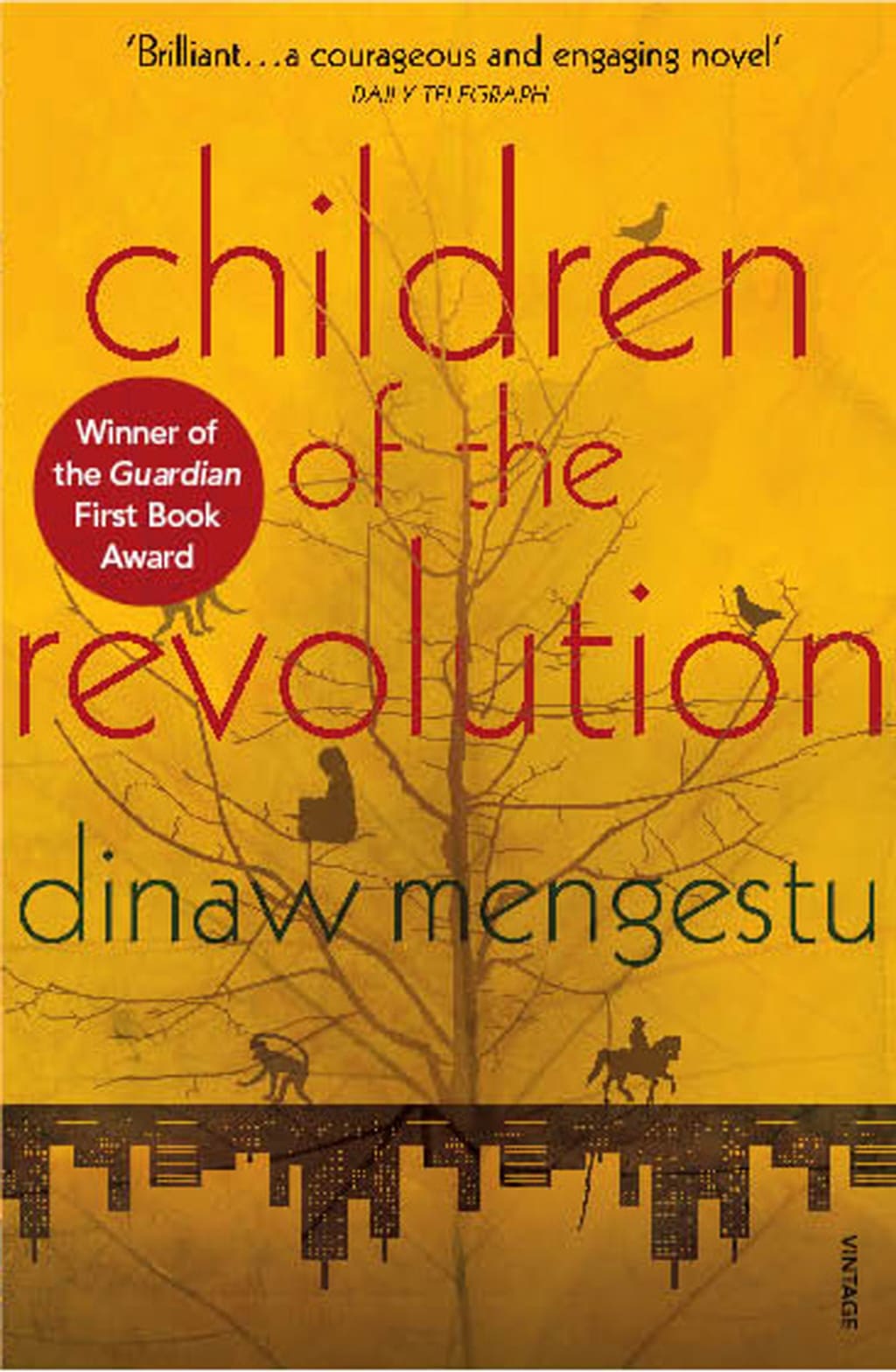
There are a lot of themes and interesting plot points in Dinaw Mengestu’s novel which are similar to his own life experiences. As an African who fled to the USA in the midst of the African sieges, Mengestu projected a lot of his real life story into Sepha Stephanos' story. Children of the Revolution is not quite categorized as a biography, but Mengestu characterized himself as Sepha a lot of times, and he incorporated raw economic, political, and racial discussions into a creative piece of fiction.
Plot Summary. The story starts with Sepha in his little store in Logan Circle, a small, poor, and grungy neighborhood in the big state of Washington D.C. He is with his friends Kenneth and Joseph, nicknamed Ken the Kenyan and Joe from the Congo respectively. In the introduction, the three friends are found to be drinking and reminiscing - it is where we find out the duration of their friendship, and the quality of their bond. The three of them bond over their regular drinking place, their favorite song, and their similar experiences of losing a family, even over their made-up game over styrofoam cups of scotch.
As the novel progresses, Sepha narrates his encounters with a white woman named Judith who just moved in next door with her 11-year old biracial daughter named Naomi. Sepha and Naomi bond over reading books, all the while Sepha and Judith’s relationship also progresses. During this character developments, the neighborhood of Logan Circle becomes more and more aloof from Judith's presence as a white woman. They did not take her seriously, the men harassed her and the neighborhood’s small margin of women talked behind her back and treated her off-ishly.
This part of the novel leads to the arc where Judith’s car is broken into and her home is burned by someone from Logan Circle. Because of this, Judith and Naomi pack up and move away since the predicament did not make them feel safe in the area anymore. Sepha narrates this with,
“If there was a theme to the conversations I overheard, it was: Thank God, it isn’t us. Grateful, once again, in the only way other people’s suffering can make us.”
The line sounds dramatic in its form, but that was the reality for the people of Logan Circle - when you’re poor and treated like dust by those in the upper floors of the mansion of society, you take bliss in the sufferings of others. It’s okay as long as it isn’t me.
Children of the Revolution resolutes with Judith visiting the neighborhood one last time without Naomi. Sepha has a last conversation with her, and here he realizes that his father was not only right, but he was right and more:
“A bird stuck between two branches gets bitten on both wings...a man stuck between two worlds lives and dies alone.”
Analyzing the text through Sociological Approach. Two of the prominent themes in the whole novel are racial discrimination and class differences. Born in Ethiopia and having lived through coups and dictators, Sepha Stephanos escaped his homeland looking forward to a better life in America. But America was not a land of unicorns and rainbows that people are blinded by - the American dream wasn’t not real, and it was not for African immigrants like Sepha.
Logan Circle is for sure not the best neighborhood. It’s a poor black community with disheveled streets and unkempt houses that Sepha narrates as, Four and five-story mansions that had once belonged to someone of great importance - a president’s cousin, or aunt, maybe nephew - but that over the years had been neglected, burned out, or in my case, divided into cheap, sometimes cockroach-infested, apartments. Easy to say, Logan Circle was not comfortable living. At some point, Sepha did get lucky with his small grocery store, although even that doesn't seem enough when he says the line before closing up his store for the day,
“I don’t add up the register because I’ve already done the math in my head. I know just how little I’ve earned.”
These lines from the novel say something about Sepha’s lack of motivation in keeping his only source of income from falling to tough concrete. In another paragraph, he also narrates that he is only sending money back to his family in Africa just because he is expected to, that it’s the only way of making it known that he has left home, but not the family, the “consolation prize for not being home”.
By these quotes, it is made easy to understand that Sepha and his friends, along with Sepha’s neighbors in Logan Circle, barely live a different life from Ethiopia. Although Ken the Kenyan could be different, but at the same time, not at all.
Kenneth, from being a bellboy in Capitol Hotel along with Joe and Sepha in their early years in America, has stepped up to being an engineer. Mengestu wrote him with descriptors like “six feet tall, thin and dark, an engineer who tries not to look like one”, and “he has needed order and predictability”. Sepha narrates that his friend is self-conscious of his imperfect teeth, but never bothered to get them fixed. “You can never forget where you came from if you have teeth as ugly as these,” he said.
The Kenyan is actually the most financially able among the triad. But despite that, he can’t get people to look at him without a second thought. He has money, but still too discriminated to fully fit in, not even with his suit and American belly. The same goes for Joe.
“He [Joe] scratches his chin thoughtfully, like the intellectual he always thought he was going to become, and has never stopped wanting to be.”
In this line, it is clear that Joe has his own plans in becoming smarter than he already is, probably plans on pursuing an academic career, even. A few scenes in the novel also shows Joe as a man with wise words, citing proverbs and philosophies which amuses both Ken and Sepha.
These predicaments of theirs show the social struggle of the immigrants in such an environment. And it’s not just them - but also Sepha’s black American neighbors in Logan Circle are insecure of Judith who was well-off and white. This is evidenced by the scene where Frank Henry, a turned-broke man, goes after Judith’s house and lights it up with a box of matches. Not only that, but in the novel, children stealing and men showing their genitals in the streets were nothing but mere everyday life. These kinds of morally corrupt actions are just a reflection of how people of Logan Circle do not care much about lifestyle. They couldn’t care less about it when they were poor and treated differently by the majority of the country they live in.
The immigrants are underprivileged, even if Ken is financially comfortable. They are African people who fled from Ethiopia because of violence and social instability, which can be similar to saying that Ethiopia drove them away from Ethiopia. The immigrants and black Americans suffer from poverty and discrimination, while Judith is rich and able to choose where to live. Ironically in the novel, Judith was also prejudiced for being a white woman in a black American community. This shows America’s divided society.
Another prominent theme in the novel is the classic American dream.When Sepha left Ethiopia, he was envisioning a better life for him in America, but when he lived there, he realized that it did not feel safe and secure. Better than Africa, because America could not get worse than dictators and deaths. Moving away just made him more grievous at the death of his father, and made him long for his family left in his homeland.
The story values money as the protagonists come from a struggling community. In America, you need to have money, but in order to have a job to earn, you must also fit into the society, which is quite the struggle of Sepha because he couldn’t let go of Ethiopia. Along with that is the struggle of being discriminated against as an African origin. This is also the case for Ken and Joe. Although the former has a much better relationship with money, he is struggling with the prejudices that might affect his engineering career.
“Kenneth shakes his head mournfully at the number. Almost nobody comes into the store anymore. It’s been this way for months now, with each month a little worse than the one before, business is slow, money is tight, and ever since Judith moved out of the neighborhood, I’ve been opening and closing my store at odd hours, driving away what few regular customers I still have left.”
These lines in the novel tells us that Sepha is struggling with his store, and probably the neighbors of Logan Circle were too poor to support whatever is left in his business. There is tension between him and finances, the same case would be to the rest of the neighborhood. Because Sepha didn’t have anything on him when he left Africa, expecting America to have a spare seat for him into a better life, he ended up living in a dingy neighborhood with scarce opportunities due to racial discrimination and poverty.
Sepha’s struggle is just one of the many black Americans experiencing the same. Dinaw Mengestu’s writing reflects real life. According to an article from Pew Research Center written in June 2016 (an estimated time when Mengestu was writing the novel), the economic and educational differences between white and black Americans are prominently seen in USA’s demographic. In this source, 36% of white Americans ages 25 and older have a bachelor’s degree, while only 23% of black Americans do. And in 2014, in an average white household, there is $71,300 of income, while for black American households, there is $43,300. These statistics show how Sepha’s struggle is not only written by Mengestu, but is an actual large issue in America’s society. This fact establishes that Sepha’s social struggle is indeed present on a larger scale beyond a fictional paperback.
Mengestu also wrote his characters as very well-versed personas about the society’s condition. Sepha is not in Africa, but his made-up game of guessing with his friends is evidence of his knowledge about what goes on in his homeland. They know dictators and when they ruled, even their strengths and weaknesses in ruling. Sepha is also conscious of America’s culture and how it doesn’t cater to him as an African immigrant - his knowledge of this is what grounds his reality in Logan Circle.
General Logan is mentioned in the novel at least two hundred times. This occurrence is what I like to consider a symbolism of the extent of Sepha’s awareness of the poor situation in Logan Circle. In the novel, a few lines narrated by Sepha goes:
“The houses cast long shadows over the circle and street, their rooftop shadows converging on the statue of General Logan, perched high on his horse in the center of the circle. When I moved into the neighborhood I did so because it was all I could afford, and because secretly I loved the circle for what it had become: proof that wealth and power were not immutable, and America was not always so great after all. The neighborhood, and by extension the city, had fallen, and every night I could see and hear that out of my living-room window.”
These lines are only a few of the ones mentioning General Logan in the whole novel. Sepha seemed to always be reminded of the neighborhood’s faulty living conditions upon the sight of this statue. While Logan Circle did not start out as a pure black and poor community, Sepha can only be reminded of its downfall everytime he sees the statue. Mengestu wrote him with melancholic tones every time Logan was in the picture, which kind of symbolizes his longing and want for the comfortable and rich neighborhood that General Logan made before Logan Circle became what Sepha had known it to be.
As a response to this awareness, Sepha cannot let go of his father’s death and his life back in Ethiopia since being in America did not ease his burdens at all. Not only was his American dream trashed and invalidated, but his life in Washington also kept that grief and misery of being an African immigrant in the state. This kind of response was shown in scenes that Mengestu wrote with Sepha’s hallucinations of his family, even his passed father,
“For at least the first two years that I was here, I was so busy passing my mother, brother, father, and friends in the aisles of grocery stores, in parks and restaurants, that at times it hardly felt as if I had really left. I searched for familiarity wherever I went… My hallucinations of home became standard. I welcomed them into my day completely. I talked to my mother from across the bus; I walked home with my father across the spare, treeless campus of my northern Virginia community college. We talked for hours… I explained to him the parts of American culture that I had never heard of before.”
The whole novel was written in melancholic and nostalgic tones. It is about Sepha’s longing and his grief for Africa, about friendship, and friendship tottering along the lines of romance. All of these were inspired by Dinaw Mengestu’s personal living experiences in America as an Ethiopian which probably made the whole writing more intimate and raw. The novel gives us readers a new perspective on the social issues of America, especially to us outsiders of the country. Personally, it made me realize that the American dream is just as it is - a dream. The novel tackled social stratification and injustice, gave us a glimpse into the life of the underprivileged, which soon also would hopefully help in addressing such social issues.
About the Creator
Kristine Via
We write to feel.
Keep reading
More stories from Kristine Via and writers in Education and other communities.
Empty Heart in Vast Skies
Most times, when I stare at the majesty of the moon, I think about the beautiful strands of hair that used to dance in between the gaps of my fingers. These sunrays remind me of when you used to be warm and comforting, full of hope and strength. I always think these entities will never compare to when you were mine and I was yours. Each breath I take, you are a part of it.
By Kristine Via3 years ago in Poets
What Market Volatility Means for Your Investment Plan and Financial Future
Market volatility is a common but often misunderstood feature of investing. It refers to the unpredictable and sometimes dramatic changes in asset prices over short periods. These fluctuations are driven by factors such as economic data, corporate earnings, geopolitical events, and investor sentiment. For many, volatility can cause anxiety, but with the right knowledge and strategy, it becomes something to navigate, not fear.
By Winston Fenga day ago in Education
Reinventing the Silver Screen: How Virtual Filmmaking is Transforming Cinema
In an era marked by rapid digital advancement, the way films are created is undergoing a fundamental transformation. Traditional filmmaking methods that relied on physical sets, practical effects, and location shoots are increasingly being replaced by virtual technologies that offer unprecedented flexibility and creative control. As technology continues to evolve, virtual filmmaking is no longer a futuristic novelty but a powerful tool shaping cinema today.
By Nigel Sinclaira day ago in Education


Comments
There are no comments for this story
Be the first to respond and start the conversation.