

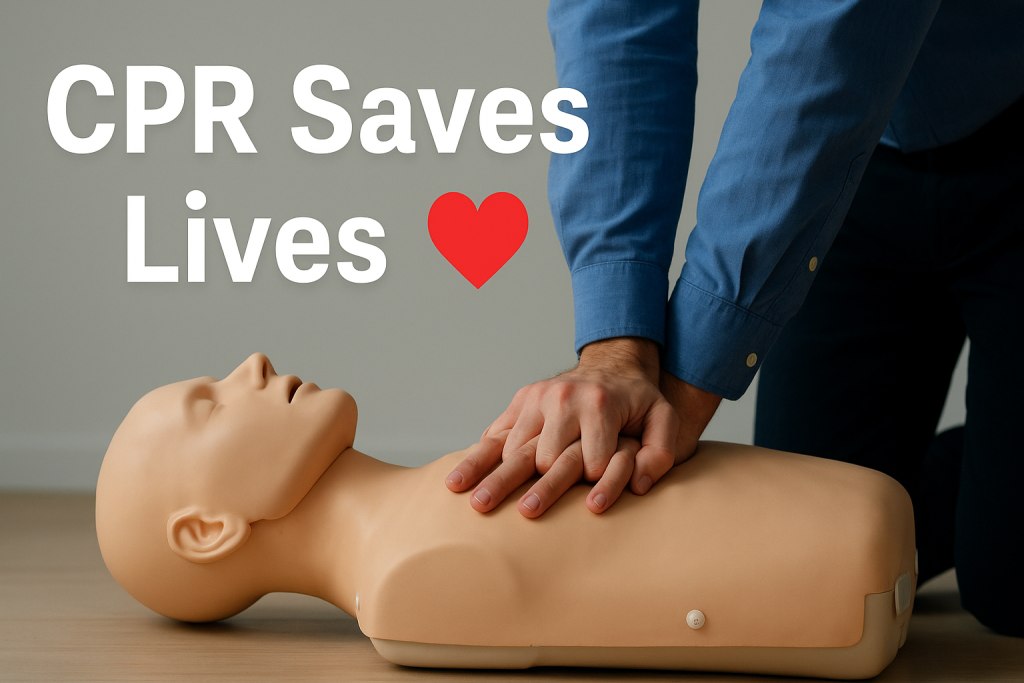
CPR (Cardiopulmonary Resuscitation) is a life-saving technique used in emergencies when someone’s heart stops beating or they stop breathing. It helps keep blood and oxygen flowing to the brain and other vital organs until professional help arrived
⚠️ When to Use CPR
You should start CPR immediately if a person:
Is unconscious and unresponsive
Is not breathing or is only gasping
Has no pulse (heartbeat not detectable)
Common causes include cardiac arrest, drowning, choking, electric shock, or severe trauma.
💡 Why CPR is Important
Every minute without CPR reduces survival chances by 7–10%.
Early CPR + early defibrillation (AED) can double or triple survival rates.
Anyone — not just doctors — can perform CPR with basic knowledge and courage.
🧠 Purpose of CPR
Chest compressions keep blood moving.
Rescue breaths (if given) provide oxygen to the lungs.
Together, they buy time until medical professionals arrive or an AED (defibrillator) is used.
Steps of CPR:
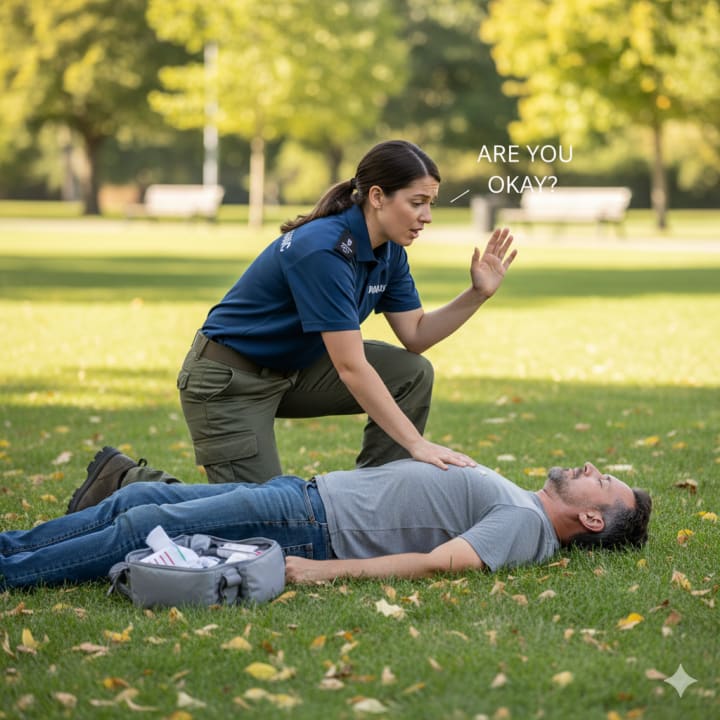
CPR Step No. 1: Check for Safety and Responsiveness 🩺
Before starting CPR, make sure the area is safe for both you and the victim — no fire, traffic, or electrical danger.
Then:
1. Tap the person’s shoulders gently.
2. Shout loudly: “Are you okay?”
3. Look for any response — movement, sound, or breathing.
➡️ If there is no response, call for help (or ask someone to call emergency services) and move to Step 2: Check for breathing.
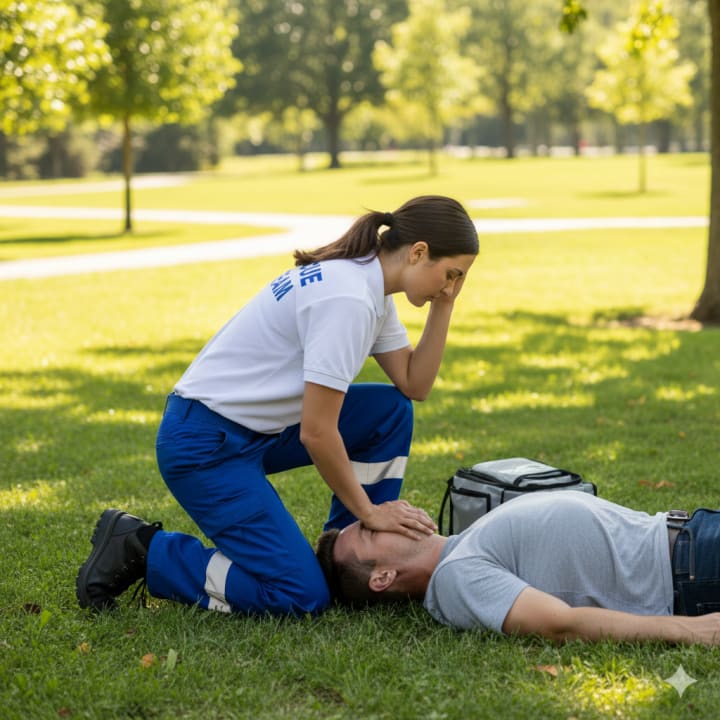
CPR Step No. 2: Check for Breathing 🫁
After confirming the person is unresponsive:
1. Tilt the head back and lift the chin to open the airway.
2. Look, listen, and feel for normal breathing —
Look for chest movement.
Listen for breath sounds.
Feel for air from the nose or mouth.
3. Spend no more than 10 seconds checking.
➡️ If the person is not breathing normally (or only gasping), move to Step 3: Call for help and begin chest compressions.
CPR step 3
1. Call emergency services (or ask someone nearby to do it).
In many countries, dial 112 or 911.
2. Ask for an AED (defibrillator) if one is available.
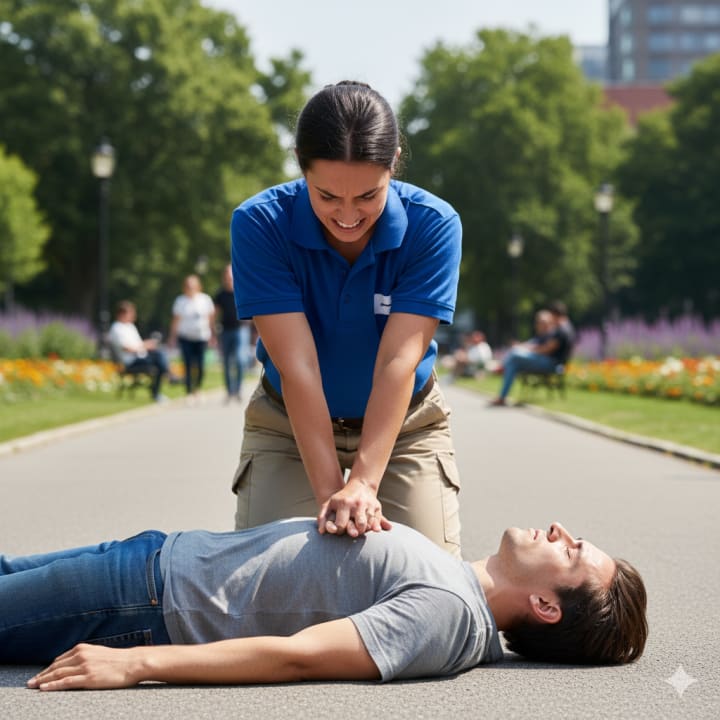
3. Start chest compressions immediately:
Place the heel of one hand on the center of the chest (lower half of the breastbone).
Put your other hand on top, fingers interlocked.
Push hard and fast, at least 5 cm (2 inches) deep.
Keep your arms straight, shoulders directly above your hands.
Compress at a rate of 100–120 per minute (like the rhythm of “Stayin’ Alive”).
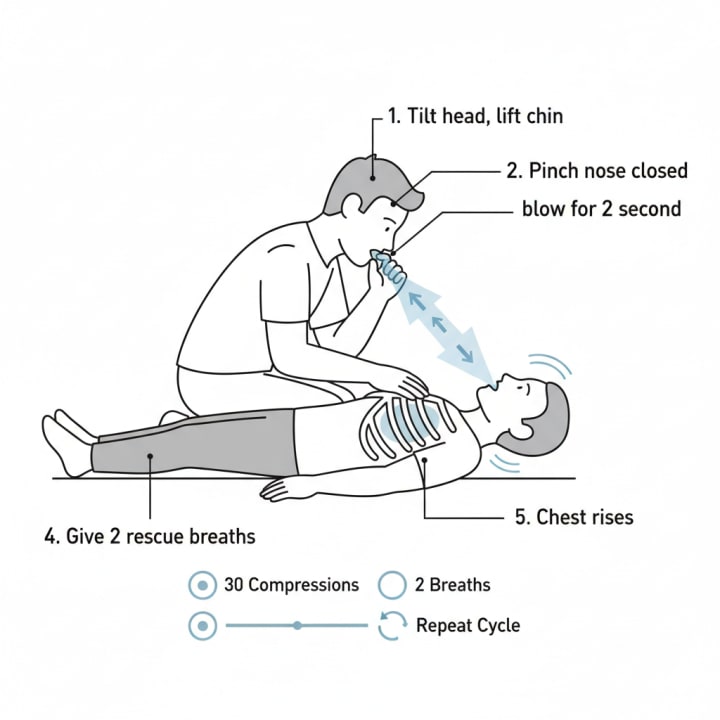
CPR Step No. 4: Give Rescue Breaths (30:2 Ratio) 💨💓
After completing 30 chest compressions:
1. Open the airway again — tilt the head back and lift the chin.
2. Pinch the nose closed with your fingers.
3. Take a normal breath, cover the person’s mouth completely with yours, and blow for 1 second — enough to make the chest rise.
4. Give 2 rescue breaths, then go back to 30 chest compressions.
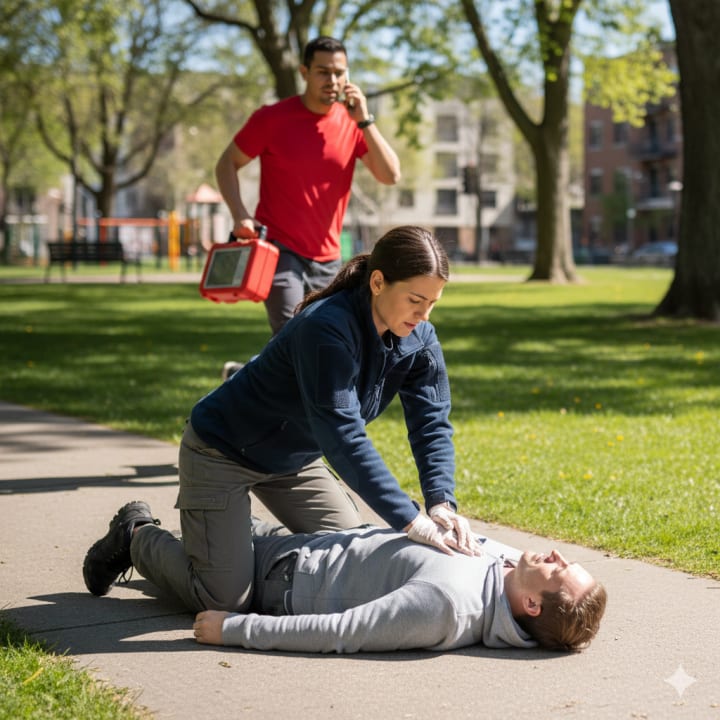
CPR Step No. 5: Continue CPR Until Help Arrives or the Person Responds 🚑💪
After repeating cycles of 30 compressions and 2 breaths:
1. Keep going — don’t stop CPR unless:
The person starts breathing normally or shows movement.
Emergency help arrives and takes over.
An AED (defibrillator) is ready to use.
You are too exhausted to continue safely.
2. If an AED becomes available:
Turn it on and follow the voice instructions immediately.
Resume CPR after each shock if told to do so.
➡️ The goal is to keep blood and oxygen flowing until professional medical help takes over.
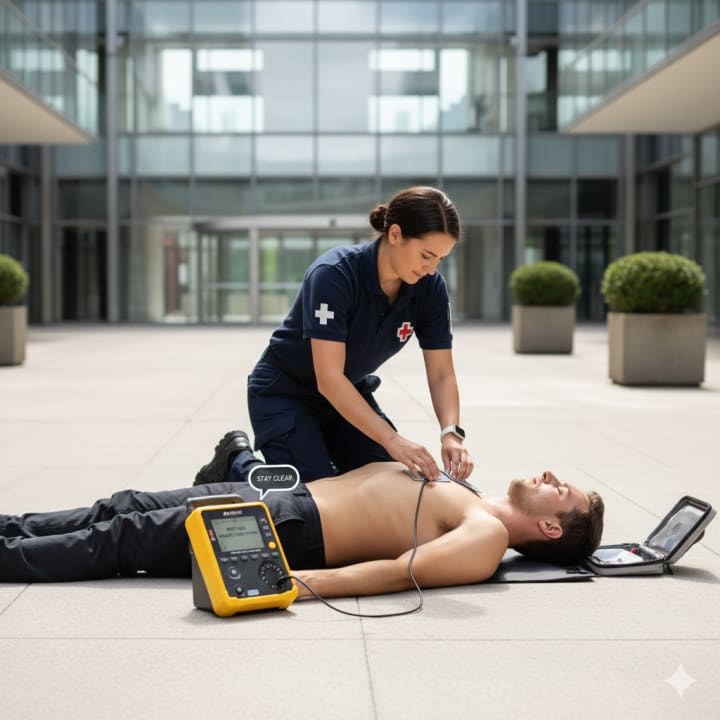
CPR Step No. 6: Use an AED (Automated External Defibrillator) ⚡❤️
When an AED arrives:
1. Turn it on immediately — it will give clear voice instructions.
2. Expose the person’s chest (make sure it’s dry).
3. Attach the AED pads as shown on the diagrams on the pads:
One pad on the upper right chest.
The other on the lower left side of the chest.
4. Ensure no one is touching the victim while the AED analyzes the heart rhythm.
5. If the AED says “Shock advised”, make sure everyone stands clear, then press the shock button.
6. Resume CPR immediately (30 compressions + 2 breaths) after the shock, following AED instructions until medical help arrives.
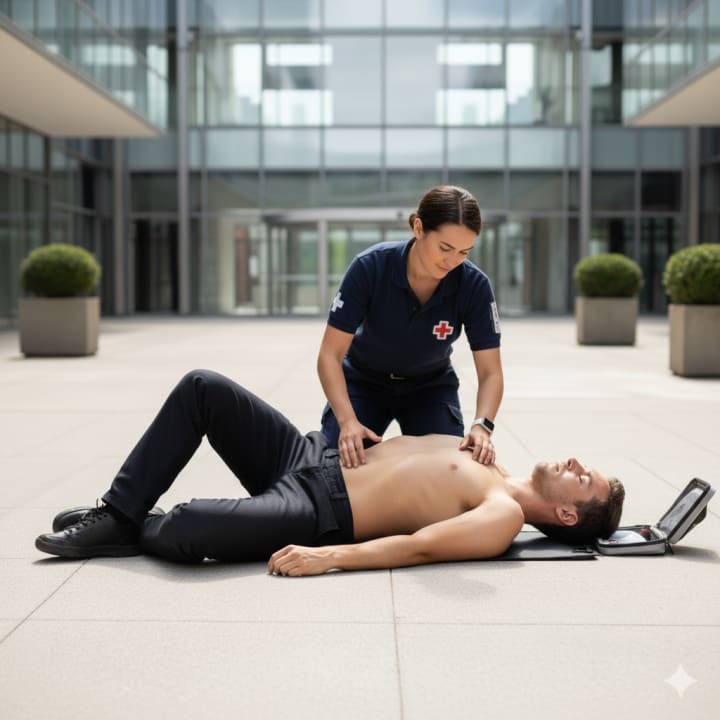
CPR Step No. 7: Place the Person in the Recovery Position 🌬️🧍♂️
Once the person starts breathing normally and shows signs of life, but is still unconscious:
1. Gently roll the person onto their side.
2. Make sure the head is tilted back slightly to keep the airway open.
3. Bend the top leg and arm to stabilize the body (so they don’t roll onto their stomach).
4. Monitor their breathing continuously until emergency help arrives.
5. If breathing stops again — start CPR immediately.
➡️ The recovery position helps keep the airway clear and prevents choking if the person vomits.
The End
About the Creator
Keep reading
More stories from Muhammad Asif and writers in Education and other communities.
Top 4 AI certifications to Land High-Paying Jobs in 2026
With artificial intelligence becoming a core business necessity in 2026, and organizations moving towards Agentic AI systems along with specialized infrastructure, the demand for professionals who can build, deploy, integrate, and even use these intelligent systems is growing.
By Anu shreya5 days ago in Education
🅼🅸🅳🅽🅸🅶🅷🆃 🆂🅽🅰🅲🅺🆂
"It's 10 in Tuscon! We all know what that means... It's Time for Midnight Snacks with your man, Gerald Gee! Ready to spend the night together? Me too! I'm full of snacks and can't wait to regurgitate them all back into your hungry ears. Crack a brew! Pop some corn! Anything to get ready for one hell of a show where the talk maybe cheap but the words cut deep...
By Lamar Wiggins4 days ago in Fiction




Comments
There are no comments for this story
Be the first to respond and start the conversation.