
Can your dreams predict the future?
Exploring the Science and Mysteries of Precognitive Dreams
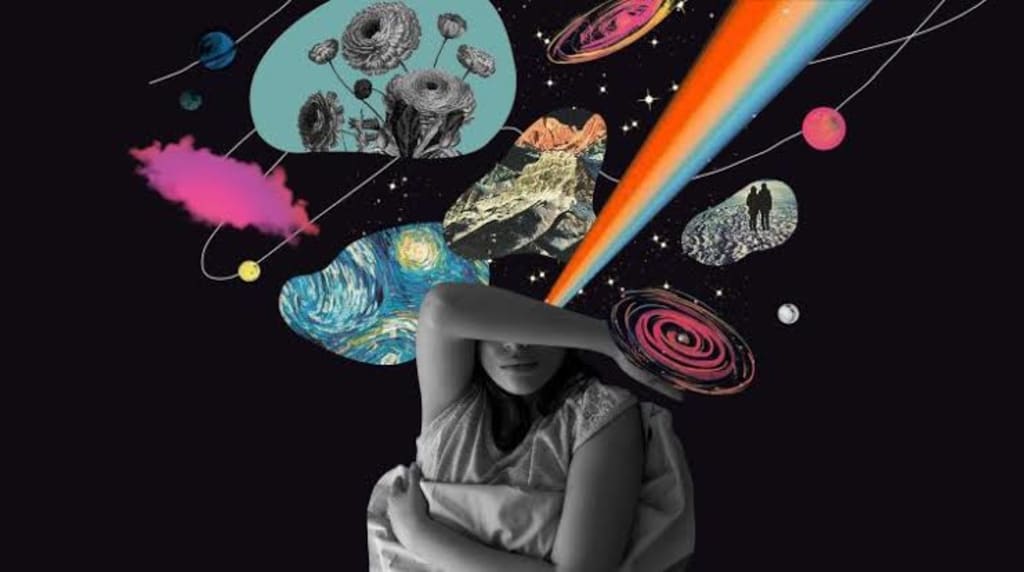
Have you ever had a dream that seemed to come true? Or perhaps a vision of the future that unfolded in reality shortly after? If so, you're not alone.
But how does this happen? Is it merely coincidence? While I can't conclusively say if precognitive dreams are real, a story I received piqued my interest in the subject. Let's delve into what precognitive dreaming is.
According to a study by the American Psychological Association, a precognitive dream is one that seems to contain information about the future that cannot be deduced from prior knowledge. These dreams provide glimpses of the future without relying on the five senses, memory, or logic. Have you ever had such an experience? These dreams are often memorable because of their strange accuracy. Although considered paranormal, research indicates that precognitive dreams are quite common, with up to 38% of large samples of people reporting at least one such dream. Women report them more frequently than men, and their occurrence appears to decline with age.
So why is the ability to have these dreams deemed unbelievable? What if they're more like instincts, something we rarely question? Instincts often come with physical sensations. A study by Northwestern University examined whether human physiology could predict significant future or emotional events. Participants were shown random pictures, and on average, they experienced physiological changes, like sweating, before seeing an image of a gun.
But can people truly predict the future, or is it just coincidence? It depends on your beliefs about time. Does time feel linear and always moving forward when you're awake, or is this an illusion?
If we view time as linear, predicting the future seems impossible. Newtonian physics, which operates on the principle of causality, states that an effect cannot occur before its cause. Precognitive dreams violate this principle. However, not everyone adheres to the Newtonian materialistic view. Some theories propose that consciousness is a fundamental aspect of reality, not merely a byproduct of brain activity. Quantum physics even supports the notion that observation can affect reality.
At the quantum level, objects are extremely sensitive to observation. You've likely heard of Schrödinger's cat, where the cat is both alive and dead simultaneously. This concept aligns with the idea of precognitive dreams as the transmission of information that can defy many laws, much like how information is transmitted via Wi-Fi.
Newtonian physics cannot explain this phenomenon, but quantum physics offers some insights. According to Einstein's theory of general relativity, time is just another dimension in space that can be traversed in either direction. This supports the "block universe" theory, which posits a four-dimensional universe where all points in time are equally real and occur simultaneously. This challenges the notion that the past is gone forever and the future is inaccessible, leading to the many-worlds or multiverse theory. This theory suggests that each moment creates a new possible future, branching into a new timeline.
One common vision in precognitive dreams involves car crashes, where the dreamer sees their own death behind the wheel and subsequently avoids driving, thus altering their timeline. Similarly, warning dreams about illnesses, such as breast cancer, often prompt individuals to seek early diagnosis, potentially saving their lives.
So, what about sleep allows us to break the linear flow of time? This brings us to paradoxical sleep, a stage where the brain is highly active but the body is paralyzed. Brain scans show that during this stage, brain wave activity is almost identical to when we're awake. Despite being asleep, our brains interpret visual cues and sensations without external stimuli, creating a paradox.
This brain activity supports the idea that our consciousness can have tangible effects on the physical world. For instance, changing behavior after a dream exemplifies consciousness influencing reality.
Given the billions of people dreaming every night, it's reasonable to think that some dreams are just coincidental.
But perhaps, just maybe, we can truly see the future.
About the Creator
Keep reading
More stories from writers in Education and other communities.
⭐ The Brave Life of James Forten —
James Forten was born in Philadelphia in 1766. He grew up near busy ships, tall sails, and people working hard every day. Even as a young boy, James was smart, kind, and always eager to help his family. He dreamed of doing something important with his life.
By TREYTON SCOTT7 days ago in Education


Comments
There are no comments for this story
Be the first to respond and start the conversation.