
Can Non-Muslims Teach Islam? A Critical Look at Al-Azhar’s Controversial Appointment
Examining the theological, ethical, and educational implications of a Coptic Christian professor teaching Islamic curriculum at a leading Islamic institution
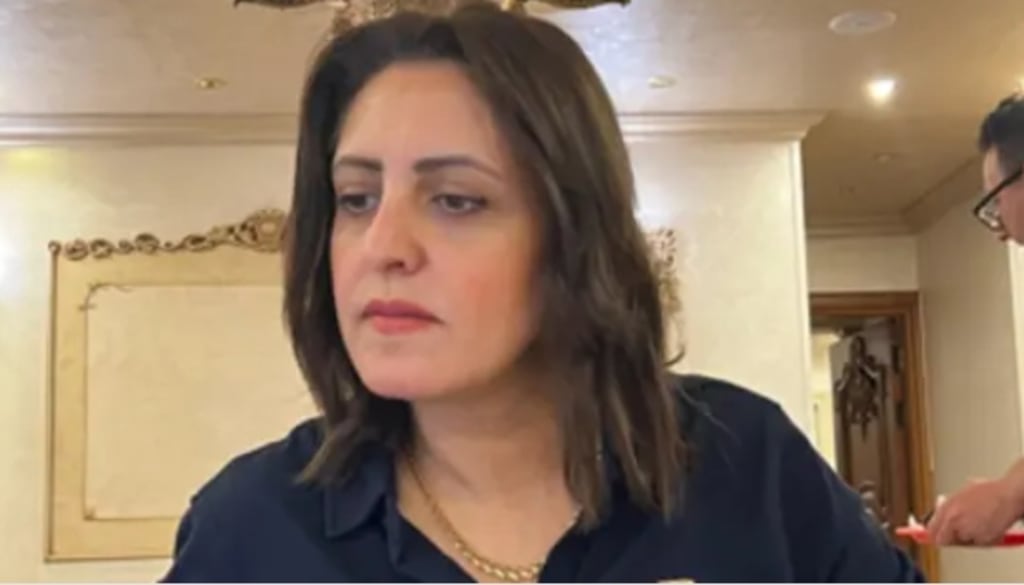
A Critical View on Non-Muslim Professors Teaching Islamic Curriculum: A Case of Christine Hanna
In the Islamic world, knowledge of religion holds a sacred status, particularly the sciences of the Qur’an, Hadith, Fiqh, and Arabic. These subjects are not merely academic but deeply spiritual and sacred. The notion that someone who does not believe in the foundations of Islam is teaching Islamic subjects at a prestigious religious institution like Al-Azhar University raises numerous legitimate concerns.
Christine Hanna, a Coptic Christian woman, has been teaching Islamic sciences at Al-Azhar’s Faculty of Islamic Studies in Port Said, Egypt, for over 23 years. This development is often portrayed in the media as a symbol of tolerance and inclusivity. However, from a critical Islamic perspective, this situation raises serious theological, ethical, and educational concerns that cannot be overlooked.
The Seriousness of Islamic Knowledge
Islamic knowledge is not merely academic or theoretical; it is a sacred trust (amanah) passed down from generation to generation through authentic chains (isnads) and pious scholars. The Prophet Muhammad (peace be upon him) emphasized that scholars are the inheritors of the prophets. So how can someone who does not believe in the finality of Prophethood or in the Qur’an as divine revelation be entrusted with its explanation and instruction?
Islamic knowledge demands not only intellectual effort but also faith (iman), reverence (ta’dheem), and spiritual connection. Teaching Qur’an, Hadith, and Islamic jurisprudence (fiqh) requires belief in its divine origin. When a person who does not share this belief teaches it, it reduces these sacred sciences to mere academic subjects, devoid of their spiritual sanctity.
The Precedent and Its Dangers
Allowing a non-Muslim to teach Islamic subjects sets a dangerous precedent. It opens the door for relativism and liberal reinterpretations of religion. What is the guarantee that such a teacher will deliver the content with the reverence and accuracy it requires? What is the guarantee that their ideological orientation will not influence the understanding of impressionable Muslim students?
Even if the individual adheres to the curriculum, their mere position as a teacher of Islam without faith can blur the lines between belief and unbelief (iman and kufr) in the minds of students. It sends the message that Islamic sciences are open to interpretation and instruction by anyone, regardless of belief, which contradicts the traditional framework of Islamic pedagogy.
Theological Inconsistency
From a theological perspective, Islamic sciences can only be fully understood and conveyed by someone who has embraced the core tenets of Islam. The Qur’an itself warns against taking knowledge from people who do not follow the truth. For example, in Surah Al-Ma’idah, verse 44, Allah says:
"And whoever does not judge by what Allah has revealed – then it is those who are the disbelievers."
If disbelief disqualifies one from implementing the Shari‘ah, how can it qualify one to teach it?
Misunderstanding of Tolerance
Promoting such appointments in the name of tolerance is misleading. Islam commands justice and respectful treatment of non-Muslims, but this does not equate to placing them in authoritative religious positions. Just as Muslims would not be allowed to teach theology in a Catholic seminary or preach from a church pulpit, non-Muslims should not be teaching in a mosque-based or Islamic seminary system.
True tolerance lies in peaceful coexistence and mutual respect, not in the dilution of religious boundaries. When non-Muslims are assigned roles within Islamic scholarship, it creates confusion, weakens the sanctity of knowledge, and dilutes the message of Islam.
Diminishing the Role of Believing Scholars
The appointment of Christine Hanna also brings into question the neglect of qualified Muslim scholars. In a world where thousands of believing Muslim women scholars are actively pursuing Islamic studies, why is preference being given to a non-Muslim? What message does it send to those who have dedicated their lives to Islamic education out of love and belief?
The Symbolism of Al-Azhar
Al-Azhar is not just any university; it is historically one of the highest seats of Islamic learning. To allow non-Muslims to teach Islam within its walls undermines its identity and mission. The pride of Al-Azhar lies not in superficial inclusivity but in preserving the purity and sanctity of Islamic knowledge.
Final Thoughts
Christine Hanna’s long tenure as a teacher of Islamic subjects is not a success story; rather, it is a reflection of the academic secularization of religious sciences. Instead of being celebrated, it should prompt serious introspection within the Muslim world about who is entrusted with sacred knowledge. The duty of Muslims is to protect their religious legacy and ensure that the light of Islam is spread by those who believe in it wholeheartedly—not merely through qualification, but through faith and conviction.
Muslim communities, institutions, and scholars must critically assess such practices and reassert the importance of faith-based transmission of Islamic sciences. The Qur’an, Hadith, and Shari‘ah are not open to interpretation by those who reject them. Upholding the integrity of religious knowledge is not extremism—it is a necessary duty upon the Ummah.
About the Creator
Keep reading
More stories from Ikram Ullah and writers in Education and other communities.
A Lecture of Compassion
In the modern race for academic and professional success, young women—especially mothers—are often forced to choose between motherhood and education. For some, the dream of higher education is paused or even ended due to the rigid systems that fail to accommodate the complex realities of their lives.
By Ikram Ullah6 months ago in Education
Speak and Be Heard: A Beginner’s Guide to Becoming a Podcast Host and Growing Your Audience
Becoming a podcast host is an exciting way to share your ideas, inspire others, and build a strong community. Whether you want to teach, entertain, or have great conversations, podcasting gives you a voice that can reach people around the world. But starting a podcast and growing an audience takes more than just a microphone. It requires planning, patience, and a real connection with your listeners. In this guide, you'll learn how to become a podcast host and grow your audience step by step.
By Spencer Hakimian4 days ago in Education


Comments
There are no comments for this story
Be the first to respond and start the conversation.