
Can Artificial Intelligence take over jobs?
Read this Article
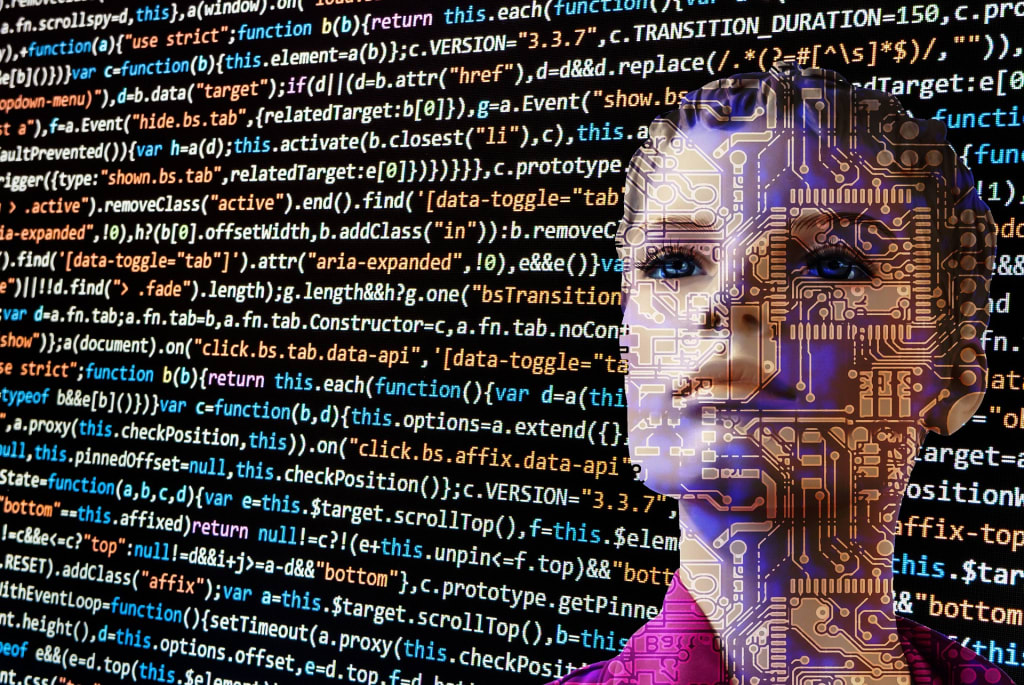
Artificial intelligence (AI) has been a rapidly growing technology in recent years, with many industries incorporating it into their operations. However, there is growing concerned about the impact of AI on employment, particularly whether it will replace human workers. In this blog post, we will explore the question of whether AI can take over jobs and what the potential consequences of this would be.
Before we can discuss the impact of AI on jobs, it is important to understand what AI is. AI refers to the ability of machines to perform tasks that would normally require human intelligence. This includes tasks such as problem-solving, pattern recognition, and decision-making. AI is achieved through the use of algorithms, which are sets of instructions that tell machines what to do. These algorithms are usually based on machine learning, which involves machine learning from data and improving its performance over time.
The impact of AI on jobs is a topic of much debate. On the one hand, AI has the potential to create new jobs and increase productivity, while on the other hand, it could lead to job displacement and unemployment. Let us look at each of these possibilities in more detail.
AI could create new jobs:
One of the main arguments in favor of AI is that it could create new jobs. For example, AI could be used to develop new products and services, requiring human workers to design, market, and sell them. AI could also be used to improve existing products and services, requiring workers to maintain and repair them.
Another area where AI could create new jobs is research and development. AI could be used to analyze large amounts of data, which could help researchers to discover new treatments for diseases, develop new technologies, and improve our understanding of the world.
AI could increase productivity:
Another argument in favor of AI is that it could increase productivity. AI could be used to automate routine and repetitive tasks, which would allow workers to focus on more complex and creative tasks. This could lead to increased efficiency and productivity, which could benefit both employers and employees.
AI could lead to job displacement:
Despite the potential benefits of AI, there is also concern that it could lead to job displacement. AI could be used to automate many jobs that are currently performed by humans, such as manufacturing, customer service, and transportation. This could lead to significant job losses in these industries, particularly for low-skilled workers.
The potential consequences of AI taking over jobs:
If AI does take over jobs, there could be significant consequences for society as a whole. Some of the potential consequences include:
Increased unemployment:
If AI takes over jobs, there could be a significant increase in unemployment. This could lead to a number of social and economic problems, such as poverty, crime, and social unrest.
Widening income inequality:
As mentioned earlier, AI could lead to a widening of the income gap between high-skilled and low-skilled workers. This could lead to a situation where a small group of highly skilled workers controls most of the wealth, while the majority of workers struggle to find employment.
Social unrest:
If AI takes over jobs and increases unemployment and income inequality, it could lead to social unrest. People who are unable to find employment or who are struggling financially may become frustrated and angry, which could lead to protests, strikes
It refers to the development of computer systems that can perform tasks that normally require human intelligence, such as visual perception, speech recognition, decision-making, and language translation.
About the Creator
Keep reading
More stories from Abdur Rahman and writers in Education and other communities.
Future of Artificial intelligence
Artificial intelligence (AI) has been a rapidly growing technology in recent years, with many industries incorporating it into their operations. From speech recognition and image classification to natural language processing and machine learning, AI has revolutionized the way we interact with machines and the world around us. In this blog post, we will explore the future of AI, its potential applications, and the impact it could have on society.
By Abdur Rahman3 years ago in Education
Life in the Ranks: The Overlooked Struggles of Military Service
Military life is often admired from a distance. The uniform, the discipline, and the mission all project a powerful image of strength. Yet, behind this image are real people facing real challenges. The structured lifestyle and constant state of readiness can be mentally and emotionally exhausting. Service members don’t just serve during deployments—they live a demanding reality every day, regardless of where they are stationed.
By Trish Schnabelabout 19 hours ago in Education
The Duelist
The rays of a dying red sun flashed against the onrushing blade. The grey beards say the key to dueling lies in size, speed, reach, righteous fury, whatever the person in front of them pays them to say. Matteo knew better than any it was none of these and had an undefeated record on these sands to prove it.
By Matthew J. Fromma day ago in Fiction


Comments
There are no comments for this story
Be the first to respond and start the conversation.