
Cambridge: Where Minds Meet Destiny
“A Journey of Dreams, Challenges, and Triumph”
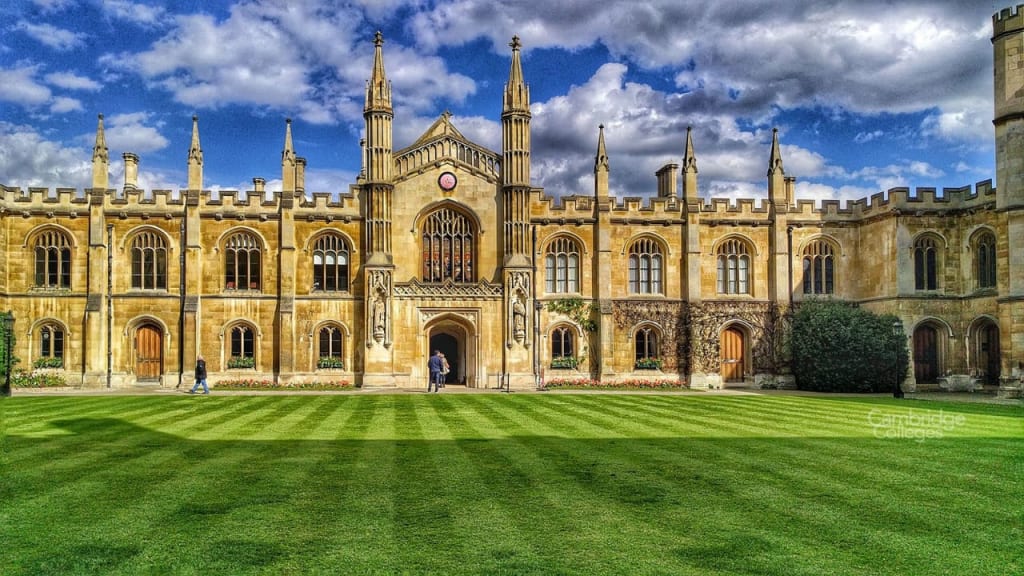
The sky above Cambridge shimmered in soft hues of gold and grey. The ancient buildings, grand and timeless, stood like guardians of knowledge. For Uzair Zaman, a young dreamer from the crowded alleys of Peshawar, this was not just a university; it was a destination written in his soul.
Growing up in a modest home with limited resources, Uzair had always been different. Where others saw limits, he saw possibilities. Books were his only companions, and ambition was his fuel. Nights often passed in darkness due to frequent power outages, but he would light candles to continue reading. His father, Zahid Khan, a man of wisdom despite limited education, often reminded him, "Beta, one day your mind will take you where your feet cannot."
Cambridge had always been that place in Uzair's imagination. It wasn't just about the academics or the prestige; it was about what it symbolized — the ultimate destination of merit, the center of ideas, the birthplace of revolutions. And when, against all odds, Uzair received his acceptance letter, it wasn’t just a personal victory. It was a moment of pride for his entire neighborhood, for his entire city.
Upon arrival, Cambridge was everything Uzair had imagined and more. The cobbled streets, the age-old libraries, the crisp air of intellect — it was breathtaking. But alongside the awe came a quiet fear. Everyone around him spoke fluent English with polished accents. They quoted philosophers he had never read, referenced ideologies he hadn’t studied, and moved with a confidence he hadn't yet known.
The first few weeks were especially tough. His essays returned bleeding in red ink. His accent made him hesitant to speak up in seminars. He missed his home, his mother’s food, his father’s advice, and the sound of the call to prayer echoing through Peshawar. But each morning, he reminded himself why he was there: not just for a degree, but to break a barrier, to build a bridge between worlds.
Uzair's turning point came in his second term. A visiting professor from Oxford, known for his strict standards, read Uzair's paper on post-colonial thought. He called Uzair to his office and said, "This essay? It’s not just academic. It’s powerful. You speak with a voice shaped by experience. That matters more than perfect grammar."
That single moment shifted something in Uzair. He began to engage more confidently. He spent extra hours in the library, not just studying, but writing articles, essays, and reflections on the immigrant experience, on South Asian history, on the identity of being both Eastern and Western. Slowly, his professors began to take notice. His peers began to ask him for insight. And Uzair began to realize that he belonged, not because he changed himself, but because he embraced who he already was.
In his final year, Uzair launced a writing initiative for underprivileged youth in Pakistan, connecting them with mentors from universities across the UK. His goal was simple: to help other kids like him see what was possible.
"Cambridge changed my life," he once wrote in a published article. "But it didn’t change who I was. It helped me find the strength to be more of who I am."
Graduation day was emotional. As Uzair stood in the courtyard, dressed in the traditional black gown, he looked up at the grey sky and felt the same softness as the day he arrived. His father, who had flown in for the occasion, stood quietly beside him, his eyes moist.
"You did it, beta," he whispered.
But Uzair knew it wasn't just him. It was every child who dared to dream with an empty pocket but a full heart. It was for every student who felt like an outsider, every immigrant who carried the burden of proving their worth.
Years later, Uzair would return to Cambridge, not as a student, but as a guest speaker. He would walk those same stone corridors, not with nervousness, but with purpose. He would remind new students, "This place may feel big. You may feel small. But if your dream brought you here, then you already belong."
Because Cambridge isn’t just about history, or prestige, or stone buildings.
It’s about minds that rise above circumstances.
It’s about destinies that are chosen, not given.
And for Uzair Zaman, it was always clear:
Cambridge was where his mind met his destiny.
About the Creator
Wuthering Heights uni module given content warning for students"
The 1847 novel Wuthering Heights has long been considered one of the most intense works in English literature. Written by Emily Brontë, the book explores obsession, revenge, cruelty and emotional torment on the Yorkshire moors. Now, nearly two centuries after its publication, the novel has become the center of a modern academic debate after a university module introduced a content warning for students studying the text.
By Fiaz Ahmed 3 days ago in Education
How Hot-Dip Galvanizing Saves Maintenance Costs Over Time for Steel Infrastructure
Steel is a key material in modern infrastructure. It is used in bridges, buildings, towers, fences, and many industrial systems. Steel offers strength and reliability, but it can rust when exposed to air and water. Rust slowly weakens steel and creates serious maintenance challenges. To prevent this damage, many industries rely on hot-dip galvanizing.
By Frontier Galvanizing4 days ago in Education
A Transparent Look at Vocal Challenges and Top Stories
Almost three years ago, we shared a resource article that served as a place for people to suggest new challenge prompts. We thought it would be a good idea to refresh that thread, and take the opportunity to answer a few common questions about top stories, how challenges are judged and how submissions are reviewed.
By Vocal Curation Team4 days ago in Resources



Comments
There are no comments for this story
Be the first to respond and start the conversation.