
Call for Promoting Humanistic Education
The Peace School's Initiative (Canada)

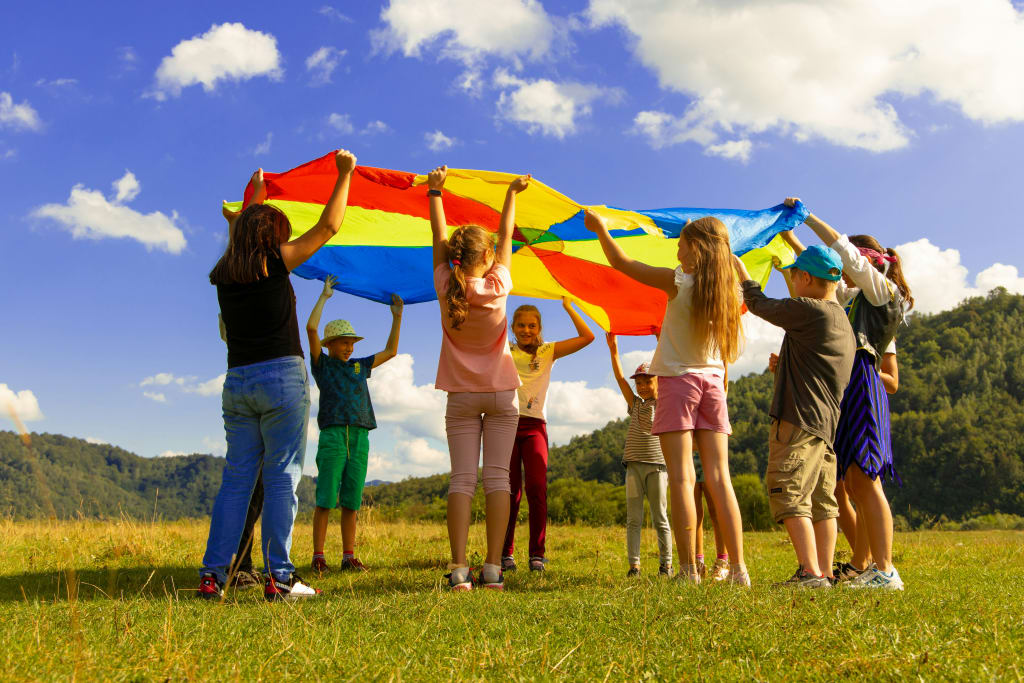
The Peace School’s Board of Advisors and Board of Directors are issuing an urgent call to promote humanistic, democratic, peace-oriented, and rights-based education worldwide.
We invite policymakers, educators, academics, and school leaders to join this important movement and become part of the Global Network of Humanistic School Advocates, a collaborative effort to advance inclusive and values-based education for all children.
Together, we can amplify this message, inspire change, and create a global community committed to education that nurtures both minds and hearts. We encourage all supporters to share this call within their communities and professional networks.
--
We, as a group of experts in the field of child education and advisors at The Peace School, invite all educational institutions to join us in promoting democracy, peacebuilding, and humanism. The Peace School in Canada warmly invites all educational centers, professionals, organizations, and individuals who are passionate about fostering a culture of peace to engage in meaningful collaboration.
Though we are an independent school based in Ontario, Canada, we do not define ourselves by the walls of a building or the limited number of students in a remote corner of the world. The Peace School has officially introduced itself as a school rooted in humanistic psychology and an alternative, human-centred approach to education and committed to providing equitable and inclusive learning opportunities for all students, without discrimination.
Humanistic education is a pedagogical approach founded on respect for human dignity and the diverse individual, social, cultural, and group differences of all learners. It emphasizes the holistic development of each student within their closer and wider communities, while fostering empathy, freedom, and a sense of meaning in the learning journey. This approach views the child not merely as a recipient of knowledge but as a full and active human being. A child who needs to be seen, heard, and given space to thrive. In a humanistic system, students have the right to choose and participate in planning and shaping the content of their learning alongside educators, families, and their local communities.
We are a democratic, peace-oriented, rights-based and humanistic school.
Yet we believe that being democratic alone does not guarantee peace, and peace-centred systems are not always inherently democratic. That’s why we emphasize the importance of uniting three guiding principles: democracy, peacebuilding, and humanism. Together, they can lead us to a better world.
The Peace School’s Board of Directors and its international Board of Advisors (comprised of some of the most respected experts in the field) believe that our vision and programs should not be confined to our school alone, but need to actively engage and collaborate with like-minded institutions and organizations.
Our educational philosophy is open to all schools and learning institutions.
We do not see our work as being in competition with any educational organization. Rather, we genuinely invite all institutions, professionals, and educational leaders worldwide to join us in promoting schools that are peaceful, humanistic, and democratic.
What Can Humanistic Schools Offer?
We want to prepare the world to be a better place for everyone.
We empower students to practice empathy, compassion, cooperation, and love for humanity. We go beyond memorization, helping students engage with learning that is shaped by life. We respect individual needs while prioritizing collective well-being.
We empower students to ask questions, think critically, create boldly, and seek just solutions to real-life challenges.
We practice equity and fairness with all students, in both content and relationships. We free students from the stress of competition, comparison, grading, and the obsession with individual success at any cost.
We give students the chance to speak, express opinions, pursue dreams, and take part in shaping their own educational journey.
We invite families to be active participants in shaping content, organizing curriculum, and co building progressive education.
We prepare learners to lead lives based on nonviolence, sustainability, and respect for all international human rights and peace treaties.
We believe this vision can lead us to a future where policymakers and global leaders put human dignity and collective well-being at the heart of every plan and policy.
We deeply believe in the transformative power of education to build a peaceful future. And to reach that future, we must begin today, together.
Join Us
We invite you to be a part of this movement.
Contact us
Share your skills, your expertise, your passion.
Together, we can build the schools and the future, the future the world truly needs.
Names of Experts, Alphabetically Arranged:
Clements, Je’anna, Author and expert on peace and democracy education. South Africa Dowling, Georga, Professional in Early Childhood Education. Ireland
Dunn, Theresa, Peace Professional & Community. Canada
Dr. Firth, Rhiannon, Professor of Sociology of Education , England
Fisher, Hannah, an international film programmer. Canada
Fransham, Richard, Lead Education Specialist and Director of Uniting for Children and Youth. Canada
Groiss, Gabriel, Lead Specialist in Democratic Education. Germany
Graner, Henning, Lead Specialist in Democratic Education. Germany
Heidari, Vida, Children's art specialist. Canada
Ibrahim, Iman, Author, Expert in Life Coaching, Leadership and Conflict Resolution, Canada
Jacobsen, Scott Douglas, Author, editor‑in‑chief and publisher. Canada
Jelenic, Shalie, practitioner of yoga philosophy. Canada
Dr. Mansouri, Arash, entrepreneur and technology leader. Canada
Dr. Moreno-Romero, Charlie, Lead Specialist in Democratic Education, Estonia
Dr. Müller, Frank J., Professor of Inclusive Education. Germany
Parcher, Simon, President, Humanist Perspectives Magazine. Canada
Dr. Robertson, Lloyd Hawkeye, Lead Professor of Counselling Psychology. Canada Uesugi, Yuko, Global and Bilingual Education Expert. Japan
Yousefi, Baran, Health Policy and Management Specialist. Canada
Dr. Yousefi, Nasser, Specialist in Humanistic education. Canada
Note: This statement draws upon the theoretical perspectives of prominent psychologists and humanistic education scholars, including Carol Rogers, Abraham Maslow, Paulo Freire, and Loris Malaguzzi.
References:
United Nations. (1989). Convention on the Rights of the Child. Treaty Series, 1577, 3.
UNESCO, Futures of Education Report - Reimagining our futures together: A new social contract for education, 2021
Council of Europe, Reference Framework of Competences for Democratic Culture, 2016
UN Office of the High Commissioner for Human Rights Report on the right to education - Securing the right to education: advances
About the Creator
Scott Douglas Jacobsen
Scott Douglas Jacobsen is the publisher of In-Sight Publishing (ISBN: 978-1-0692343) and Editor-in-Chief of In-Sight: Interviews (ISSN: 2369-6885). He is a member in good standing of numerous media organizations.
Keep reading
More stories from Scott Douglas Jacobsen and writers in Education and other communities.
Khrystyna Drahomaretska: Why a Ukrainian Architect Chose Frontline Animal Rescue During a Long War
Khrystyna Drahomaretska is a 28-year-old Ukrainian animal rescuer and architect who left her profession after Russia’s full-scale invasion. She works as a stray-animal catcher and evacuates pets from combat areas, operating amid shelling and mines. In Toretsk, three guided aerial bombs detonated near her; in Vovchansk, she suffered shrapnel wounds during mortar fire while rescuing animals. She founded the Under the Sun shelter in Ukraine’s Odesa region, caring for 250 dogs, many of whom were treated, socialized, sterilized, vaccinated, and rehomed; about 70 percent are adopted abroad. She is UWARF’s country manager and partners with 12 Vartovykh, Animal Rescue Kharkiv, and UAnimals.
By Scott Douglas Jacobsen3 days ago in Education
Best Laptop for Work
Work has changed and so has the kind of laptop you need. Whether you're juggling meetings, multitasking through heavy workloads, or working remotely across time zones, the right laptop can completely transform your productivity. But picking the perfect one? That’s where it gets overwhelming.
By Tab Delite7 days ago in Education
Leading in a Remote World: Tips for Virtual Team Success
In today’s fast-paced, interconnected world, remote work has become more than just a trend—it’s a fundamental shift in how businesses operate. Leaders now face the unique challenge of managing virtual teams while ensuring productivity, collaboration, and team morale. This article delves into practical tips for successfully leading remote teams and overcoming common obstacles.
By Sanjeev Kumar3 days ago in Education




Comments (1)
As an American patriot… thank you, Canada!