
Calculating Volume in Liters: A Handy Guide for Everyday Life
Tips to calculate volume in litres
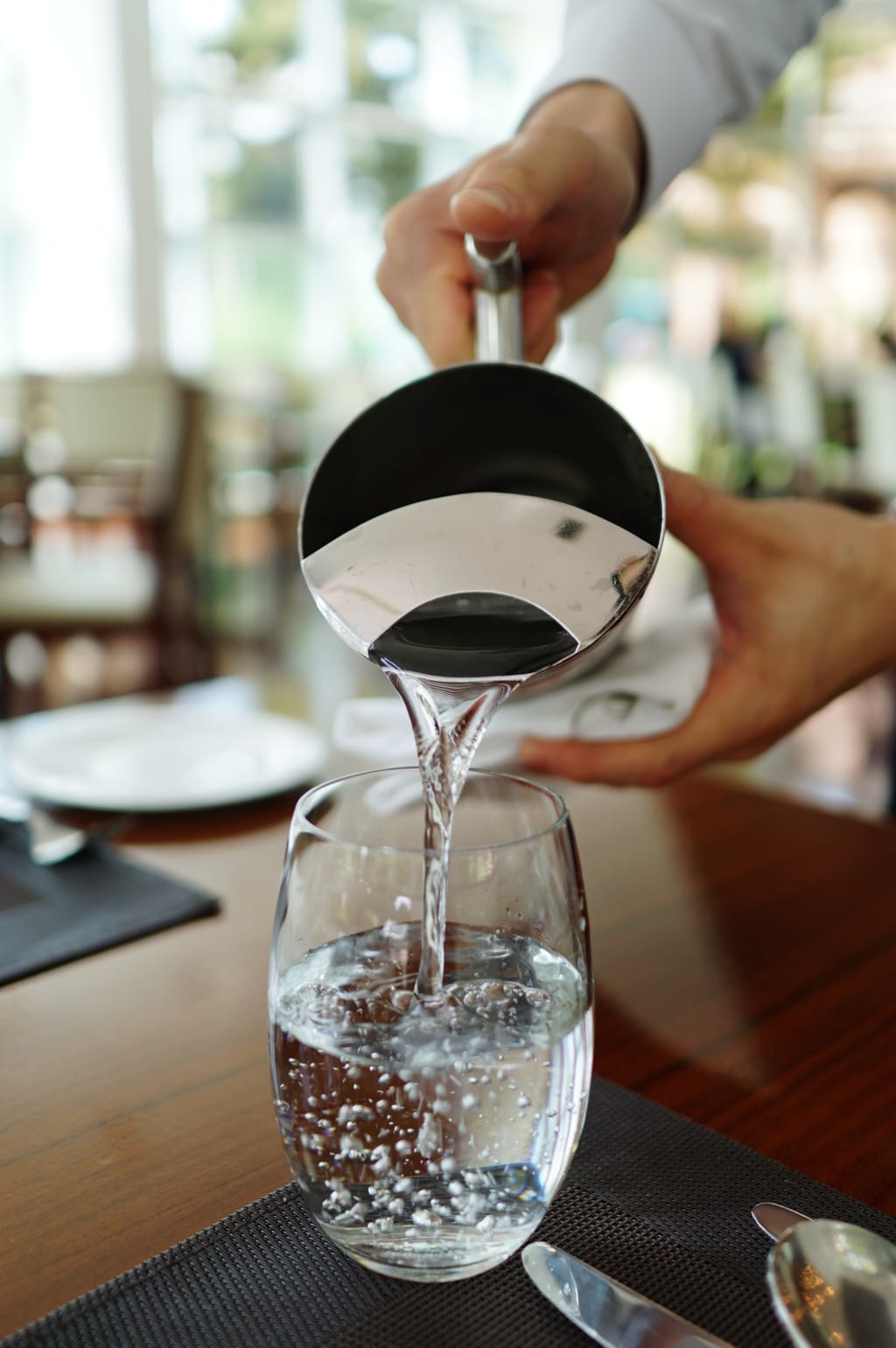
Volume is a fundamental measurement used in various aspects of everyday life, from cooking to construction to manufacturing. It is the amount of space occupied by an object or substance, often measured in liters. Liters are a common unit of volume in the metric system, which is widely used around the world. In this article, we will explore how to calculate volume in liters and understand its practical applications.
Understanding Volume:
Volume is the measure of three-dimensional space occupied by an object or substance. It can be thought of as the amount of space an object or substance takes up. Volume is usually expressed in cubic units, such as cubic meters (m^3), cubic centimeters (cm^3), or cubic inches (in^3), depending on the system of measurement used. In the metric system, the litre (L) is the unit of volume most commonly used for everyday calculations.
Calculating Volume in Litres:
Calculating volume in litres involves a simple mathematical formula, depending on the shape of the object or substance being measured. Let's look at some common shapes and how to calculate their volume in litres.
Rectangular/Square Prism:
A rectangular or square prism is a three-dimensional shape with six faces, where the opposite faces are parallel and equal in shape and size. To calculate the volume of a rectangular or square prism in litres, you need to know the length (l), width (w), and height (h) of the object, and use the following formula:
Volume (V) = length (l) × width (w) × height (h)
Once you have the length, width, and height of the object in the same unit of measurement (e.g. centimeters, meters), you can simply multiply them together to obtain the volume in cubic units. To convert the volume from cubic units to litres, you need to divide the volume by 1000, since 1 litre is equivalent to 1000 cubic centimeters (cm^3) or 1 cubic decimeter (dm^3).
Cylinder:
A cylinder is a three-dimensional shape with two parallel circular bases of equal size connected by a curved lateral surface. To calculate the volume of a cylinder in litres, you need to know the radius (r) of the circular base and the height (h) of the cylinder, and use the following formula:
Volume (V) = π × radius (r)^2 × height (h)
where π (pi) is a mathematical constant approximately equal to 3.14159. Once you have the radius and height of the cylinder in the same unit of measurement, you can plug them into the formula and calculate the volume in cubic units. To convert the volume from cubic units to litres, you need to divide the volume by 1000.
Sphere:
A sphere is a perfectly symmetrical three-dimensional shape with all points on its surface equidistant from its center. To calculate the volume of a sphere in litres, you need to know the radius (r) of the sphere, and use the following formula:
Volume (V) = (4/3) × π × radius (r)^3
where π (pi) is a mathematical constant approximately equal to 3.14159. Once you have the radius of the sphere in the same unit of measurement, you can plug it into the formula and calculate the volume in cubic units. To convert the volume from cubic units to litres, you need to divide the volume by 1000.
Irregular Shapes:
Calculating the volume of irregular shapes can be more challenging and may require the use of more advanced mathematical techniques or specialized tools, such as a computer software or a physical displacement method. One common method for irregular shapes is the displacement method, which involves immersing the object in a liquid and measuring the change in liquid volume.
To calculate the volume of an irregular shape using the displacement method, you will need a container with a known volume, such as a graduated cylinder or a measuring cup, and a liquid that the object can be submerged in without reacting or dissolving. Here's how you can do it:
Step 1: Fill the container with a known volume of liquid, making sure to record the initial volume.
Step 2: Carefully submerge the irregular object in the liquid, making sure there are no air bubbles trapped around the object.
Step 3: Measure the new volume of the liquid, making sure to record the final volume.
Step 4: Calculate the difference between the initial and final volumes of the liquid. This difference represents the volume of the irregular object.
Step 5: If the volumes were measured in cubic units, you can convert the volume to litres by dividing it by 1000.
It's important to note that the displacement method may not be suitable for all irregular shapes, and in some cases, more advanced techniques may be required. For complex shapes, using computer software or seeking professional help may be necessary to accurately calculate the volume in litres.
In conclusion, calculating volume in litres involves simple mathematical formulas for regular shapes, such as rectangular prisms, cylinders, and spheres. However, for irregular shapes, more advanced techniques may be required. Understanding the shape of the object or substance being measured and using the appropriate formula or method is crucial for accurate volume calculations. Whether it's for cooking, construction, or other everyday tasks, knowing how to calculate volume in litres can be a valuable skill in various aspects of life.
About the Creator
Keep reading
More stories from Jane Smith and writers in Education and other communities.
Top 6 Trending Tools for App Development in 2023
In 2023, there is an app for all the everything. It has become a necessity for every business to have an app of its own. No doubt, when you head over to the app development company, they will tell you everything you need to know.
By Jane Smith3 years ago in Lifehack
Fascinating Facts About Mosquitoes
Mosquitoes, which we often consider ordinary insects, are actually among the most dangerous creatures on Earth. They are responsible for more human deaths each year than any other animal, making them the deadliest species on the planet. Legend even suggests that mosquitoes contributed to the death of Alexander the Great.
By Sudais Zakwan2 days ago in Education
The Discipline Line That Protects Every Serious Trader
A lack of opportunity rarely destroys long-term trading success. A single uncontrolled loss far more often destroys it. Markets move quickly, emotions react faster, and hesitation at the wrong moment can erase months or years of progress. Pre-defined stop losses are in place to prevent that outcome.
By Agast Mishra3 days ago in Education



Comments
There are no comments for this story
Be the first to respond and start the conversation.