
Burj Khalifa: Where Human Ambition Touches the Sky – A Journey Beyond Limits
A powerful narrative exploring the world’s tallest building as a symbol of innovation, unity, and the future of human possibility.
Introduction
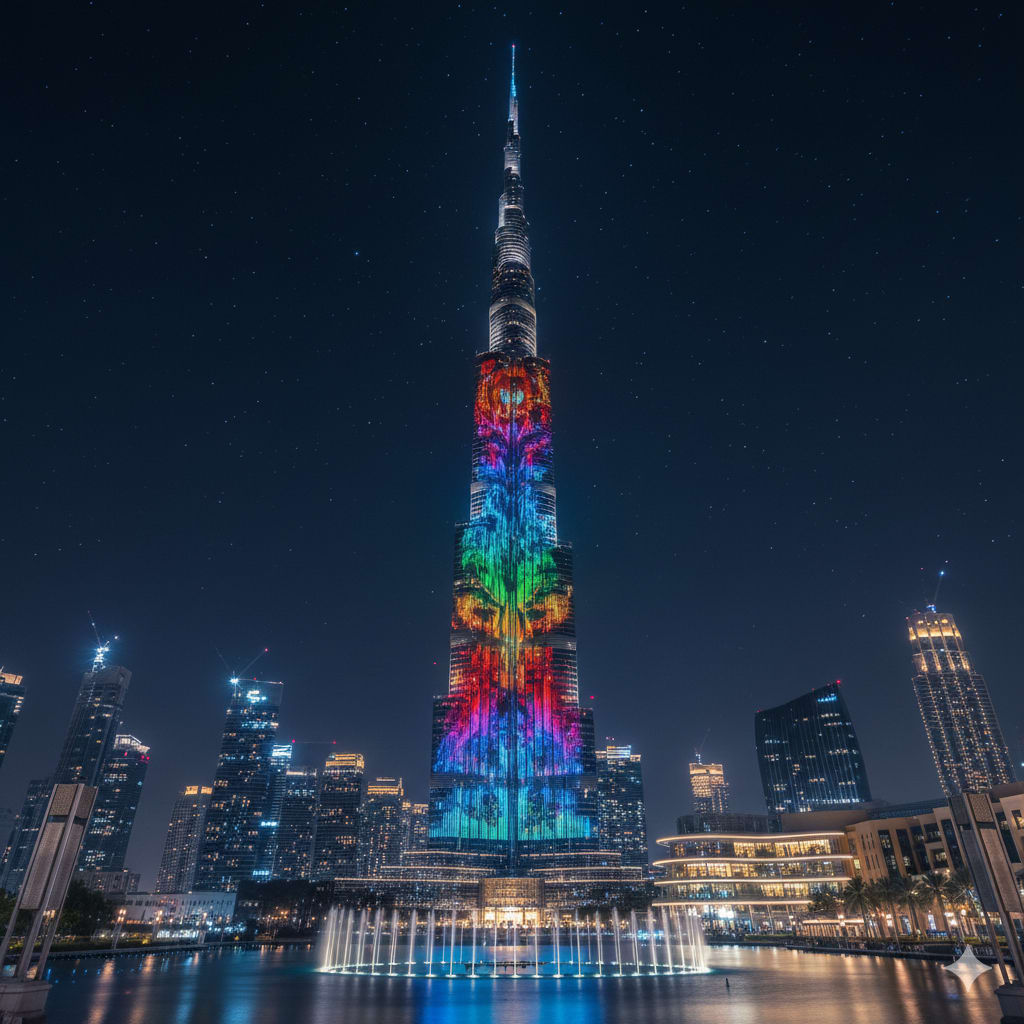
In the heart of Dubai, piercing the skies at a breathtaking height of 828 meters, stands more than just a building—it stands a statement. A statement of what humanity is capable of when dreams meet dedication and vision aligns with innovation. The Burj Khalifa is not merely the world’s tallest building; it is a global symbol of persistence, architectural mastery, and the timeless human pursuit to break boundaries.
Dubai may once have been a small desert trading town, but today, it is a city synonymous with luxury, innovation, and futuristic ambition. And at its center, pointing toward the heavens, stands the Burj Khalifa—an architectural masterpiece born from ambition and delivered through collaboration involving over 100 nationalities. Completed in 2010, this tower is not just an engineering success, but also a cultural landmark that redefined what is possible.
This Vocal Media article explores the Burj Khalifa not simply through its numbers or records, but as a story of human courage, innovation, global unity, and future vision. Whether you admire it for its structural marvel, artistic elegance, or symbolic greatness, one thing is certain—it represents the heights we can reach when we believe in something greater than limitations.
The Vision Behind Burj Khalifa
The story of Burj Khalifa begins with one man's ambition—His Highness Sheikh Mohammed bin Rashid Al Maktoum, the ruler of Dubai. His vision was simple yet revolutionary: Dubai should not compete locally; it should lead globally. The construction of the Burj was not just to break the world record but to place Dubai on the world map as a hub of tourism, innovation and future-forward thinking.
The tower was envisioned as the heart of the Downtown Dubai development project, transforming desert land into a modern metropolis. Today, Downtown Dubai hosts the Dubai Mall, Dubai Fountain, various luxury hotels, business hubs, and entertainment destinations—all interconnected, all complementing Burj Khalifa’s central presence.
The Burj became more than a skyscraper—it became a symbol of Dubai’s leap from sand to skyline. It stood as a reminder: dreams are valid, and limits are self-imposed.
Setting New World Records
Burj Khalifa holds more than 160 floors, and on its completion, it broke multiple world records, including:
- Tallest building in the world
- Tallest free-standing structure
- Highest number of stories in the world
- Highest occupied floor
- Highest outdoor observation deck (Level 148)
- Elevator with the longest travel distance (more than 600m)
- Tallest service elevator in the world
Numbers alone can impress, but what truly fascinates engineers and artists alike is how the structure achieves these records while maintaining balance, stability, and beauty.
Architectural Genius – The Design Concept
The Burj Khalifa’s design was inspired by the Spider Lily, a desert flower with long petals that extend outward from its core. The architectural design is based on a triple-lobed footprint, forming a Y-shaped floor plan that provides both aesthetic appeal and structural stability.
The main architect, Adrian Smith of Skidmore, Owings & Merrill, ensured that the design captured not only modernism but also a subtle touch of Islamic architecture. The tower’s setbacks spiral upward, giving it a telescopic shape that reduces wind resistance.
Over 330,000 cubic meters of concrete, 39,000 tonnes of steel, and 103,000 square meters of glass were used. If all the aluminum used was stacked, it would weigh as much as five A380 aircrafts.
Fun fact: The Burj Khalifa’s spire itself is nearly 200 meters long—longer than most skyscrapers in the world!
Engineering Challenges and Innovations
Constructing a structure of this magnitude required solving problems never encountered before.
1. Wind Resistance
At heights beyond 600 meters, wind pressure becomes aggressive. Engineers used advanced wind tunnel testing and shaped the building so that winds push around it rather than directly against it.
2. Foundation Strength
The Burj is anchored by deep pile foundations, with over 192 piles driven more than 50 meters deep.
3. High-Pressure Concrete
The concrete was specially designed to withstand unbelievably high pressure and extreme UAE weather conditions. It had to be pumped a world-record 605 meters vertically.
4. Safety Measures
The building is divided into fire-safe zones every 25 floors, with pressurized stairwells and emergency resting areas.
Burj Khalifa didn’t just push engineering boundaries—it set new ones for future buildings.
Construction: A Story of Global Unity
Over 12,000 workers and engineers from more than 100 countries contributed to the construction. Multiple working shifts ran 24/7, and it took over 22 million working hours to bring the structure to life.
To maintain fast progress, a new floor was completed every three days, an almost unbelievable pace.
This project became a massive global collaboration, combining technology from South Korea, engineering from the USA, expertise from Germany, materials from India and China, and labor from across Asia, Africa, and the Middle East.
It wasn’t just construction—it was humanity working together to reach the sky.
The Burj Khalifa Experience – More Than Just Views
At the Top – Observation Decks
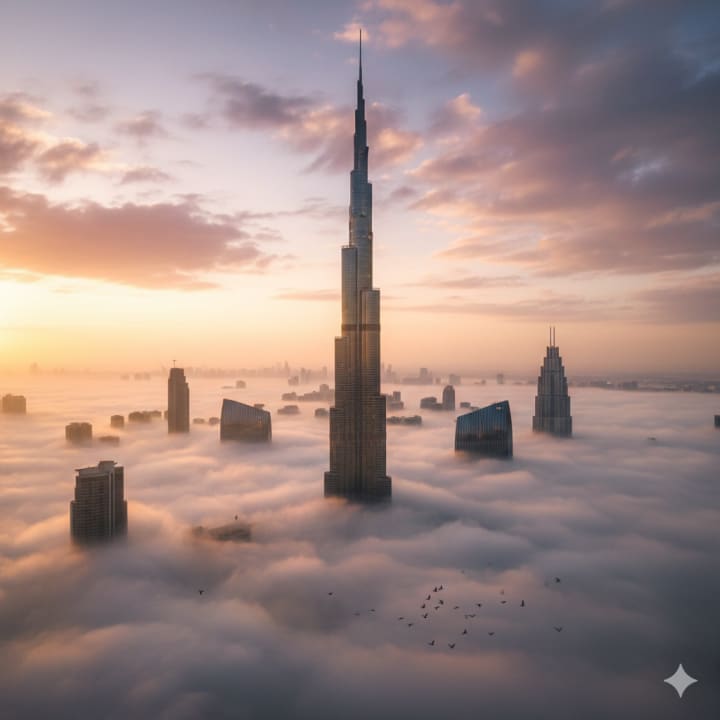
Visitors can enjoy panoramic views from Level 124 and 125, while Level 148, at 555 meters, was the world’s highest outdoor observation deck.
Atmosphere Restaurant
Located on Level 122, at 442 meters high, it is the highest restaurant in the world. Dining here feels like eating among the clouds.
Armani Hotel Dubai
The first-ever Armani hotel, personally designed by Giorgio Armani, occupies 15 floors. Luxury isn’t just expected here—it’s handcrafted.
The Symbolism of Burj Khalifa
Burj Khalifa tells a story through its height:
“There are no limits except the ones we accept.
It is often compared to the Pyramids of Giza, the Eiffel Tower, and the Empire State Building—structures that defined eras. Likewise, the Burj defines our modern era—an era of innovation beyond borders.
It represents:
- Ambition
- Unity
- Hope
- Future-forward thinking
Its reflection during sunrise stretches across the horizon like a declaration of humanity’s potential.
Burj Khalifa and Dubai’s Transformation
Before 1990, Dubai was known primarily for trade and oil. Today, tourism, real estate, technology, and finance power its economy. The Burj played a pivotal role in rebranding Dubai globally.
It:
- Increased tourism significantly
- Helped attract high-value investments
- Became the centerpiece for Downtown Dubai’s growth
- Turned Dubai into a global luxury icon
From hosting New Year’s Eve fireworks watched by over a billion people worldwide, to lighting up in global solidarity messages during crises, the Burj Khalifa has become the world’s communication tower.
Sustainability Measures
Despite its scale, Burj Khalifa integrates sustainability:
- Water recycling system collects 15 million gallons annually
- Condensation from air-conditioning waters landscaping areas
- Energy-efficient double-glazed facade
- Smart cooling systems
This proves luxury and sustainability can coexist.
How Burj Khalifa Changed Architecture Globally
Architects across the world now use the Burj’s engineering principles as reference. It opened pathways for taller structures, including:
- Jeddah Tower in Saudi Arabia (planned to exceed 1,000 meters
- Projects in China and the US inspired by its foundation model
- Innovations in vertical transportation (high-speed elevators)
The Burj didn’t just break records—it expanded the definition of architecture.
Tourism Impact
Over 2 million people visit the observation deck annually, and millions more take photos from Downtown Dubai. Every tourist who sees the Dubai skyline will undoubtedly notice its crown jewel.
It also played a key role in Dubai becoming one of the top 5 most visited cities globally.
Burj Khalifa in Pop Culture
The skyscraper has been featured in movies such as:
- Mission: Impossible – Ghost Protocol (Tom Cruise actually climbed it!)
- Independence Day: Resurgence
- Geostorm
- Star Trek: Beyond
It has also appeared in video games, music videos, and documentaries.
Night Shows – A Global Spectacle
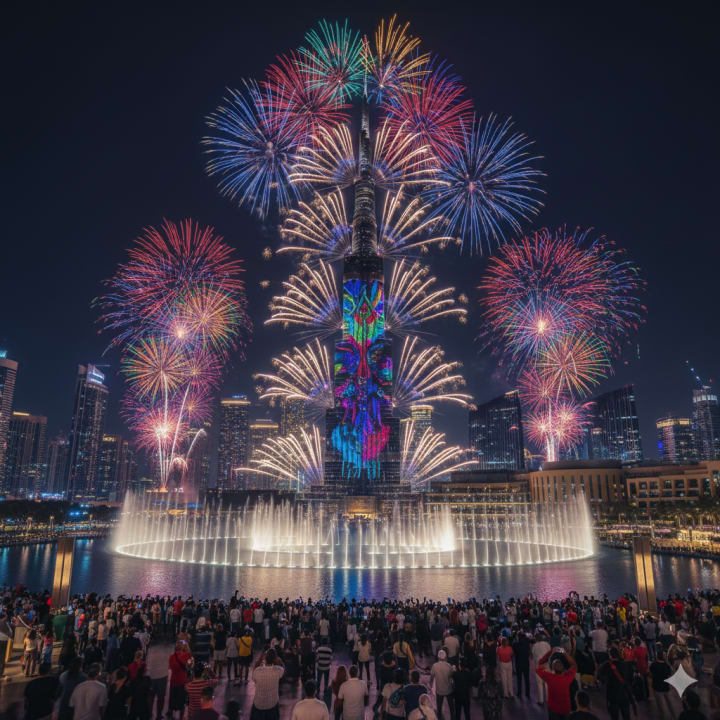
Burj Khalifa's LED light façade transforms it into the world’s largest digital screen. From national celebrations to international events like:
- New Year Countdown
- Eid Greetings
- Expo 2020 Promotions
- World Cup celebrations
People wait around the lake to watch the fountain and light show together.
Interesting Facts
- 3 times taller than the Eiffel Tower
- Visible from over 95 km away
- 10,000 people can occupy it at once
- Elevators travel at 10 meters per second
- During Ramadan, people at the top can break fast 2-3 minutes later due to a later sunset
Future – Beyond Burj Khalifa
Dubai is already planning bigger marvels like the Dubai Creek Tower, expected to surpass the Burj. However, Burj Khalifa will forever remain the structure that made the world pause and look up.
Conclusion
The Burj Khalifa is not just a skyscraper—it is a metaphor for human potential. It stands proudly, silently reminding the world:
- Dream big.
- Aim higher than doubt.
- Work beyond comfort.
- And most importantly… rise above limits.
From the sands of Dubai to the heights of architectural innovation, the Burj Khalifa is more than a building—it is history written in glass and steel.
About the Creator
Ashen Asmadala
Hi, I’m Ashen, a passionate writer who loves exploring technology, health, and personal development. Join me for insights, tips, and stories that inspire and inform. Follow me to stay updated with my latest articles!
Keep reading
More stories from Ashen Asmadala and writers in Education and other communities.
🇦🇪 The Sands That Dreamed: A Human Story of UAE National Day
Introduction: A Morning in the Emirates When the sun rises across the Arabian skies on 2nd December, its golden rays sweep across cities still half-asleep and deserts stretching endlessly into history. The air feels different—proud, silent, yet full of meaning. Flags flutter from balconies, children rehearse their school performances, and expatriates smile softly, remembering the day they first stepped into this land of opportunity.
By Ashen Asmadala4 months ago in Education
Why Marketplace Experts Are Key to Stronger Guest Loyalty Programs
Guest loyalty programs have become an essential component of the modern hospitality industry. Hotels, resorts, and vacation rental brands rely on these programs to create meaningful relationships with travelers while encouraging repeat bookings. In a competitive travel marketplace where guests have endless choices, loyalty programs help brands stand out and maintain long term customer connections. However, developing a successful loyalty strategy requires more than simply offering points or discounts. It demands a deep understanding of guest behavior, booking platforms, and digital marketplace trends.
By Jason Nissena day ago in Education


Comments
There are no comments for this story
Be the first to respond and start the conversation.