
Bulk Sale and Exit Tax in New Jersey : A Comprehensive Guide
Understanding Bulk Sale Tax and Exit Tax in Real Estate Transactions

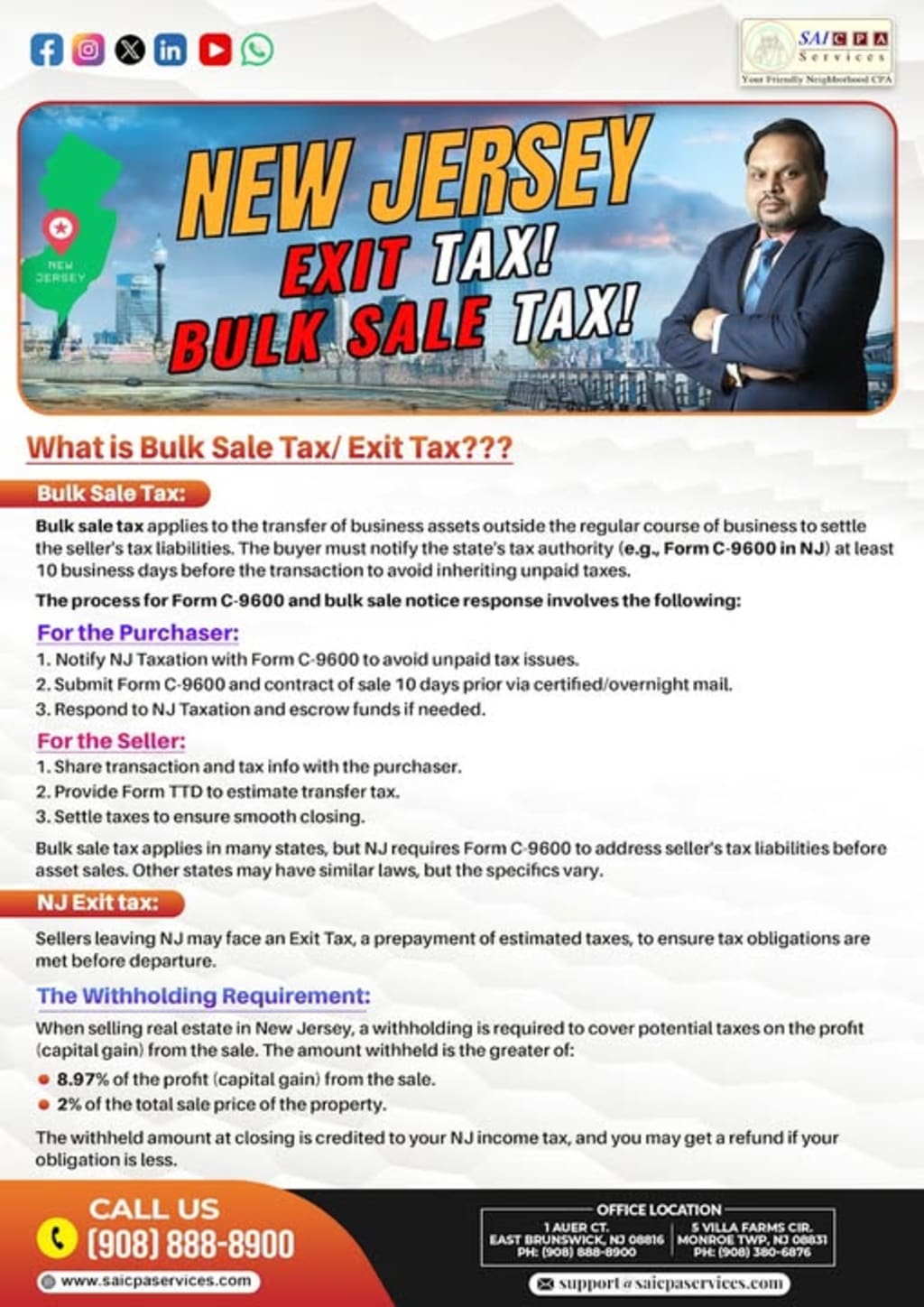
When dealing with real estate transactions in New Jersey, it is crucial to be aware of specific tax requirements that ensure all outstanding obligations are settled before finalizing a sale. Among these tax considerations are the Bulk Sale Tax and the so-called Exit Tax. Though these are not distinct taxes, they serve as mechanisms to prepay tax liabilities, ensuring compliance with state taxation laws.
Bulk Sale Tax: Ensuring Tax Compliance in Asset Transfers
The Bulk Sale Tax applies when business assets are transferred outside the normal course of operations. It is designed to prevent sellers from avoiding tax liabilities by requiring buyers to notify the New Jersey Division of Taxation before the transaction occurs. This process protects the buyer from inheriting any unpaid tax obligations associated with the assets being transferred.
Key Requirements and Process for Buyers
Buyers have specific responsibilities under the Bulk Sale Tax provisions to ensure they are not held accountable for the seller’s unpaid taxes. The process includes:
1. Submitting Notification: Buyers must notify the New Jersey Division of Taxation by filing Form C-9600 (Notification of Sale, Transfer, or Assignment in Bulk).
2. Submission Timeline: This form, along with a copy of the sales contract, must be submitted at least 10 business days prior to the transaction date. It should be sent via certified or overnight mail to ensure compliance and documentation.
3. Escrow Requirement: If the tax authority determines that the seller has outstanding tax liabilities, buyers may need to hold funds in escrow until the seller clears these obligations.
Key Responsibilities for Sellers
Sellers must cooperate with buyers to ensure smooth processing of the bulk sale transaction. Their responsibilities include:
1. Providing Transaction Information: Sellers must supply necessary details regarding the transaction to the buyer to facilitate the submission of Form C-9600.
2. Tax Estimate Submission: Sellers may need to submit Form TTD (Taxpayer’s Declaration of Intent to Dissolve, Withdraw, or Transfer) to estimate and settle outstanding taxes.
3. Settling Tax Obligations: Before closing the transaction, sellers should ensure that any due taxes are paid, as failure to comply may delay the sale or lead to funds being withheld in escrow.
Importance of Compliance
New Jersey strictly enforces Bulk Sale Tax requirements to prevent tax evasion. While Form C-9600 is mandatory in NJ, other states may have different regulations, reinforcing the necessity of consulting a tax professional or attorney to navigate legal obligations effectively.
NJ Exit Tax: Withholding Tax for Non-Resident Sellers
Sellers leaving New Jersey after a real estate sale must account for the NJ Exit Tax, which ensures the state collects applicable income taxes from the transaction. This is not an additional tax but a prepayment toward potential income tax obligations on the capital gains derived from the sale.
Withholding Requirement for Non-Resident Sellers
If a property owner is no longer a resident of New Jersey at the time of sale, the state requires tax withholding based on the greater of:
• 8.97% of the taxable gain (capital gains) on the sale, OR
• 2% of the total sale price
How Exit Tax Works
1. At Closing: The designated withholding amount is deducted from the seller’s proceeds and paid to the state.
2. Tax Filing and Reconciliation: If the actual tax liability is less than the amount withheld, sellers can file a New Jersey income tax return to claim a refund for any overpaid taxes.
3. Compliance Considerations: Since tax rates vary based on income and other deductions, working with a tax professional ensures accurate calculations and potential refunds if applicable.
Why the Exit Tax Exists
The Exit Tax helps prevent tax avoidance by non-residents who may otherwise sell property and fail to file NJ income tax returns. By withholding an estimated tax amount at the time of sale, the state secures revenue while allowing for adjustments during tax filing.
Conclusion: Seek Professional Guidance for Compliance
Navigating New Jersey’s Bulk Sale Tax and Exit Tax regulations can be complex. While this guide provides a detailed overview, every real estate transaction has unique circumstances that may require tailored advice. To ensure full compliance and optimal tax planning, consulting with a qualified tax professional, accountant, or real estate attorney is highly recommended.
About the Creator
Keep reading
More stories from Ajay Kumar and writers in Education and other communities.
Worried About IRS Audits? Here’s How SAI CPA Services Can Help You Avoid Them!
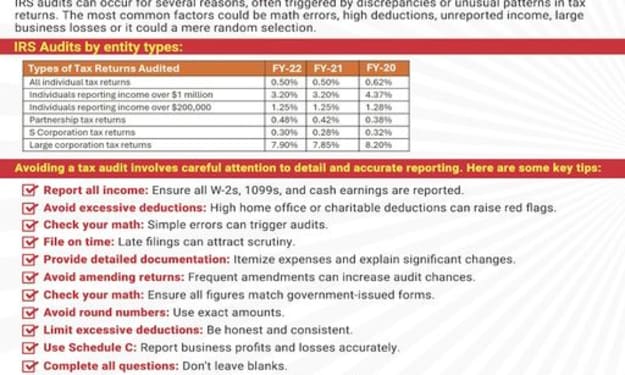
IRS audits can be stressful, but with the right preparation, you can minimize your chances of being audited. Audits often stem from discrepancies or unusual patterns in tax returns. Common triggers include math errors, large deductions, unreported income, and significant business losses. Here’s a snapshot of audit rates by entity type for FY-22:
By Ajay Kumarabout a year ago in Writers


Comments
There are no comments for this story
Be the first to respond and start the conversation.