
Building Gig Economy Apps and Mobile App Development Los Angeles Regulations
When Technology Moves Faster Than Policy and Developers Must Design Around Rules Still Taking Shape

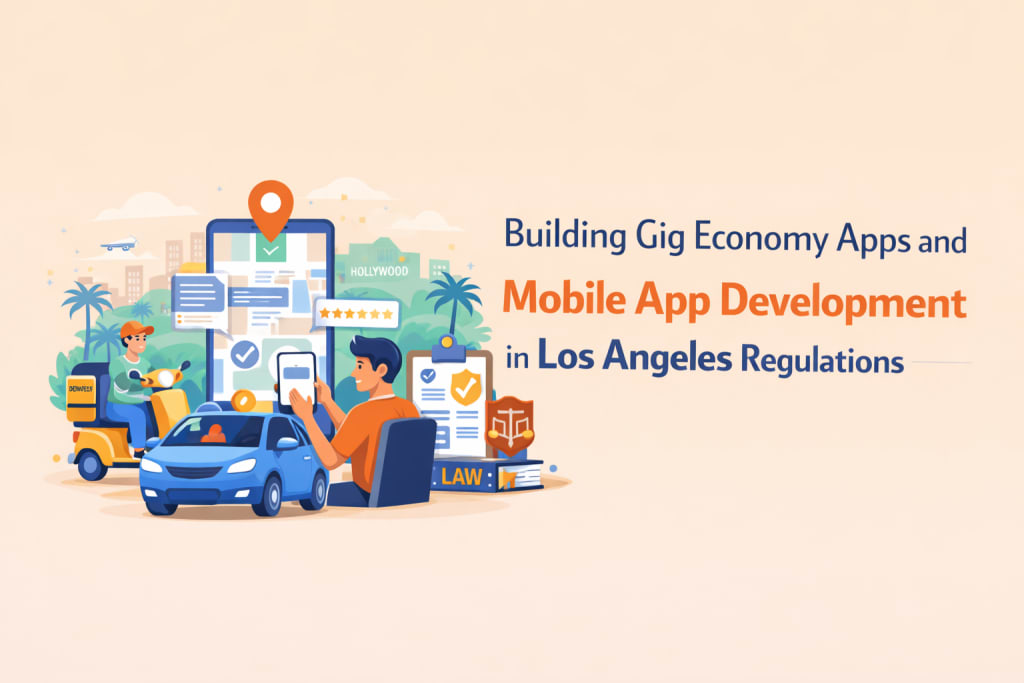
Regulation rarely arrives before innovation. More often, policymakers react after technology reshapes daily life, attempting to balance opportunity with public interest. Nowhere is this tension more visible than in the gig economy, where mobile apps have rewritten how work is organized, compensated, and monitored.
Los Angeles stands at the center of this conversation. The city’s reliance on ride-hailing, delivery services, freelance marketplaces, and creator-driven platforms makes it a living laboratory for how digital tools intersect with labor policy. For developers and startup teams, building gig economy apps here involves more than coding logistics or user interfaces; it requires navigating a regulatory environment that continues evolving alongside the platforms themselves.
Understanding this environment means looking beyond technical architecture and examining how legal frameworks shape product decisions from the earliest planning stages.
The Rise of Gig Economy Platforms and Their Influence on Urban Life
Gig economy apps emerged from a desire for flexibility — both for workers seeking control over schedules and companies aiming to scale quickly without traditional employment structures.
By 2025, estimates suggested that more than one-third of U.S. workers participated in freelance or contract-based work in some capacity. Urban centers like Los Angeles experienced particularly strong adoption due to population density, transportation needs, and entertainment-related freelance opportunities.
Mobile apps serve as the operational backbone for these platforms. They match supply and demand, manage payments, track performance metrics, and maintain communication between users and service providers.
As adoption increased, regulators began examining questions around worker classification, wage protections, and data transparency. These discussions now shape how gig apps are built.
Labor Classification Laws and Their Impact on Product Design
One of the most influential factors affecting gig economy platforms in California involves worker classification laws. Legislation addressing whether gig workers qualify as independent contractors or employees has influenced platform features and policies.
Companies operating in Los Angeles must consider:
- How earnings are calculated and displayed.
- Transparency around fees and commissions.
- Mechanisms allowing workers to track hours and income.
These requirements affect user interface decisions as much as backend systems. Developers must incorporate tools ensuring compliance with local labor standards while maintaining usability.
Research from UC Berkeley’s Labor Center highlights how regulatory debates have influenced app workflows, especially regarding scheduling and payment structures.
Data Transparency and User Rights in the Age of Algorithmic Work
Gig platforms rely heavily on algorithms to assign tasks, determine pricing, and evaluate performance. This raises questions about fairness and accountability.
Regulators increasingly focus on algorithmic transparency. Some policies require companies to explain how decisions affecting workers are made, particularly when automated systems determine job assignments or compensation adjustments.
For developers, this means designing features that:
- Provide accessible explanations of rating systems.
- Offer clear earnings breakdowns.
- Allow users to contest decisions.
These requirements introduce new design challenges. Technical teams must balance algorithmic sophistication with clarity that ordinary users can understand.
Location Tracking and Privacy Considerations
Gig economy apps often rely on real-time location tracking. Ride-sharing and delivery services depend on GPS data for routing, safety, and efficiency.
California privacy regulations require companies to disclose how location data is collected, stored, and used. Developers must create permission systems allowing users to control tracking settings without disrupting service functionality.
Privacy considerations extend beyond legal compliance. Surveys from Pew Research indicate that many users express concern about how apps handle personal data. Platforms that provide clear privacy options may gain stronger user trust.
Insurance, Safety, and Risk Management Features
Urban gig platforms operate in environments where safety considerations matter greatly. Developers must incorporate tools addressing both worker and customer protection.
Examples include:
- Emergency contact features.
- Trip tracking systems.
- Identity verification tools.
Regulatory frameworks sometimes require these features explicitly, while in other cases companies introduce them proactively to reduce risk.
Insurance partnerships also influence technical requirements. Apps may need to collect additional information or maintain detailed activity logs supporting claims processes.
Payment Systems and Financial Regulations
Handling payments within gig platforms introduces additional layers of complexity. California regulations may affect how funds are distributed, how tips are processed, and how earnings statements appear.
Developers must design payment systems that:
- Maintain transparent transaction histories.
- Separate platform fees clearly.
- Support compliance with tax reporting standards.
Research from financial technology studies suggests that clear earnings dashboards improve worker satisfaction by reducing confusion around compensation.
Balancing Flexibility With Regulatory Expectations
One of the core appeals of gig platforms lies in flexibility. Workers choose when and how they participate. Yet regulatory frameworks often seek to introduce structure ensuring fairness.
This creates tension within product design.
Too much rigidity may reduce the flexibility users expect. Too little oversight may raise compliance concerns.
Developers must navigate these competing priorities carefully. Product teams frequently collaborate with legal advisors early in development to anticipate potential challenges.
Community Impact and Local Government Influence
Los Angeles policymakers frequently respond to public concerns about traffic congestion, worker protections, and urban infrastructure.
For gig economy apps, local regulations may address:
- Traffic patterns and zoning.
- Environmental impact.
- Worker safety standards.
These factors shape how apps operate within specific neighborhoods. For example, delivery platforms may need to adjust routing algorithms based on local policies.
The connection between urban planning and software design highlights how digital platforms increasingly influence physical city environments.
The Role of Platform Governance in Long-Term Sustainability
Regulation often aims to prevent exploitation while allowing innovation to continue. Platforms that incorporate governance structures into their design may navigate regulatory challenges more effectively.
Governance tools include:
- Feedback systems allowing workers to voice concerns.
- Transparent dispute resolution mechanisms.
- Data dashboards enabling oversight.
Academic studies from MIT’s Initiative on the Digital Economy suggest that transparent governance practices correlate with higher platform stability over time.
A Single Keyword Moment
Discussions about mobile app development Los Angeles frequently focus on design trends or technology stacks, yet regulatory awareness plays an equally important role when building gig economy platforms.
Future Regulatory Trends Likely to Shape Gig Economy Apps
Several developments may influence the next generation of gig platforms:
Algorithm Accountability
Regulators may require clearer explanations of automated decision-making processes.
Portable Worker Benefits
New frameworks could allow gig workers to carry benefits across platforms, requiring technical coordination between companies.
Environmental Standards
Cities may introduce rules encouraging sustainable transportation within delivery apps.
AI-Assisted Oversight
Government agencies may use analytics tools to monitor compliance more effectively.
Developers preparing for future regulations must consider adaptability within their system architecture.
Final Reflection: Designing for a Moving Target
Building gig economy apps in Los Angeles involves more than technical execution. Developers must anticipate shifting policies, cultural expectations, and debates around the future of work.
The challenge lies in designing systems that remain flexible as regulations change. Apps must support innovation while respecting legal frameworks shaping worker experiences.
As cities continue redefining how digital platforms intersect with labor markets, developers may find themselves acting not only as engineers but as translators between technology and policy — creating tools that balance freedom, fairness, and accountability in a rapidly changing environment.
About the Creator
Nick William
Nick William, loves to write about tech, emerging technologies, AI, and work life. He even creates clear, trustworthy content for clients in Seattle, Indianapolis, Portland, San Diego, Tampa, Austin, Los Angeles, and Charlotte.
Keep reading
More stories from Nick William and writers in Education and other communities.
How to Build a Peer-to-Peer Rental App in Tampa?
For generations, ownership defined value. People bought tools, vehicles, equipment, and even vacation properties with the expectation of long-term use. But modern consumer behavior tells a different story. Increasingly, individuals prioritize access over ownership — choosing to rent items temporarily rather than commit to permanent purchases.
By Nick William3 days ago in 01
Why the Beer Market Is Evolving Beyond Tradition and Into Lifestyle Culture?
As an alcoholic beverage that has been popular across cultures and ages, beer has a long history. Customarily, beer has been associated with social interaction, but in the modern world it has become a dynamic industry defined by innovation, branding, and consumer preferences. The beer market is still largely influenced by customary brewing but has adapted for modern lifestyles.
By Akshay Kumar3 days ago in Education



Comments
There are no comments for this story
Be the first to respond and start the conversation.