

DEFINE BIOTECHNOLOGY:
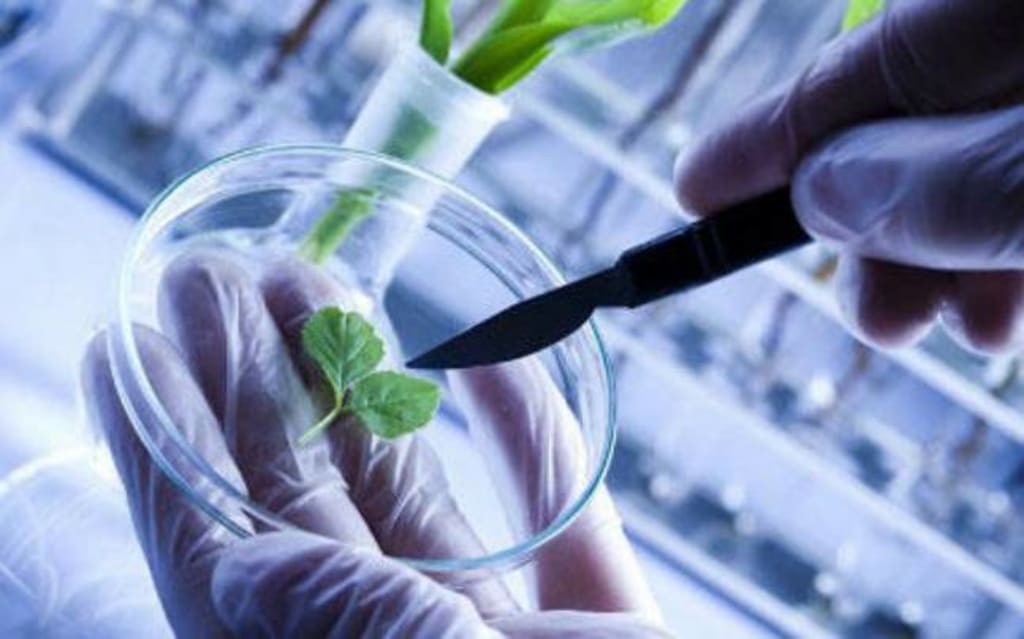
Biotechnology is an interdisciplinary field that uses living organisms, biological systems, and processes to develop new products and technologies that benefit society.
Biotechnology is the application of biological organisms, systems, or processes by various industries to learn about the science of life and improve the value of materials and organisms such as pharmaceuticals, crops, and livestock. It is based on the basic biological sciences and provides methods to support and perform basic research in biology. Biotechnology is the research and development in the laboratory using bioinformatics for exploration, extraction, exploitation, and production from any living organisms and any source of biomass by means of biochemical engineering. It is also the utilization of biological processes, organisms or systems to produce products that are anticipated to improve human lives. Biomedical engineering is an overlapping field that often draws upon and applies biotechnology.
HISTORY:
Agriculture has been the dominant way of producing food since the Neolithic Revolution. Through early biotechnology, the earliest farmers selected and bred the best-suited crops to produce enough food to support a growing population. These processes were introduced in early Mesopotamia, Egypt, China and India, and still use the same basic biological methods. Before the time of Charles Darwin's work and life, animal and plant scientists had already used selective breeding to improve the production of crops and livestock to use them for food. In the early twentieth century, selective breeding was used with corn to produce the largest and sweetest crops. Biotechnology has led to the development of antibiotics, such as penicillin, which became available for medicinal use in 1940. Paul Berg's experiments in gene splicing had early success, and Herbert W. Boyer and Stanley N. Cohen advanced the technology in 1972. In 1980, the US Supreme Court ruled that a genetically modified microorganism could be patented.
EXAMPLES:
Biotechnology has applications in health care, crop production, non-food products, and environmental uses.
Biotechnology is used to manufacture organic products, recycle, treat waste, clean up sites, and produce biological weapons.
Bioinformatics is an interdisciplinary field that addresses biological problems using computational techniques, making rapid organization and analysis of biological data possible.
Green biotechnology is biotechnology applied to agricultural processes, such as micropropagation and transgenic plants. It is hoped to produce more environmentally friendly solutions than traditional industrial agriculture, such as the engineering of a plant to express a pesticide, and the use of microorganisms to clean and reduce waste.
Blue biotechnology uses sea resources to produce bio-oils with photosynthetic micro-algae.
White biotechnology is biotechnology applied to industrial processes, such as designing organisms to produce useful chemicals or using enzymes as catalysts.
Red biotechnology is the use of biotechnology in medical and pharmaceutical industries, and health preservation.
Yellow biotechnology is the use of biotechnology in food production, agriculture, and medicine.
Gray biotechnology is focused on protecting biodiversity and reducing pollutants.
Brown biotechnology is used to create enhanced seeds to resist extreme environmental conditions and manage resources.
Violet biotechnology is related to law, ethical and philosophical issues.
Dark biotechnology is associated with bioterrorism and biowarfare.
MEDICINE:
Modern biotechnology has many applications in medicine, with 40% of company value in Oncology and Neurology/Rare Diseases.
Pharmacogenomics is a combination of pharmacology and genomics to analyze genetic variation and optimize drug therapy to ensure maximum efficacy with minimal adverse effects.
Biotechnology has enabled the discovery and manufacturing of traditional pharmaceutical drugs as well as drugs that are the product of biotechnology. It has also enabled emerging therapeutics like gene therapy and improved our understanding of biology, allowing us to develop new medicines to treat previously untreatable diseases.
Genetic testing identifies changes in chromosomes, genes, or proteins associated with inherited disorders, and can be used to confirm or rule out suspected genetic conditions or determine a person's chance of developing or passing on a genetic disorder. It is often accompanied by genetic counseling.
AGRICULTURE:
Genetically modified crops can improve food security and encourage private sector investment in agrobiotechnology.
Non-food crops can benefit from resistance to pests, diseases, environmental conditions, chemical treatments, and bioremediation.
Farmers have adopted GM technology, increasing the surface area of land cultivated with GM crops by 94% between 1996 and 2011, with 10% of the world's crop lands planted in 2010.
Genetically modified foods are foods produced from organisms that have had specific changes introduced into their DNA with the methods of genetic engineering, allowing for the introduction of new crop traits and greater control over their genetic structure. Commercial sale began in 1994 with Calgene's Flavr Savr delayed ripening tomato. GM livestock have been experimentally developed, and in 2015 the FDA approved the first GM salmon for commercial production and consumption.
The legal and regulatory status of GM foods varies by country, with some countries banning or restricting them and others permitting them with varying degrees of regulation.
Opponents oppose GM crops due to environmental concerns, safety concerns, and economic concerns.
Biotechnology has many applications in food security, including vaccines, breeding processes, and transgenic biofortification to combat malnutrition.
INDUSTRIAL:
Industrial biotechnology is the application of biotechnology for industrial purposes, using microorganisms and enzymes to generate industrially useful products in sectors such as chemicals, food and feed, detergents, paper and pulp, textiles and biofuels.
Synthetic biology is essential for industrial biotechnology due to its financial and sustainable contribution. It can be used to engineer model microorganisms to produce bio-based products, such as medicines and biofuels.
CRISPR and CRISPRi systems alter the metabolic pathways of E. coli to produce 1,4-butanediol, increasing yield from 0.9 to 1.8 g/L.
ENVIRONMENTAL:
Environmental biotechnology is used to reduce environmental waste and provide environmentally safe processes, but can have both beneficial and adverse effects. Cleaning up environmental wastes is an example of an application, while loss of biodiversity or containment of harmful microbes are examples of environmental implications.
About the Creator
VETRI S
Biotechnology is a field of study that uses living organisms, biological systems, and processes to develop new products and technologies that can benefit human society.
Keep reading
More stories from writers in Education and other communities.
Martin Luther King Jr
Martin Luther King Jr. was one of the most influential leaders of the American civil rights movement. He is best known for his commitment to nonviolent protest and for delivering the historic “I Have a Dream” speech. Through his leadership, courage, and dedication to equality, King helped bring about major social and legal changes in the United States.
By Organic Products 2 days ago in Education



Comments
There are no comments for this story
Be the first to respond and start the conversation.