
Biochemistry And Biotechnology: A Simple Explanation | Key Comparison
Discover the key differences between biochemistry and biotechnology. Understand how one is the "manual of life" and other builds the "toolkit" for future solutions.

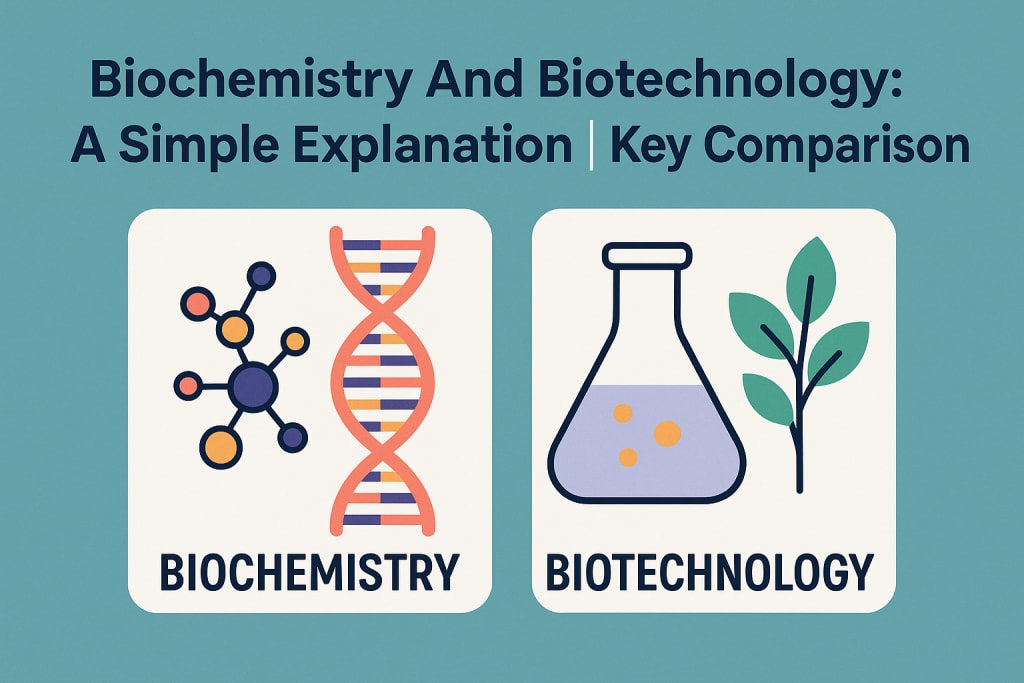
Biochemistry and Biotechnology sound alike, right? Are you a biology student who has just begun your biology work but is stuck on these two? Stressed about “Who’s gonna do my assignment now?” Here is an article that addresses your doubts. Also, it has a clear explanation of their differences. These two interconnect with each other in a complex way. Essentially, biochemistry uncovers the "how" and "why" behind biological phenomena, while biotechnology uses that understanding to innovate and solve problems. They both involve working with living things; it's easy to mix up the two. Thus, it becomes confusing from the start.
What Is Biochemistry and Biotechnology?
Biochemistry and biotechnology might sound complex, but they are actually easy to understand. These two are among the main subjects in biology. They share a deep understanding of the building blocks of life, proteins and DNA. For example, understanding how an enzyme works (biochemistry) is necessary to engineer it for industrial use (biotechnology). Both fields use similar lab techniques to study molecules and cells. Now, you might think they are almost the same, but no! How? Let’s understand that, start by learning what these two subjects are.
Biochemistry: Guide to the Chemical Processes of Life
Biochemistry is the study of the chemistry of life. A part of biology that explores the molecules and processes inside living things. It helps you to understand how life works at the micro level. Thus, goal is to discover and explain the fundamental chemical mechanisms. Such as how cells get energy, or what speeds up a reaction.
Example:
Imagine every living thing, from a tiny bug to a giant tree, has a chemical instruction book. Biochemistry is the science of reading that book. It looks at the very micro molecules. Like proteins, DNA, and fats and understand how living things get energy, how they grow and heal. Also, answers to what happens when they get sick.
Biotechnology: a Toolkit For Human Solutions
Biotechnology is the use of living things to make valuable products. It uses biology to solve problems and make things. It develops products for medicine, food, and other needs. It applies biological processes and systems to solve practical problems. Thus, healthcare, agriculture and other industries uses it. The field is always growing and bringing new inventions.
Example:
Think of biotechnology as using a recipe to make something special from living ingredients. Now insulin is produced for people with diabetes. For a long time, insulin was taken from animals like pigs and cows, but modern biotechnology uses special bacteria as tiny factories. It makes a life-saving medicine more reliable and available for everyone who needs it.
What Are the Main Differences?
Although these two look similar, they are completely different from each other. Below is the comparison of both studies in a short and simple manner. The key points are the source for your biology assignment help.
Biotechnology-
Main Goal - The main aim is to understand the chemistry of living things.
Focus - It explains how life works on a molecular level.
Analogy - A car mechanic who studies the engine to understand how all the parts work together.
Nature of Work - Mainly about discovering and explaining processes.
Role of Organisms - Studies organisms to see their chemicals and processes function.
Key Question - What is happening inside this cell and why?
Example - Examining the properties of enzymes to understand how they can speed up chemical reactions.
Biochemistry-
Main Goal - To use that knowledge to create useful products and tools.
Focus - It applies the science to solve practical problems.
Analogy - A factory worker who uses the mechanic's knowledge to build a better car.
Nature of Work - Mostly about building and developing new technologies.
Role of Organisms - While it uses and modifies them to produce the product.
Key Question - How can we use this cell's processes to make something?
Example - Using those enzymes in industrial processes for making detergents, paper, etc more efficiently.
You can simply differentiate them by taking biotechnology as the “research” part and biochemistry as the “application”.
Additional Examples For Better Understanding
Below are some more examples for you to know the differences and applications of both the studies in various fields:
Biotechnology-
Medicine - Plus, helps us to find out what is wrong by testing blood and tissues.
Forensic - Analyses DNA and chemicals from a crime scene.
Farming - It studies how plants use food from the soil and grow.
Biochemistry -
Medicine - It uses that knowledge to create vaccines, new medicines, and remedies.
Forensic - Uses special tools and techniques to help match that DNA to a person.
Farming - And, it changes crops to become stronger against bugs or bad weather.
Think Of It Like This:
A biochemist discovers how a specific process happens in a cell, and a bio technologist then uses that discovery to create something useful, making their jobs sound similar but having very different end goals. One's contribution ends with the findings and other focuses on turning that data into a valuable solution For learning about the career life of these two, you can check guides on Instant Assignment Help.
Summing-Up
Biochemistry is the fundamental science that studies the chemical processes occurring within living organisms. On the other hand, biotechnology takes that foundational understanding of biology and apply it to develop new products or technologies. Now, all this finally clears your doubts, and you don’t have to worry about who is gonna do my assignment anymore. Also, students like you are making their careers in these fields. Eventually, one explains the rules of the natural world, and the other uses those rules to invent solutions.
Also Read - Why Should You Study if Everything's Available on the Internet?
About the Creator
Emma Green
I am a academic content writer with a proven track record of producing well-researched, and excellent content. Essays, reports, research papers, case studies, assignment help and other academic materials.
Keep reading
More stories from Emma Green and writers in Education and other communities.
Why Should You Study if Everything's Available on the Internet?
If you can gain information about everything online, why should you even study? This question arises in the minds of many. Even though an infinite amount of data is available online, you should think about whether the traditional studying method is helpful in current times. The web can create an illusion that knowledge is just a few clicks away. Moreover, if you need aid from experts, you can use coursework helper services. With just a few clicks, you can get professional-level answers. The article will show you the benefits of studying in the era of AI and the internet.
By Emma Green4 months ago in Education
How Early Hustle Jobs Build Real Mental Toughness for Life
Early hustle jobs—like babysitting, mowing lawns, stocking shelves, or working the drive-thru—might seem small on paper, but they often shape big psychological strengths. These first experiences with responsibility, pressure, and real-world expectations can build mental toughness in ways school alone usually can’t.
By David Lipan3 days ago in Education


Comments
There are no comments for this story
Be the first to respond and start the conversation.