
Beyond the Needle: Understanding Venipuncture, IV, and Phlebotomy Sites in Clinical Training
From anatomy to access points, here's what every healthcare learner needs to know about choosing the right site and why hands-on practice kits are critical for mastering the skill.

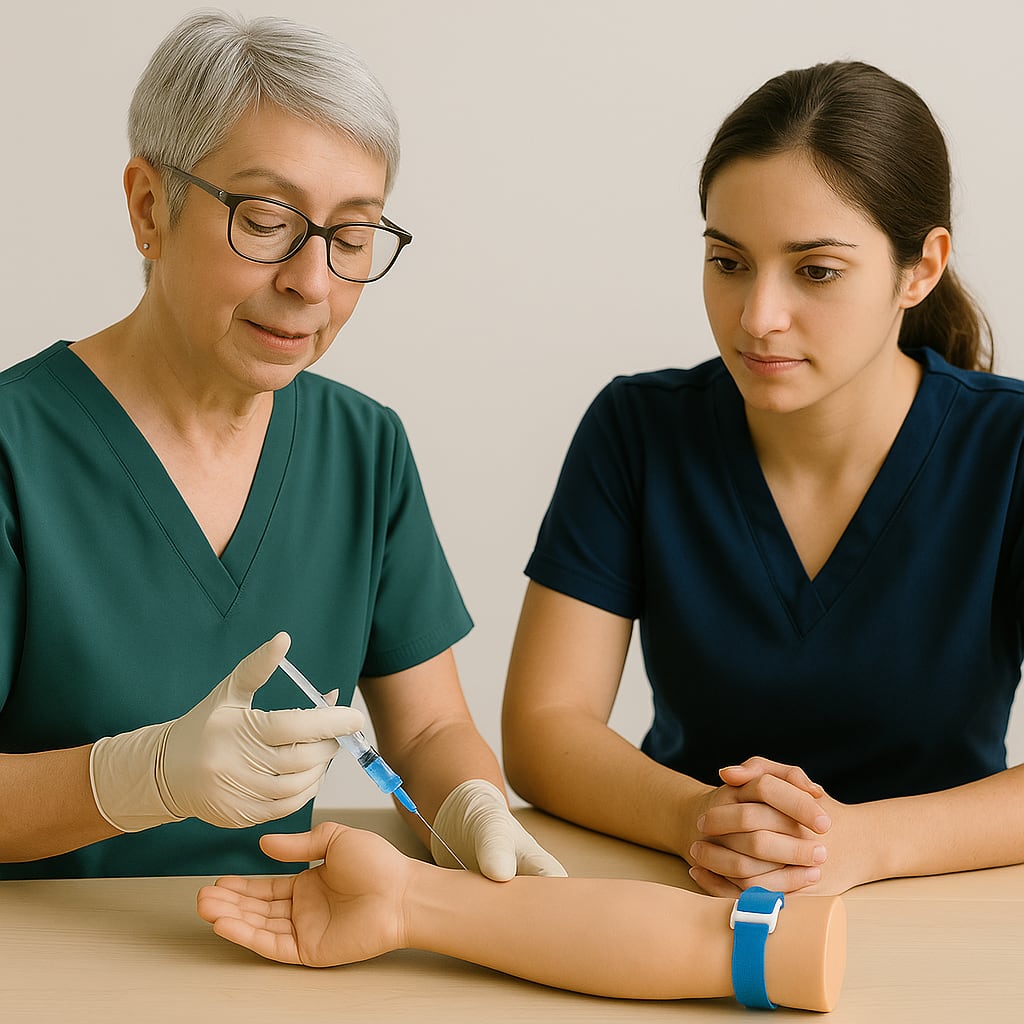
Injections may seem like a routine part of healthcare, but ask any nurse, phlebotomist, or EMT and they'll tell you - not all puncture sites are created equal. Whether you're drawing blood, administering IV fluids, or inserting a catheter, selecting the correct site is more than technical - it's clinical judgment. That's why understanding the difference between venipuncture sites, intravenous (IV) sites, and phlebotomy sites is essential for any medical or nursing student.
It's also why practice matters - a lot. Realistic training with an IV practice kit or a phlebotomy practice kit allows trainees to internalize site selection logic before they ever face a real patient.
Venipuncture Site vs. IV Site vs. Phlebotomy Site: What's the Difference?
While the terms are often used interchangeably, there are subtle (yet crucial) differences that define each:
Venipuncture site refers to any vein access point where a needle is inserted—most commonly in the antecubital fossa (inner elbow) or forearm. It's a broad term that includes sites used for both IV insertion and blood draws.
Phlebotomy site refers specifically to locations used for blood collection. These are typically superficial veins that are easily accessible and offer a low risk of complications, like the median cubital, cephalic, and basilic veins.
IV site implies venous access for fluid, medication, or nutrient administration, often requiring deeper or more stable veins that can hold a catheter over time. IV sites may include the dorsum of the hand, the forearm, or even central lines in critical care settings.
Why Site Selection Is a Big Deal
Site choice isn't just about visibility - it's about vein size, patient comfort, infection risk, and intended use. A poor decision can lead to:
- Hematomas
- Phlebitis
- Nerve damage
- Dislodged catheters
- Failed draws or infiltrations
For instance, while the median cubital vein is ideal for phlebotomy due to its prominence and low nerve proximity, it's not always the best option for longer-term IV placement, which might require more stable veins like the cephalic.
The Challenge for Beginners
Let's be honest. Veins don't look like textbook diagrams, especially in patients who are obese, dehydrated, elderly, or pediatric. And when you're under pressure, even locating a prominent vein can feel like finding a needle in a haystack.
That's where simulation-based education comes in. High-quality phlebotomy practice kits and IV practice kits simulate the tactile resistance, vein recoil, and even flashback you'd get in a real clinical setting. Repeated hands-on experience with these tools helps trainees:
- Recognize vein patterns
- Learn angle and depth control
- Handle difficult access scenarios
- Build confidence in high-stakes environments
Which Sites Should Students Practice First?
For beginners, here's a basic roadmap:
- Phlebotomy practice: Median cubital → Cephalic → Basilic (progressively harder)
- IV practice: Dorsal hand → Forearm veins → Antecubital (if needed)
- Advanced practice: Pediatric scalp or foot veins, or simulated central access for higher training levels.
The right training tool can replicate these variations. Kits like those offered by Ultrassist and MedEduQuest offer multi-vein systems with realistic skin, vein refill, and replaceable components, ideal for institutions and self-learners alike.
Bridging Knowledge with Practice
Classroom lectures may teach theory, but it's the act of inserting, failing, adjusting, and trying again that shapes real competence. One insertion on a live patient is worth ten hours of textbook study - but only if it's safe, clean, and effective. That's why simulation is now the gold standard in phlebotomy and IV training programs.
For a deeper look into how practice kits are used in real-world healthcare education - and why they're revolutionizing procedural confidence, see this detailed resource:
👉 Why Hands-On IV Practice Kits Are Essential for Phlebotomy and Venipuncture Training
About the Creator
Ultrassist
We're Ultrassist, creators of realistic medical training models for nursing, EMS, and trauma care. Our blog offers tips, tutorials, and insights to support hands-on learning. Visit ultrassist.com for more.
Keep reading
More stories from Ultrassist and writers in Education and other communities.
How Ultrassist’s IV & Phlebotomy Practice Kits Are Revolutionizing Medical Training
Education in the medical field has long grappled with a fundamental challenge: how can we help students and professionals build proficiency without risking patient safety? Traditional methods, textbooks, lectures, and occasional demonstrations, only go so far. The real solution lies in hands-on, realistic practice, and that’s exactly what Ultrassist's IV and Phlebotomy Practice Kits deliver.
By Ultrassist6 months ago in Education
The Importance of Strong Leadership in IT and Cybersecurity Teams
In today’s rapidly evolving digital landscape, IT and cybersecurity are no longer support functions—they are central to business success and resilience. With growing threats, complex infrastructures, and constant technological change, these departments face intense pressure to perform at the highest levels. At the heart of their performance is a critical factor that often determines whether a team succeeds or struggles: strong leadership.
By Keith Brautigam5 days ago in Education



Comments
There are no comments for this story
Be the first to respond and start the conversation.