
Belt & Road Initiative.
Chinese large scale infrastructure
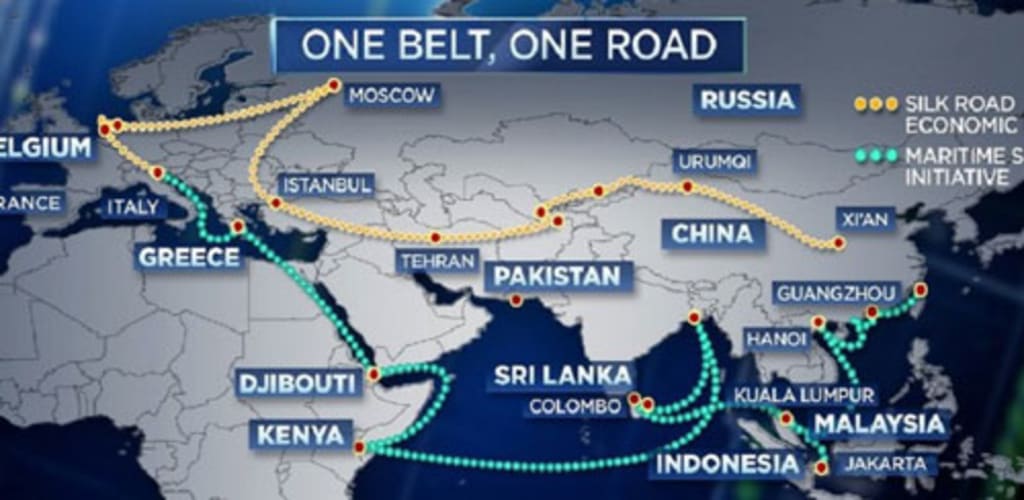
The Belt and Road Initiative (BRI), also known as the One Belt, One Road (OBOR) initiative. The Belt and Road Initiative is a large-scale infrastructure and economic development project led by the Chinese government. It was announced in 2013 by President Xi Jinping and aims to enhance connectivity and promote trade and economic cooperation between China and countries along the proposed routes.
The BRI consists of two main components: the land-based "Silk Road Economic Belt" and the ocean-based "21st Century Maritime Silk Road." This component focuses on land-based infrastructure development and connectivity. It seeks to revive and expand the ancient Silk Road trading routes that historically connected China to Central Asia, the Middle East, and Europe. The Belt includes the construction and improvement of roads, railways, pipelines, and other transportation infrastructure to facilitate the movement of goods, services, and people across the region. This component focuses on enhancing maritime connectivity and promoting cooperation among countries in Southeast Asia, Oceania, the Indian Ocean, and East Africa. It involves the development of ports, shipping lanes, and other maritime infrastructure to facilitate trade and maritime cooperation. The Maritime Silk Road aims to strengthen maritime trade links and promote sustainable development along the coastal regions.
Chinese interests in the Belt and Road Initiative are multifaceted. From an economic perspective, China seeks to expand its influence and access new markets for its goods and services. By improving infrastructure and connectivity, China aims to facilitate the flow of trade and investments, which can benefit its companies and industries. The BRI also presents an opportunity for Chinese construction and engineering firms to secure contracts for infrastructure projects, which can generate significant revenue for these companies.
The initiative promotes financial cooperation and connectivity to support infrastructure development and investment projects. China has established several financial institutions, such as the Asian Infrastructure Investment Bank (AIIB) and the Silk Road Fund, to provide financing for infrastructure projects and promote economic cooperation. The BRI emphasizes cultural and educational exchanges, tourism promotion, and cooperation in areas such as science and technology, healthcare, and environmental protection. These initiatives aim to enhance mutual understanding, strengthen people-to-people ties, and promote cultural diversity.
Additionally, the BRI aligns with China's broader geopolitical objectives. It allows China to enhance its international standing and shape the global economic order by promoting its vision of economic integration and regional connectivity. By cultivating strong economic ties with participating countries, China can exert influence and build strategic relationships. This can have diplomatic and political advantages for China, such as gaining support for its policies and initiatives on the international stage. The Belt and Road Initiative aims to promote economic development, trade, and investment across participating countries. It emphasizes the development of infrastructure, energy projects, industrial parks, and other initiatives to stimulate economic growth and regional integration. Additionally, the initiative seeks to strengthen cultural exchanges, people-to-people connectivity, and policy coordination among participating nations
However, the Belt and Road Initiative has also faced criticism and concerns. Some argue that the BRI projects may lead to debt burdens for participating countries, especially those with limited financial resources or weak governance structures. There have been cases where countries struggled to repay loans, resulting in a loss of control over strategic assets to China. Others express concerns about environmental impacts, lack of transparency, and potential for corruption associated with BRI projects.
The Belt and Road Initiative has gained support from many countries, particularly those seeking infrastructure investment and economic cooperation. However, the initiative remains a subject of debate and scrutiny, with ongoing discussions about its benefits, risks, and long-term implications. It's important to note that the specific interests and motivations of Chinese actors involved in the Belt and Road Initiative can vary. While the Chinese government plays a central role, there are also contributions from Chinese state-owned enterprises, private companies, and financial institutions, each with their own goals and motivations.
About the Creator
Keep reading
More stories from writers in Education and other communities.
Smart Steps Today for a Comfortable Tomorrow
Planning for retirement might feel overwhelming, but it does not have to be. A little preparation now can make your future feel far less uncertain. The most important thing is to start thinking ahead and taking action while you still have time. Key retirement planning tips for a secure future are easier to follow than many people believe. With steady decisions and a clear goal, you can build a future that is both safe and fulfilling.
By Michael Petruska8 days ago in Education
I've Just Realized
The President doesn't understand music. There. It felt very good to write that; it's some thing I just realized today. Oh , yes; he plays it. He TRUMPets it in rallies and meetings, pumps it across the airwaves when he gathers up our minutes waiting for his late arrival.
By Judey Kalchik 3 days ago in Beat


Comments
There are no comments for this story
Be the first to respond and start the conversation.