
Become an Affiliate Marketer: A Step-by-Step Guide
Learn how to become a successful affiliate marketer with this comprehensive guide. Discover the best affiliate programs, build your website, and start earning today


Affiliate marketing is a performance-based marketing strategy where a company rewards affiliates for each customer brought about by the affiliate's own marketing efforts. It is a way for businesses to promote their products and for affiliates to earn a commission for their efforts. The process involves an affiliate promoting a product or service and earning a commission for each sale made through their unique referral link. In this guide, we will go over the steps to becoming a successful affiliate marketer. Whether you are new to the world of online marketing or are looking to add affiliate marketing to your existing skillset, this guide will provide you with the knowledge and resources you need to get started.
A. Definition of Affiliate Marketing
Affiliate marketing is a type of performance-based marketing in which a business rewards affiliates for each customer brought about by the affiliate's own marketing efforts. It is a way for businesses to promote their products and services, and for affiliates to earn a commission for their efforts. In affiliate marketing, an affiliate promotes a product or service and earns a commission for each sale made through their unique referral link.
The commission rate varies depending on the affiliate program, but it can range from a few percent to over 50% of the sale price. The affiliate does not have to worry about creating, manufacturing, or storing the product, as the business takes care of these tasks. The affiliate simply focuses on promoting the product and earning a commission for their efforts.
B. Benefits of Affiliate Marketing
There are several benefits of affiliate marketing, both for businesses and affiliates. Some of the main benefits include:
Increased exposure: For businesses, affiliate marketing can help increase their exposure and reach a wider audience. This can result in more sales and revenue.
Cost-effective: Affiliate marketing is a cost-effective marketing strategy for businesses, as they only pay affiliates for the results they bring in. This means that businesses do not have to worry about paying for ineffective advertising.
Passive income: For affiliates, affiliate marketing can provide a source of passive income. Affiliates can continue to earn a commission for sales made through their referral link, even after the initial promotion.
Flexibility: Affiliate marketing offers flexibility for both businesses and affiliates. Businesses can choose which products to promote and how to promote them, while affiliates can choose which products to promote and when to promote them.
No product creation required: Affiliates do not have to worry about creating, manufacturing, or storing a product. They simply promote the product and earn a commission for their efforts.
Easy to get started: Affiliate marketing is easy to get started with, as there is no need for a large investment of time or money. Affiliates can start promoting products and earning a commission right away.
These are just some of the benefits of affiliate marketing. Whether you are a business looking to promote your products or an affiliate looking to earn a commission, affiliate marketing can be a valuable tool for achieving your goals.
II. Finding Affiliate Programs and Products to Promote
Finding the right affiliate programs and products to promote is an important step in becoming a successful affiliate marketer. Here are some steps to help you get started:
Research niche: Start by researching a niche that you are interested in and have knowledge of. This can be a specific industry, topic, or product type.
Look for affiliate programs: Use search engines, affiliate networks, and company websites to find affiliate programs that are related to your niche. Make a list of the programs that you are interested in promoting.
Evaluate commission rates: Look at the commission rates offered by each affiliate program and make a decision about which programs to join based on the commission rate and other factors such as product quality and customer support.
Review products: Once you have found an affiliate program that you would like to join, review the products that are available to promote. Make sure that the products are relevant to your niche and that you believe in the product quality.
Join the program: Once you have found a product that you would like to promote, join the affiliate program and get your unique referral link.
Start promoting: Start promoting the product through your website, social media channels, email list, or other marketing methods. Make sure to track your results so that you can see which methods are most effective.
By following these steps, you can find affiliate programs and products that are right for you and start promoting them to earn a commission. Keep in mind that it takes time and effort to find the right products and to build a successful affiliate marketing business. But with patience and persistence, you can become a successful affiliate marketer.
A. Affiliate Networks
Affiliate networks are websites that connect affiliate marketers with merchants who offer affiliate programs. These networks provide a centralized platform for affiliates to find and join affiliate programs, as well as track their results and get paid for their efforts. Some of the benefits of using affiliate networks include:
Easy to find programs: Affiliate networks make it easy for affiliates to find affiliate programs that are relevant to their niche.
Access to a wide range of programs: Affiliate networks offer access to a wide range of affiliate programs, making it easy for affiliates to find multiple programs to promote.
One-stop tracking: Affiliate networks provide a centralized platform for tracking your results, so you can see which programs and promotions are working and which ones are not.
On-time payments: Affiliate networks handle payments for affiliates, making sure that affiliates get paid on time for their efforts.
Support and resources: Affiliate networks often provide support and resources for affiliates, including training materials, marketing tools, and technical support.
Some of the most popular affiliate networks include Commission Junction, ShareASale, and Rakuten Marketing. By joining an affiliate network, you can simplify the process of finding and promoting affiliate programs and make the most of your affiliate marketing efforts.
B. Choosing a Niche
Choosing a niche is an important step in becoming a successful affiliate marketer. A niche is a specific area of interest or market that you will focus on promoting. Here are some steps to help you choose a niche:
Consider your interests and expertise: Start by thinking about your interests and areas of expertise. What do you enjoy talking about and know a lot about? These areas can be a good starting point for your niche.
Research demand: Once you have a list of potential niches, research the demand for each niche to see which ones are popular and have a large audience. You can use tools like Google Trends and keyword research tools to assess demand.
Look for profitability: Consider the profitability of each niche. Are there products that you can promote in the niche that offer a good commission rate?
Evaluate competition: Evaluate the level of competition in each niche to see if it is saturated or if there is still room for new affiliates.
Choose your niche: Based on your research, choose a niche that you are interested in, has demand, is profitable, and has a manageable level of competition.
By following these steps, you can choose a niche that is right for you and set yourself up for success as an affiliate marketer. Keep in mind that it may take some time to find the right niche, so be patient and persistent in your search.
C. Researching Affiliate Programs
Researching affiliate programs is an important step in becoming a successful affiliate marketer. Here are some steps to help you get started:
Use search engines: Use search engines like Google to search for affiliate programs related to your niche. You can use keywords such as "affiliate programs for [your niche]" to find relevant results.
Check company websites: Check the websites of companies in your niche to see if they offer an affiliate program. Many companies have an "affiliate program" or "partners" page on their website that provides information about their affiliate program.
Join affiliate networks: Join an affiliate network to access a wide range of affiliate programs in one place. Affiliate networks like Commission Junction, ShareASale, and Rakuten Marketing make it easy to find affiliate programs and track your results.
Read reviews: Read reviews of affiliate programs to see what other affiliates have to say about the program. Look for reviews on websites, forums, and blogs to get a well-rounded perspective.
Evaluate commission rates: Look at the commission rate offered by each affiliate program and compare it to other programs in the same niche. Make sure the commission rate is competitive and that you are comfortable with the rate.
By following these steps, you can research affiliate programs and find the ones that are right for you. Keep in mind that not all affiliate programs are created equal, so be selective in your choices and choose programs that you believe in and that offer a good commission rate.
III. Building a Website and Audience

Building a website and audience is an important step in becoming a successful affiliate marketer. Here are some steps to help you get started:
Choose a platform: Choose a website platform, such as WordPress, to build your website. Make sure the platform is user-friendly and offers the features you need to build a professional-looking website.
Choose a domain name: Choose a domain name that is memorable and relevant to your niche. Your domain name is the address people will use to find your website, so make sure it is easy to remember and spell.
Design your website: Design your website to be visually appealing and easy to navigate. Make sure it is easy for visitors to find what they are looking for and that your website is optimized for search engines.
Create content: Create high-quality content that is relevant to your niche and provides value to your audience. This can include blog posts, product reviews, tutorials, and more.
Build an audience: Build an audience by promoting your website through social media, guest posting, and other marketing strategies. Engage with your audience and respond to their questions and comments to build a strong relationship with them.
Offer incentives: Offer incentives to encourage visitors to sign up for your email list, such as discounts, free downloads, or exclusive content. Your email list is a valuable asset and will help you stay in touch with your audience and promote products to them.
By following these steps, you can build a website and audience that will help you succeed as an affiliate marketer. Keep in mind that building a website and audience takes time and effort, so be patient and persistent in your efforts.
A. Choosing a Domain Name and Hosting
Choosing a domain name and hosting are important steps in building a website for your affiliate marketing business. Here are some tips to help you get started:
Choose a domain name: Choose a domain name that is memorable, relevant to your niche, and easy to spell. Your domain name is the address people will use to find your website, so make sure it is easy to remember.
Use a reliable hosting provider: Choose a reliable hosting provider to host your website. Hosting providers like Bluehost, SiteGround, and A2 Hosting offer affordable and reliable hosting options for small businesses.
Consider the cost: Consider the cost of hosting when choosing a hosting provider. Hosting costs can vary widely, so compare the features and prices of several providers before making a decision.
Choose a plan: Choose a hosting plan that fits your needs and budget. Most hosting providers offer a variety of plans to choose from, including shared, VPS, and dedicated hosting options.
Get a unique IP address: Get a unique IP address for your website to help with search engine optimization (SEO). A unique IP address makes it easier for search engines to crawl and index your website.
By following these tips, you can choose a domain name and hosting that will help you build a successful website for your affiliate marketing business. Keep in mind that choosing the right domain name and hosting is an important step in building a successful online presence, so take your time and make an informed decision.
B. Setting up a Website
Setting up a website is a crucial step in becoming an affiliate marketer. Here are the steps to follow to set up your website:
Choose a platform: Choose a website platform, such as WordPress, to build your website. Make sure the platform is user-friendly and offers the features you need to build a professional-looking website.
Install a theme: Install a theme that matches your niche and provides the features you need for your website. Themes control the look and feel of your website, so choose a theme that is visually appealing and easy to navigate.
Customize your theme: Customize your theme to match your brand and make your website unique. This can include adding your own logo, changing the colors, and adding custom pages.
Install plugins: Install plugins to add functionality to your website. Plugins can be used to add contact forms, social media sharing buttons, and other features to your website.
Create pages: Create pages for your website, such as an About page, Contact page, and Privacy Policy page. Make sure your pages are well-written and provide the information your visitors need.
Create content: Create high-quality content that is relevant to your niche and provides value to your audience. This can include blog posts, product reviews, tutorials, and more.
Optimize for search engines: Optimize your website for search engines by using keywords in your content, using alt tags for images, and using a sitemap. These optimizations will help search engines crawl and index your website, making it easier for people to find your site when searching for topics related to your niche.
By following these steps, you can set up a website that will help you succeed as an affiliate marketer. Keep in mind that setting up a website takes time and effort, so be patient and persistent in your efforts.
C. Building an Audience
Building an audience is an important step in becoming a successful affiliate marketer. Here are the steps to follow to build your audience:
Define your target audience: Define the demographics of your target audience, such as age, gender, location, and interests. Knowing your target audience will help you create content that resonates with them and attracts them to your website.
Create content: Create high-quality, relevant content that provides value to your audience. This can include blog posts, product reviews, tutorials, and more. Make sure your content is well-written, easy to read, and optimized for search engines.
Use social media: Use social media platforms like Facebook, Twitter, and Instagram to promote your content and build your audience. Share your content on your social media profiles and engage with your followers by responding to their comments and messages.
Utilize email marketing: Build an email list of your subscribers and send regular newsletters to keep them informed about your latest content and promotions. Make sure to comply with email marketing regulations, such as the CAN-SPAM Act.
Collaborate with other bloggers and influencers: Collaborate with other bloggers and influencers in your niche to reach a wider audience and build relationships with other members of your industry.
Offer incentives: Offer incentives to encourage people to sign up for your email list or follow you on social media. This can include exclusive content, discounts, and other perks.
By following these steps, you can build an audience of engaged and interested followers who are more likely to become customers and promote your affiliate products. Building an audience takes time and effort, so be patient and consistent in your efforts.
IV. Implementing Affiliate Marketing Strategies

Implementing effective affiliate marketing strategies is key to success as an affiliate marketer. Here are the steps to follow to implement your affiliate marketing strategies:
Promote affiliate products through your website: Promote affiliate products through your website by writing product reviews, creating tutorials, and including affiliate links in your content. Make sure your content provides value to your audience and is relevant to your niche.
Use email marketing: Use email marketing to promote affiliate products to your subscribers. You can include affiliate links in your newsletters, or write product reviews and send them to your subscribers.
Utilize social media: Use social media to promote affiliate products to your followers. Share affiliate links, product reviews, and other promotional content on your social media profiles.
Optimize for search engines: Optimize your website for search engines by using keywords in your content, using alt tags for images, and using a sitemap. This will help search engines crawl and index your website, making it easier for people to find your site when searching for topics related to your niche.
Offer bonuses and incentives: Offer bonuses and incentives, such as exclusive content or discounts, to encourage people to purchase affiliate products through your links.
Use analytics: Use analytics tools, such as Google Analytics, to track the performance of your affiliate marketing efforts. Analyze the data to determine which strategies are working and which need improvement.
By following these steps, you can implement effective affiliate marketing strategies that will help you succeed as an affiliate marketer. Keep in mind that affiliate marketing is a long-term strategy, so be patient and persistent in your efforts.
A. Creating Content

Creating high-quality, relevant content is an essential part of becoming a successful affiliate marketer. Here are the steps to follow to create content that engages and converts your audience:
Know your target audience: Understand the demographics of your target audience, such as age, gender, location, and interests. This will help you create content that resonates with them and provides value.
Choose a topic: Choose a topic that is relevant to your niche and target audience. Research what topics are popular and trending in your niche and what questions your target audience is asking.
Conduct research: Conduct thorough research on your topic to ensure that your content is accurate, up-to-date, and informative. Use reputable sources and consider the perspectives of experts in your niche.
Write high-quality content: Write high-quality content that is easy to read and provides value to your audience. Use subheadings, bullet points, and images to break up the text and make it easier to read.
Optimize for search engines: Optimize your content for search engines by using keywords in your content and using alt tags for images. This will help your content rank higher in search engine results, making it easier for people to find.
Promote your content: Promote your content on your website, social media, and other platforms to reach a wider audience. Encourage your followers and subscribers to share your content, and respond to comments and feedback.
By following these steps, you can create content that engages and converts your audience, and helps you succeed as an affiliate marketer. Remember, content creation is an ongoing process, so be consistent and persistent in your efforts.
B. Driving Traffic to Your Website
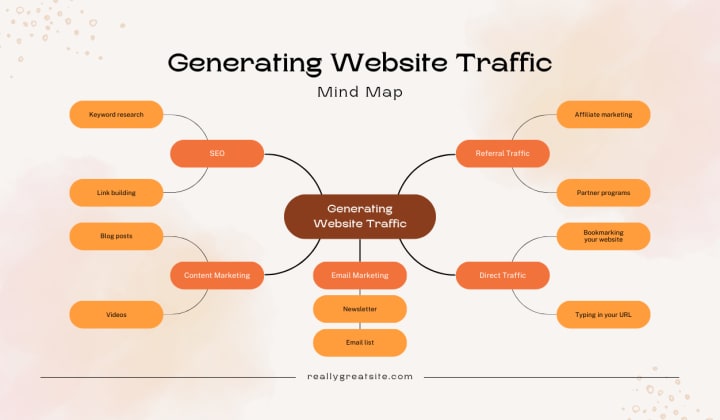
Driving traffic to your website is critical to your success as an affiliate marketer. Here are the steps to follow to drive traffic to your website:
Search engine optimization (SEO): Optimize your website for search engines by using keywords in your content, using alt tags for images, and using a sitemap. This will help your website rank higher in search engine results and attract more organic traffic.
Social media marketing: Use social media to promote your website and drive traffic to your site. Share your content, participate in relevant online communities, and collaborate with influencers in your niche.
Paid advertising: Use paid advertising, such as Google AdWords or Facebook Ads, to drive targeted traffic to your website. Make sure to set a budget and track your results to ensure you are getting a positive return on investment.
Content marketing: Create high-quality, relevant content that provides value to your audience and helps establish your website as a trustworthy and authoritative resource in your niche.
Email marketing: Use email marketing to drive traffic to your website and promote your affiliate products. Send regular newsletters to your subscribers and include calls to action that encourage them to visit your site.
Influencer marketing: Collaborate with influencers in your niche to promote your website and drive traffic to your site. You can offer them exclusive content or bonuses, or pay them to promote your affiliate products.
By following these steps, you can drive traffic to your website and increase your visibility as an affiliate marketer. Keep in mind that driving traffic is an ongoing process, so be persistent and consistent in your efforts.
C. Optimizing Your Website for Conversions
Optimizing your website for conversions is an essential step in becoming a successful affiliate marketer. Here are the steps to follow to optimize your website for conversions:
Make it user-friendly: Ensure that your website is easy to navigate, loads quickly, and is optimized for mobile devices. A user-friendly website will help improve the user experience and increase the likelihood of conversions.
Include clear calls to action: Make sure that your website includes clear calls to action, such as "buy now" or "sign up," that encourage visitors to take action. Use persuasive language and highlight the benefits of taking action.
Use high-quality images and videos: Use high-quality images and videos to showcase your affiliate products and engage your audience. Images and videos help break up text and make your site more visually appealing.
Test and optimize: Regularly test and optimize different elements of your website, such as the layout, color scheme, and calls to action, to see what works best. Use tools like Google Analytics to track your results and make data-driven decisions.
Use customer reviews and testimonials: Include customer reviews and testimonials on your website to build trust and credibility with your audience. Highlight the positive experiences of others to demonstrate the value of your affiliate products.
By following these steps, you can optimize your website for conversions and increase your chances of success as an affiliate marketer. Remember, optimization is an ongoing process, so be persistent and consistent in your efforts.
V. Earning Potential
The earning potential as an affiliate marketer is largely dependent on several factors, including the niche you choose, the products you promote, the strategies you implement, and the effort you put into your business. Here are a few factors that can impact your earning potential:
Commission rate: The commission rate is the percentage of each sale that you earn as an affiliate. Commission rates can vary greatly depending on the affiliate program and product, so it's important to research and compare different programs to find the ones that offer the highest commission rates.
Conversion rate: The conversion rate is the percentage of visitors to your website who take action, such as making a purchase or signing up for a service. A high conversion rate can significantly increase your earning potential as an affiliate marketer.
Traffic volume: The volume of traffic to your website is a major factor in determining your earning potential. The more visitors you have, the more opportunities you have to make sales and earn commissions.
Niche and product popularity: The popularity of your niche and the products you promote can also impact your earning potential. Niches with a large, engaged audience are more likely to generate higher earnings, as are popular products with a proven track record of sales.
It's important to note that as an affiliate marketer, your earning potential is not limited and can grow over time with effort and consistent performance. Some affiliate marketers earn hundreds of dollars per month, while others earn thousands or even tens of thousands of dollars per month. The key is to stay focused, put in the effort, and continually optimize and improve your strategies.
A. Commission Rates
Commission rates are the percentage of each sale that you earn as an affiliate marketer. They vary greatly depending on the affiliate program and the product you are promoting. Here are a few factors that can impact commission rates:
Affiliate program: Different affiliate programs offer different commission rates, so it's important to research and compare different programs to find the ones that offer the highest commission rates.
Product type: Commission rates can also vary depending on the type of product you are promoting, with some products offering higher commission rates than others.
Sales volume: Some affiliate programs offer tiered commission rates that increase as your sales volume increases. This means that the more sales you make, the higher your commission rate becomes.
Negotiating with merchants: In some cases, you may be able to negotiate higher commission rates with merchants by proving your value as an affiliate. This can be done by demonstrating your ability to drive traffic and sales to their products.
It's important to remember that commission rates are just one factor to consider when choosing affiliate programs and products to promote. Other factors, such as the quality of the product and the level of support provided by the affiliate program, should also be considered. By choosing affiliate programs and products carefully, you can maximize your earning potential as an affiliate marketer.
B. Tracking Your Earnings

Tracking your earnings is an essential part of being a successful affiliate marketer. Here are a few tips for tracking your earnings effectively:
Use an affiliate tracking software: Most affiliate programs use affiliate tracking software to track your earnings and commissions. This software will track each sale and commission earned and provide you with detailed reports on your earnings.
Keep detailed records: In addition to using affiliate tracking software, it's important to keep detailed records of your earnings, including the date of each sale and the commission earned.
Monitor your earnings regularly: Regularly monitoring your earnings allows you to track your progress and identify any areas that need improvement. This can include identifying underperforming affiliate programs and products and making changes to your strategy to increase your earnings.
Use analytics tools: Utilizing analytics tools, such as Google Analytics, can provide valuable insights into your website traffic, conversion rates, and earnings. This information can be used to optimize your website and improve your affiliate marketing strategy.
By tracking your earnings regularly and using the tools and techniques mentioned above, you can stay on top of your earnings and make informed decisions to optimize and grow your affiliate marketing business.
C. Scaling Your Business
Scaling your affiliate marketing business involves growing and expanding your operations to increase your earnings. Here are a few tips for scaling your business:
Diversify your affiliate programs and products: Diversifying your affiliate programs and products allows you to reduce your reliance on any one program or product, which can minimize the impact of any changes or disruptions to that program.
Expand your reach: Reaching a wider audience through new marketing channels, such as social media, email marketing, and content marketing, can help increase your visibility and drive more traffic to your website.
Optimize your website for conversions: Optimizing your website for conversions involves making changes to your website design and content to increase the number of visitors who take action on your site, such as making a purchase or filling out a form.
Invest in your education and training: As the affiliate marketing industry evolves, it's important to stay up-to-date with new developments and best practices. Investing in your education and training can help you stay ahead of the curve and improve your skills and knowledge.
Work with influencers and partners: Working with influencers and partners, such as bloggers and other websites in your niche, can help you reach a wider audience and increase your visibility.
By following these tips and continually looking for ways to grow and expand your business, you can scale your affiliate marketing business and increase your earning potential over time.
VI. Conclusion
In conclusion, affiliate marketing can be a lucrative and rewarding business for those who are willing to put in the time and effort to build a successful affiliate marketing strategy. With the right tools and strategies in place, you can grow your audience, promote affiliate products, and earn commissions from your sales.
Becoming an affiliate marketer requires research, planning, and execution, but with the right mindset and approach, you can succeed and turn your affiliate marketing business into a long-term and sustainable source of income.
Remember to stay focused, continuously educate yourself, and be persistent in your efforts. With patience and hard work, you can achieve your goals and build a successful affiliate marketing business.
A. Recap of Steps to Becoming an Affiliate Marketer
Here is a recap of the steps to becoming an affiliate marketer:
Define your niche and research affiliate programs and products to promote.
Build a website and audience by choosing a domain name and hosting, setting up your website, and building an audience through content marketing and other strategies.
Implement your affiliate marketing strategies by creating content, driving traffic to your website, and optimizing your website for conversions.
Track your earnings and monitor your progress by using affiliate tracking software and keeping detailed records.
Scale your business by diversifying your affiliate programs and products, expanding your reach, optimizing your website for conversions, investing in your education and training, and working with influencers and partners.
By following these steps and continually refining and improving your affiliate marketing strategies, you can build a successful and profitable affiliate marketing business
B. Final Thoughts
In summary, becoming an affiliate marketer requires effort, dedication, and a willingness to continuously learn and improve. But with the right tools, strategies, and mindset, you can build a successful affiliate marketing business that can provide a steady source of income over the long term.
Remember to always focus on providing value to your audience, building relationships with your followers, and promoting high-quality products that align with your values and your audience's needs. By following these principles, you can establish yourself as a trusted and respected affiliate marketer, and grow a thriving and profitable business over time.
Notes:
Emphasize the importance of researching affiliate programs and choosing a niche that aligns with your interests and skills
Discuss the different types of affiliate marketing strategies and provide tips on how to implement them effectively
Mention the earning potential of affiliate marketing and how to track and scale your business
Title Tag:
"Become an Affiliate Marketer: A Step-by-Step Guide" Affiliate marketing, monetization, product promotion , Affiliate programs, affiliate networks, affiliate marketing strategies, earning potential
Thank You, JS.Alex Content Creator
About the Creator
Clicked In
I'm Alex It's time for me to discover and express my voice.
Poetry, short stories, cooking instructions, and many other things I wish I had known much earlier.
Keep reading
More stories from Clicked In and writers in Education and other communities.
Maximize Your Earnings: A Guide to Making Money from Home
I. Introduction Maximizing your earnings and achieving financial stability can be a challenge, especially in today's uncertain economy. However, with the rise of the gig economy and the increasing demand for remote work, there are more opportunities than ever to earn money from the comfort of your own home.
By Clicked In3 years ago in Education
Canadian Work Permit 2026: Check If You Qualify to Work in Canada
Canada continues to be one of the top destinations for foreign workers, offering competitive salaries, a strong economy, and an excellent quality of life. With new immigration adjustments expected in 2026, understanding Canada’s work permit system has become more important than ever.
By Ayesha Lashari4 days ago in Education
Living in SillyVille, U.S.A.
U.S. President Donald Trump speaks at a ceremony held to dedicate a 4-mile stretch of road from West Palm Beach Airport to his Mar-a-Lago estate to be named as 'President Donald J. Trump Boulevard', at the Mar-a-Lago estate in Palm Beach, Florida, U.S., January 16, 2026. REUTERS/Kevin Lamarque.
By Novel Allen6 days ago in Poets




Comments
There are no comments for this story
Be the first to respond and start the conversation.