
Battles of WW2
Here are some of the battles that chnge the shape of the entire war
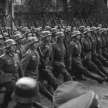

World War II (WWII) was a global conflict that lasted from 1939 to 1945, involving the major powers of the world, including the Allied and Axis powers. The war emerged from the aftermath of World War I and the rise of totalitarian regimes, particularly Nazi Germany under the leadership of Adolf Hitler.
The war began with the invasion of Poland by Nazi Germany on September 1, 1939. This led to the involvement of other major powers, including the United Kingdom and France, who declared war on Germany. The war quickly spread to other regions, including Asia, Africa, and the Middle East, with Japan and the United States also becoming major participants.
WWII was characterized by significant military battles and campaigns, including the Battle of Stalingrad, the Battle of Normandy, and the Battle of Midway. The war was also marked by significant human rights atrocities, including the Holocaust and the use of atomic bombs on Hiroshima and Nagasaki.
The war ended with the unconditional surrender of Germany and Japan in 1945. The conflict had a significant impact on the world, leading to the formation of the United Nations and major changes in political, economic, and social systems around the globe.
But here is the list of some battles that played an important role in the Allied victory.
1. Invasion of Poland:
Invasion of Poland, which began on September 1, 1939. Nazi Germany, under the leadership of Adolf Hitler, launched a surprise attack on Poland with a massive military force of over 1.5 million soldiers, supported by air and naval forces.
The invasion began with a series of coordinated attacks, including bombings of major cities, airfields, and military bases, followed by a ground offensive that quickly overran the Polish forces. The Polish army was outmatched and outgunned, and despite their best efforts, they were unable to stop the German advance.
The invasion of Poland marked the beginning of World War II in Europe, and it was a significant turning point in the history of the 20th century. It led to the declaration of war by Britain and France against Germany, and it ultimately led to the involvement of the United States and other nations in the conflict.
The invasion of Poland also had devastating consequences for the Polish people, as it led to the occupation of their country by Nazi Germany and the eventual extermination of millions of Polish civilians, including Jews, in the Holocaust. The invasion of Poland was a tragic and significant event in world history that had far-reaching consequences for millions of people.
2. Battle of Atlantic:
Battle of the Atlantic, which was fought between Allied and Axis naval forces in the Atlantic Ocean. The battle began in September 1939 and continued throughout the war until May 1945, when Germany officially surrendered.
The Battle of the Atlantic was a crucial battle because it was fought to control the shipping lanes in the Atlantic Ocean. The German Navy, under the command of Admiral Karl Dönitz, used U-boats (submarines) to sink Allied ships carrying supplies and troops to Europe. The Allies, led by the British Royal Navy and the United States Navy, deployed warships, aircraft, and convoy systems to protect their convoys from the German U-boats.
The battle was fought mainly through the use of submarine warfare, as German U-boats attacked Allied convoys with torpedoes. The Allies responded by deploying escort ships to protect the convoys, and they also used sonar and radar to detect and track U-boats. The Battle of the Atlantic was a long and grueling battle, and it involved thousands of ships and aircraft on both sides.
The outcome of the Battle of the Atlantic was crucial to the outcome of the war because it determined whether or not the Allies would be able to maintain their supply lines to Europe. In the end, the Allies were able to gain the upper hand in the battle thanks to technological advances in radar, sonar, and anti-submarine weapons, as well as improved convoy systems.
The Battle of the Atlantic was a significant turning point in the war because it allowed the Allies to maintain their supply lines and ultimately mount a successful invasion of Normandy in 1944, which helped to bring the war in Europe to an end.
3. Battle of Stalingrad:
Battle of Stalingrad, which was fought from August 23, 1942, to February 2, 1943, between German and Soviet forces. The battle was one of the most significant and bloodiest battles in the history of warfare, and it marked a turning point in the war on the Eastern Front.
The Battle of Stalingrad began when German forces, under the command of General Friedrich Paulus, launched a massive offensive against the Soviet city of Stalingrad. The Germans hoped to capture the city and cut off the Soviet Union's oil supply, which would have crippled the Soviet war effort. However, the Soviet Union, led by General Georgy Zhukov, launched a counter-attack and encircled the German forces in the city.
The battle was fought in close quarters, with German and Soviet soldiers engaged in brutal hand-to-hand combat in the city's streets and buildings. The fighting was intense and vicious, and it took a heavy toll on both sides. The Germans suffered heavy losses, and by the time the battle was over, only 91,000 of the original 330,000 German soldiers remained.
The Battle of Stalingrad was a significant turning point in the war because it marked the first major defeat of the German Army on the Eastern Front. The Soviet victory at Stalingrad also boosted morale among the Soviet troops and civilians and marked a turning point in the war's overall momentum. The victory at Stalingrad gave the Soviet Union the confidence and resources to launch a counter-offensive that would eventually lead to the defeat of Germany and the end of World War II.
In addition to its military significance, the Battle of Stalingrad was also a humanitarian tragedy. The fighting in the city was brutal and destructive, and it resulted in the deaths of over 1 million people, including soldiers and civilians.
4. Battle of Normandy/D.Day:
The Battle of Normandy, also known as D-Day, was a major Allied operation during World War II that began on June 6, 1944. It was a massive amphibious invasion of Nazi-occupied France by Allied forces that involved nearly three million troops, making it the largest amphibious assault in history.
The objective of the invasion was to establish a foothold in France, allowing Allied forces to launch a full-scale attack against Germany and eventually liberate Western Europe from Nazi control. The invasion began with a massive airborne assault by paratroopers and glider troops, followed by a naval bombardment and an amphibious landing of Allied troops on the beaches of Normandy.
The invasion was preceded by an extensive deception campaign designed to mislead the Germans about the location and timing of the invasion. The Allies created a fictitious army, complete with fake tanks and planes, to deceive the Germans into believing that the invasion would take place at a different location.
Despite initial setbacks, the Allies managed to establish a beachhead and secure a foothold in France. The success of the invasion was due in large part to the bravery and determination of the Allied soldiers, who faced heavy resistance from the well-fortified German defenders.
Over the next several weeks, the Allies continued to push inland, encountering stiff resistance from German forces. However, by August 1944, the Allies had successfully liberated Paris and had established a firm foothold in France, allowing them to launch a full-scale attack against Germany from the West.
The Battle of Normandy was a turning point in World War II and marked the beginning of the end of Nazi control in Europe. It was a major Allied victory that demonstrated the power and effectiveness of combined arms warfare and showcased the bravery and determination of the Allied soldiers who fought in the battle. The sacrifices made by the soldiers who fought in the Battle of Normandy are still remembered and honored today as a testament to their courage and sacrifice.
5. Battle of Bulge:
The Battle of the Bulge, also known as the Ardennes Offensive, was a major German offensive campaign launched against the Western Allies during World War II. The battle began on December 16, 1944, and lasted until January 25, 1945.
The battle was fought in the Ardennes forest region of Belgium, Luxembourg, and northeastern France. The German goal was to split the Allied forces and seize the port of Antwerp, which would have disrupted Allied supply lines and possibly forced them to negotiate a peace treaty.
The battle began with a massive surprise attack by German forces, who used a combination of artillery, tanks, and infantry to break through Allied lines. The Germans initially made significant gains, creating a "bulge" in the Allied lines, hence the name "Battle of the Bulge."
The Allies were caught off guard by the attack and were initially pushed back. However, the German advance eventually slowed due to logistical difficulties and fierce resistance by Allied troops, who fought tenaciously despite being outnumbered and outgunned.
The battle was eventually won by the Allies, who were able to push back the German advance and recapture lost territory. The battle was a major turning point in the war, as it marked the end of significant German offensive capabilities in the West and allowed the Allies to continue their advance towards Germany.
The Battle of the Bulge was one of the bloodiest battles of World War II, with over 80,000 American casualties and 100,000 German casualties. The battle showcased the bravery and determination of the Allied soldiers, who fought valiantly against overwhelming odds, and demonstrated the resilience and strength of the Allied forces in the face of a determined enemy attack.
6. Battle of Iwo Jima:
The Battle of Iwo Jima was a major battle fought between the United States and Japan during World War II. The battle took place on the island of Iwo Jima, a small volcanic island located in the Pacific Ocean, approximately 750 miles south of Tokyo.
The battle began on February 19, 1945, with an amphibious landing by US Marines. The objective of the invasion was to capture the island and its three airfields, which would provide an important base for the US military to conduct air strikes against Japan.
The Japanese defenders were well-prepared for the invasion and had constructed a complex network of underground tunnels and bunkers, making them difficult to dislodge. The battle was one of the bloodiest of the war, with both sides suffering heavy casualties.
Despite the heavy resistance, the US Marines were eventually able to secure the island and its airfields. The battle was won by the United States after 36 days of intense fighting, with the Japanese suffering nearly 22,000 casualties, while the United States suffered over 26,000 casualties, including more than 6,800 dead.
The capture of Iwo Jima was a significant victory for the United States, as it provided a strategic base for the US military to launch air attacks against Japan. The iconic photograph of the raising of the American flag on Mount Suribachi during the battle has become a symbol of American military heroism and sacrifice.
The Battle of Iwo Jima is remembered as one of the most ferocious and costly battles of World War II, highlighting the bravery and determination of both the Japanese and American soldiers who fought in the battle.
7. Battle of Berlin:
The Battle of Berlin was the final major battle fought between the Allied forces and Nazi Germany during World War II. The battle took place in Berlin, the capital city of Germany, from April 16 to May 2, 1945.
The battle began when the Soviet Union launched a massive offensive against the city, with the goal of capturing Berlin and ending the war in Europe. The Germans put up a fierce resistance, but they were ultimately overwhelmed by the Soviet forces.
The battle was fought in the streets of Berlin, with both sides engaging in intense urban warfare. The Soviet forces faced stiff resistance from the Germans, who were fighting from heavily fortified positions and had constructed extensive defensive fortifications.
The fighting was brutal and resulted in heavy losses for both sides. The Soviets suffered over 80,000 casualties, while the Germans suffered over 100,000 casualties.
The battle ended with the capture of Berlin by the Soviet forces, marking the end of the war in Europe. The city was left in ruins, with much of its infrastructure and buildings destroyed.
The Battle of Berlin was significant in that it marked the final defeat of Nazi Germany and the end of the war in Europe. The battle also demonstrated the importance of urban warfare and the devastating impact that it can have on both civilians and military personnel.
The Battle of Berlin is remembered as one of the most significant events of World War II, as it marked the end of a long and devastating conflict that had ravaged Europe and the world. The battle is also remembered as a testament to the bravery and sacrifice of the soldiers on both sides who fought and died in the conflict.
Although there are many other battles which I did not mention. If you want me to cover up on those other battles show me some support so that I can cover up those too.
Thanks for reading.
About the Creator
Keep reading
More stories from War Explained and writers in Education and other communities.
Prevention First: How Proactive Medical Care Builds Stronger Communities
Preventive medical care plays a critical role in shaping healthier communities. When people receive care before illness develops, they avoid many severe conditions. This approach improves quality of life and reduces strain on healthcare systems. Moreover, prevention supports long-term wellness rather than short-term treatment. Communities that prioritize preventive care experience lower rates of chronic disease. As a result, individuals remain active and productive. Preventive care, therefore, serves as the foundation for sustainable public health.
By St. John's Community Health4 days ago in Education
Starting Strong: Learning the Basics of Investment Management
Investment management involves managing money set aside to grow over time. It is about deciding how and where to put money so that it earns more in the future. This process includes choosing among options such as stocks, bonds, or real estate. It also involves planning how long to hold these investments and how to react when markets change. For beginners, learning about investment management is the first step toward gaining control over their financial future.
By Winston Feng3 days ago in Education




Comments (1)
Hope you will like my story, please appreciate me by supporting me. Again thanks.