
Basic understanding of Six Sigma
Six Sigma methodology
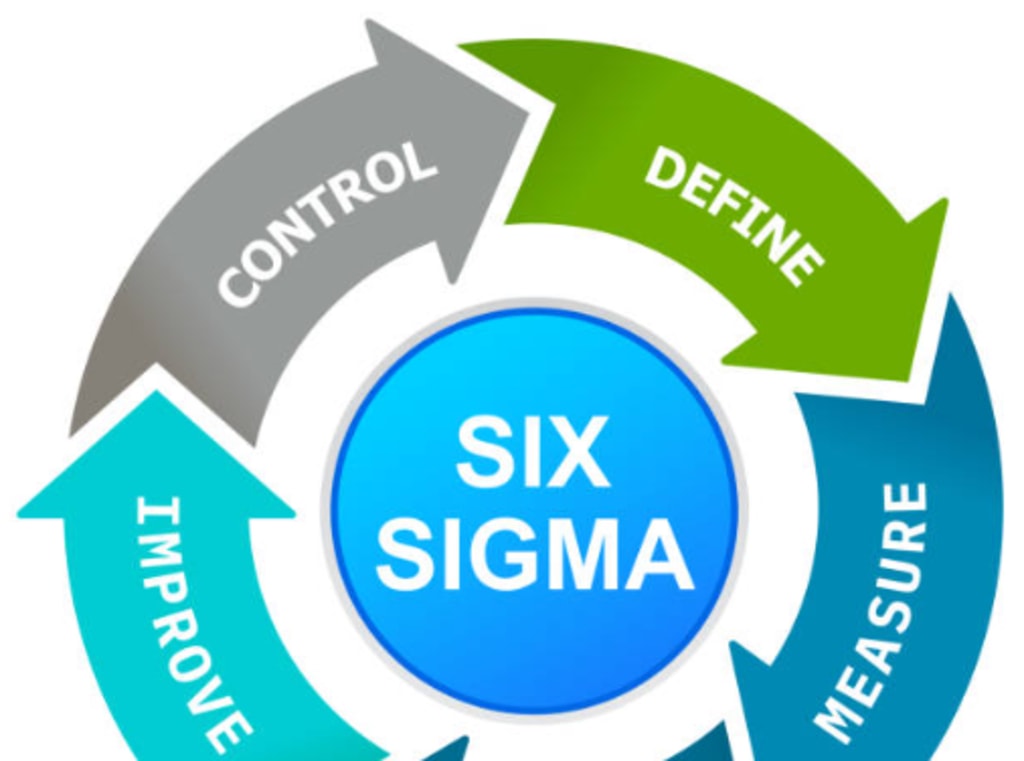
Six Sigma is a methodology that uses data and statistical analysis to identify and eliminate defects in a process. It aims to improve the quality of the output of a process by identifying and removing the causes of defects and minimizing variability in manufacturing and business processes.
The Six Sigma methodology is broken down into five phases:
1) Define: Identify the problem and define the goals of the project.
2) Measure: Collect data and measure the current performance of the process.
3) Analyze: Analyze the data and identify the causes of defects.
4) Improve: Develop and implement solutions to eliminate the causes of defects.
5) Control: Monitor the process to ensure that the improvements are sustained and that the process remains in control.
The Six Sigma methodology is often used in manufacturing, but it can also be applied to any process in any industry. It is a data-driven approach that relies on the use of statistical tools and techniques to identify and eliminate defects.
Some of the key tools used in Six Sigma include:
Statistical Process Control (SPC): Uses statistical methods to monitor and control a process.
Design of Experiments (DOE): Uses experimentation to identify the factors that affect a process and to determine their relative importance.
Failure Modes and Effects Analysis (FMEA): Identifies potential failure modes and their causes, and evaluates the potential effects of those failures.
Six Sigma is often associated with a certification process, where individuals can become Six Sigma Green Belts, Six Sigma Black Belts, and Six Sigma Master Black Belts. These certifications indicate the level of knowledge and experience an individual has in using Six Sigma methodologies and tools.
Overall, Six Sigma is a methodology that helps organizations improve the quality of their products and services by identifying and eliminating defects in their processes.
It is a data-driven approach that relies on statistical tools and techniques to identify and eliminate defects, and it can be applied to any process in any industry.
DMAIC is the acronym for the five phases of the Six Sigma methodology: Define, Measure, Analyze, Improve, and Control. These phases are used to systematically improve the quality of a process and eliminate defects.
- Define: In this phase, the project is defined and scoped. The problem is identified and the goals of the project are established. A project charter is created, which outlines the project goals, objectives, and success criteria.
- Measure: In this phase, the current performance of the process is measured. Data is collected and analyzed to determine the process's capabilities and limitations. Baseline performance metrics are established, and the process is mapped out.
- Analyze: In this phase, the data is analyzed to identify the root causes of defects in the process. Statistical tools such as Pareto charts, histograms, and cause-and-effect diagrams are used to identify patterns and relationships.
- Improve: In this phase, solutions are developed to eliminate the root causes of defects. Experiments are conducted to test the effectiveness of different solutions, and the best solution is chosen.
- Control: In this phase, the process is monitored to ensure that the improvements are sustained. Control plans are developed to ensure that the process remains in control and that the improvements are permanent. Statistical process control tools such as control charts are used to monitor the process.
DMAIC is a structured approach for process improvement, and it helps organizations to identify and eliminate defects in their processes, which leads to improved quality and efficiency. It is widely used in manufacturing and service industries, but it can be applied to any process in any industry.
.
About the Creator
Keep reading
More stories from writers in Education and other communities.
What causes cavities
When a team of archaeologists recently came across some 15,000-year-old human remains, they made an interesting discovery. The teeth of those ancient humans were riddled with holes. Their cavities were caused by the same thing that still plagues us today: specific tiny microbes that live in our mouths.
By Munesh Yadavabout 14 hours ago in Education
How Business Coaching Helps Founders Scale With Clarity and Control
Business coaching assists founders to scale since hustle and reactivity are substituted with structure, systems and strategic leadership. Strategic coaching provides clarity in the marketing, operations, leadership, and decision-making roles of the business, eliminating the need to use the owner as the bottleneck, instead enabling the business to expand without havoc, burnout, or firefighting.
By Alice Adams5 days ago in Education
Rachel Reviews: The Spiral Archive by Pieter Hendrik
It's difficult for me to know where to start with a review of this book as it was, for me, an entirely unique experience and one that I'll probably never have again. I don't want that to be interpreted as unenjoyable but it has left me scratching my head a little and ruminating on its content, its themes and its characters.
By Rachel Deeming3 days ago in BookClub
A Dart at Dusk
Seconds ago, the sullen sun set on the two of us… my exuberant furry companion and me. A fresh breeze embraces us, delivering welcome relief from the day’s oppressive heat. His typical stumbling and staggering along — apace with a sloth — has turned into trip-trapping, high-stepping, almost skipping along.
By Angie the Archivist 📚🪶7 days ago in Petlife



Comments
There are no comments for this story
Be the first to respond and start the conversation.