
Basic Cryptocurrency Concepts (For Beginners)
What is Blockchain? Explained Simply

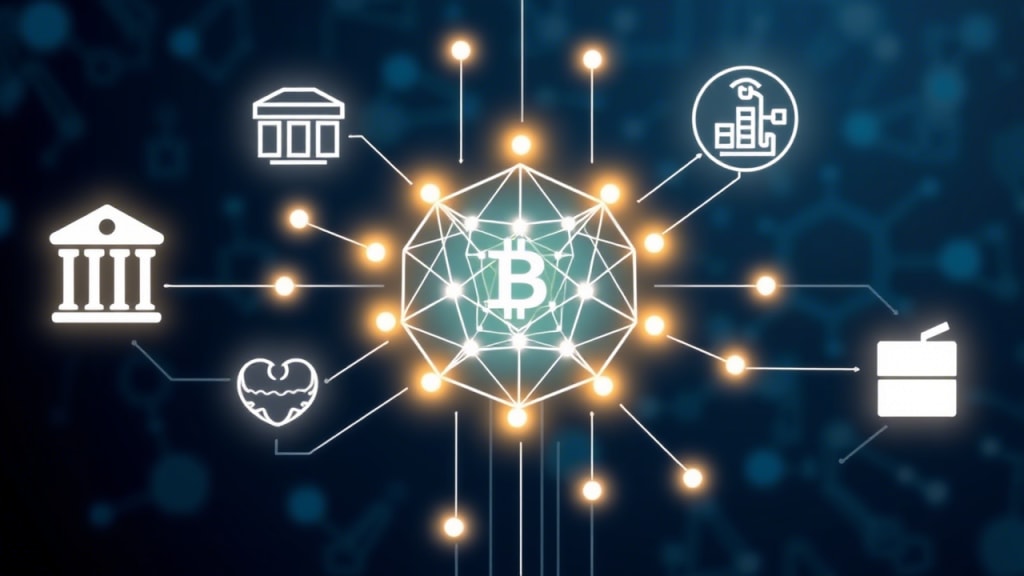
In today’s digital world, blockchain technology has gained immense popularity due to its association with cryptocurrencies like Bitcoin and Ethereum. However, blockchain is much more than just a foundation for digital currencies—it has the potential to revolutionize industries such as finance, healthcare, supply chain management, and more. But what exactly is blockchain, and how does it work? Let’s break it down in simple terms and understand the concepts of blockchain.
1. What is blockchain?
A blockchain is a decentralized, digital ledger that records transactions in a secure, transparent, and tamper-proof manner. Unlike traditional databases managed by a single entity, a blockchain is distributed across a network of computers, making it resistant to manipulation and fraud.
Think of it as a public notebook where transactions are recorded in chronological order. Once information is added, it cannot be changed or deleted, ensuring integrity and trust.
2. How Does Blockchain Work?
Blockchain operates on a few fundamental principles:
1. Blocks: Information is stored in blocks, which contain transaction data, a timestamp, and a unique code called a hash.
2. Chain: Blocks are linked together in chronological order, forming a chain.
3. Decentralization: Instead of a single authority controlling the data, blockchain is maintained by a network of computers (nodes).
4. Consensus Mechanism: Transactions are verified by network participants through mechanisms like Proof of Work (PoW) or Proof of Stake (PoS).
Each block references the previous block’s hash, making it nearly impossible to alter past transactions without modifying the entire chain, which is highly secure and computationally expensive.
3. Key Features of Blockchain
Blockchain technology stands out due to its unique features:
• Decentralization: No single authority controls the network, reducing risks of corruption and failure.
• Immutability: Once recorded, data cannot be changed, ensuring a trustworthy system.
• Transparency: All transactions are publicly accessible and verifiable.
• Security: Cryptographic encryption makes blockchain resistant to hacking and fraud.
• Smart Contracts: Self-executing contracts automate processes, reducing the need for intermediaries.
4. Types of Blockchains
There are different types of blockchains designed for various applications:
• Public Blockchain: Open to anyone (e.g., Bitcoin, Ethereum).
• Private Blockchain: Restricted access, used within organizations (e.g., Hyperledger).
• Consortium Blockchain: Managed by a group of organizations (e.g., R3 Corda).
• Hybrid Blockchain: Combines elements of public and private blockchains for flexibility.
5. Applications of Blockchain Beyond Cryptocurrency
While blockchain is widely known for its role in cryptocurrency, it has many other applications:
• Finance: Enables secure, fast, and low-cost cross-border transactions.
• Healthcare: Protects medical records and ensures data integrity.
• Supply Chain Management: Improves transparency and traceability of goods.
• Voting Systems: Prevents fraud and enhances election security.
• Real Estate: Streamlines property transactions and ownership verification.
6. Advantages and Challenges of Blockchain
Advantages:
• Enhances security and reduces fraud.
• Reduces reliance on intermediaries, lowering transaction costs.
• Provides transparency and accountability.
• Enables trust in digital transactions.
Challenges:
• Scalability issues can slow down transaction speeds.
• High energy consumption for some consensus mechanisms.
• Regulatory uncertainty and government restrictions.
• Complexity in integrating blockchain with existing systems.
7. The Future of Blockchain
Blockchain technology development will drive increased market-wide usage of its solutions. Innovations like Ethereum 2.0, decentralized finance (DeFi), and non-fungible tokens (NFTs) showcase blockchain’s expanding potential. Both federal governments and corporate entities search for blockchain-based solutions that aim to manage identity information and establish legal contracts and digital currency platforms.
Conclusion
The revolutionary blockchain technology provides systems with security features along with transparency capabilities and decentralized management. Despite its hurdles, blockchain stands out because of its ability to revolutionize business sectors and thus demands basic understanding from users. Blockchain technology develops the digital world through its applications with cryptocurrencies and business processes and digital identity solutions.
About the Creator
Girisha K M
I am a dedicated and enthusiastic blogger with a deep passion for educating others about cryptocurrency. My goal is to simplify complex crypto concepts and make them accessible to beginners and enthusiasts alike.
Keep reading
More stories from Girisha K M and writers in Education and other communities.
Basic Cryptocurrency Concepts (For Beginners)
In recent years, cryptocurrency has gained significant attention as a potential alternative to traditional money. While both serve as a medium of exchange, store of value, and unit of account, there are fundamental differences between them. This article explores the key distinctions between cryptocurrency and traditional money, covering their origins, structure, security, usability, and economic impact.
By Girisha K M11 months ago in Education
How I Discovered Evan Roderick and Why His Work Stood Out
Sometimes, discovering a new actor feels like stumbling upon a hidden gem. That’s exactly how I felt when I first came across Evan Roderick. I wasn’t looking for anyone new to follow, and I had no idea who he was at the time. But as soon as I saw him perform, something clicked. His presence was different. His style was subtle but powerful. And as I explored more of his work, it became clear that Evan Roderick wasn’t just another rising actor—he was someone who brought something unique to the screen.
By Evan Roderick7 days ago in Education
Karen Solie’s Wellwater Wins the TS Eliot Poetry Prize: A Quiet Triumph of Modern Verse
In a literary world often dominated by loud headlines and fast-moving trends, poetry still finds ways to stop time. That pause arrived powerfully with the announcement that Karen Solie’s poetry collection Wellwater has won the TS Eliot Poetry Prize, one of the most prestigious honors in contemporary poetry. The award is not only a personal milestone for Solie but also a reminder of poetry’s enduring ability to explore the human condition with depth, restraint, and emotional clarity. A Prize That Shapes the Poetry World The TS Eliot Poetry Prize, awarded annually in the United Kingdom, is considered one of the highest accolades a poet can receive. It recognizes the best new poetry collection published in the UK or Ireland, often setting the tone for literary discussions in the year ahead. Past winners have included some of the most influential poetic voices of modern times, making Solie’s victory a significant cultural moment. What sets this prize apart is its emphasis on craft, originality, and emotional intelligence—qualities that Wellwater embodies fully. Who Is Karen Solie? Karen Solie is a Canadian poet known for her sharp intellect, grounded observations, and emotionally resonant language. Over the years, she has earned respect for writing poetry that feels both deeply personal and socially aware. Her work often navigates themes such as place, memory, climate anxiety, labor, aging, and quiet resilience, avoiding grand statements in favor of carefully observed truths. Solie’s poetry does not shout; it listens. That listening quality is precisely what makes Wellwater stand out. Inside Wellwater: Poetry of Depth and Reflection Wellwater is a collection that moves deliberately, inviting readers to slow down and pay attention. The title itself suggests hidden depths—water drawn from below the surface, shaped by time and pressure. This metaphor runs throughout the collection, as Solie explores lives shaped by unseen forces: economic uncertainty, environmental change, personal history, and emotional endurance. The poems are rooted in everyday experiences, yet they carry philosophical weight. Solie writes about landscapes both natural and human-made, finding meaning in small moments: a shift in weather, a conversation overheard, a memory resurfacing unexpectedly. Her language is precise but never cold, intellectual without being inaccessible. Why Wellwater Resonated With Judges The TS Eliot Prize judges praised Wellwater for its quiet authority and emotional honesty. In a time when many works aim for immediacy or spectacle, Solie’s collection was recognized for its patience and depth. The poems do not rush toward conclusions; instead, they allow complexity to remain unresolved, mirroring real life. This approach reflects a broader shift in contemporary poetry, where subtlety and reflection are gaining renewed appreciation. Solie’s work demonstrates that poetry can be powerful without being performative, political without being loud, and personal without being confessional. Poetry in a Restless World The success of Wellwater also speaks to the role of poetry in today’s fast-paced, digitally saturated culture. As attention spans shrink, poetry offers a counterbalance—a space where readers can slow down, sit with uncertainty, and engage with language thoughtfully. Solie’s poems address modern anxieties without sensationalism. Climate change, economic instability, and emotional fatigue are present, but they are woven into lived experience rather than treated as abstract concepts. This grounding makes Wellwater especially relevant to contemporary readers seeking meaning rather than noise. What This Win Means for Contemporary Poetry Karen Solie’s TS Eliot Prize win reinforces the idea that poetry still matters, even—perhaps especially—in uncertain times. It highlights the value of work that prioritizes depth over trendiness and reflection over reaction. For emerging poets, Solie’s success is encouraging. It suggests that careful craftsmanship, intellectual honesty, and emotional restraint can still find recognition in a competitive literary landscape. For readers, Wellwater offers an invitation: to read slowly, to think deeply, and to reconnect with the quieter aspects of being human. A Lasting Literary Moment Karen Solie’s Wellwater winning the TS Eliot Poetry Prize is more than an award announcement—it is a celebration of poetry’s ability to endure, adapt, and illuminate. In drawing from the deep wells of observation and experience, Solie has created a collection that will likely be read and discussed for years to come. In an age hungry for instant answers, Wellwater reminds us that some truths are best discovered slowly.
By Fiaz Ahmed Brohiabout 2 hours ago in Education



Comments
There are no comments for this story
Be the first to respond and start the conversation.