
Balancing Narrative and Mechanics in Story-Driven RPGs: Crafting Harmony Between Plot and Play
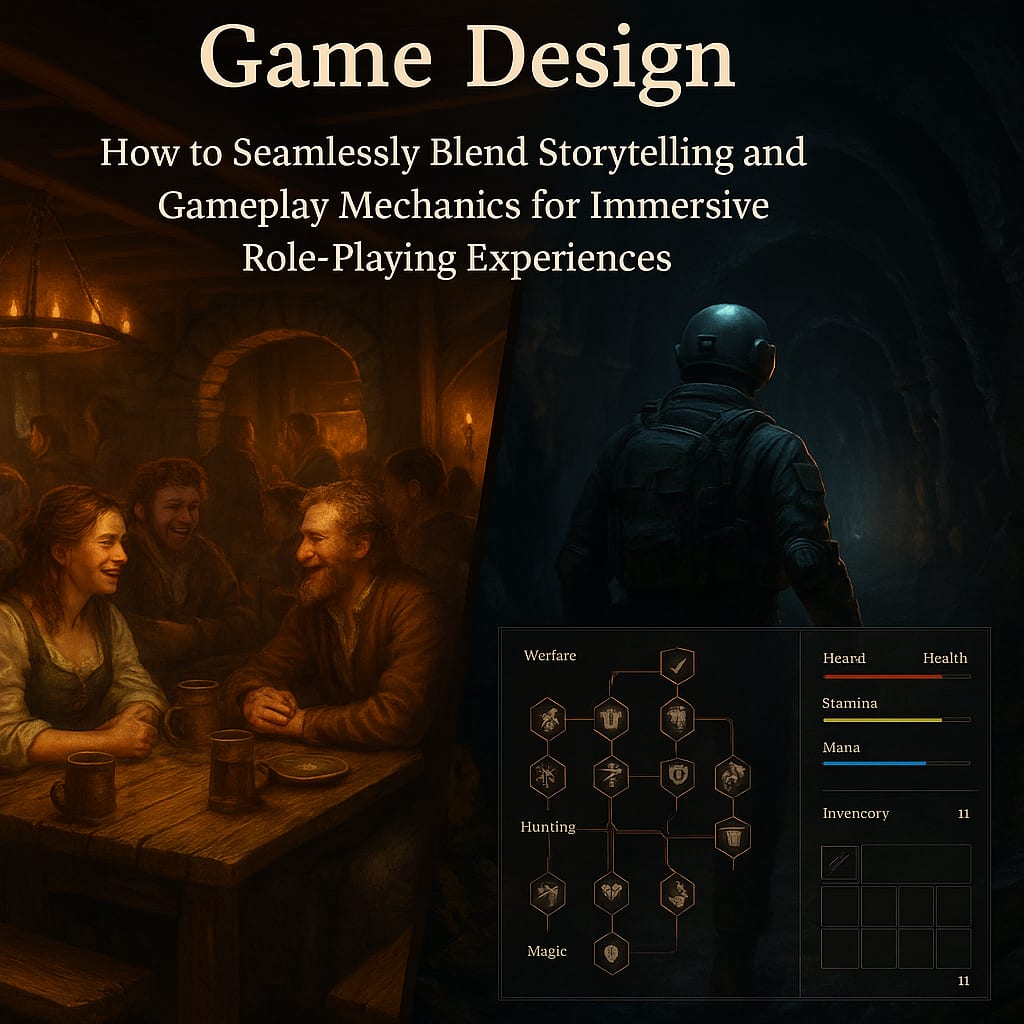
How to Seamlessly Blend Storytelling and Gameplay Mechanics for Immersive Role-Playing Experiences

In the realm of story-driven role-playing games (RPGs), the synergy between gameplay mechanics and narrative is paramount. These two pillars, story and interactivity, must function not as separate systems, but as interlocking gears in a well-oiled machine.
When they clash, the experience suffers. When they align, players are transported into worlds that feel real, dynamic, and meaningful.
Yet achieving this harmony is no simple task. Game developers must constantly walk a tightrope, ensuring that neither mechanics nor narrative overshadows the other.
This article dives deep into the core of that balance, offering insights, examples, and frameworks for creators eager to craft RPGs that tell compelling stories without sacrificing engaging gameplay.
Why Balance Matters
Narrative-driven RPGs invite players into immersive, character-rich environments. They promise growth, choices, and consequences. But without engaging mechanics, the story becomes passive, closer to a visual novel than a game.
On the flip side, if mechanics are prioritized while the story is sidelined, players may feel disoriented, emotionally disconnected, or overwhelmed by systems that lack context.
The best RPGs don’t just ask players to play a game, they invite them to live in a world.
Understanding the Dual Core: Story and Systems
Before diving into how to balance them, let’s define each element in the context of RPG design:
- Narrative includes plot, character arcs, worldbuilding, dialogue, lore, and thematic structure. It’s the emotional and intellectual context of the game.
- Mechanics encompass combat, skill systems, inventory, progression, exploration, dialogue trees, and quest structures, essentially, the systems players interact with.
These two components should not operate in silos. Instead, they should support and inform one another.
Designing Mechanics That Serve the Story
A powerful technique for maintaining balance is to ensure mechanics emerge from the narrative context. Rather than designing a feature and retrofitting it into the story, start with the world and characters, then ask, what mechanics would naturally arise in this setting?
1. Character Progression as Thematic Growth
Consider games like The Witcher 3 or Disco Elysium. In both, progression is deeply tied to the protagonist’s personal evolution. Geralt’s upgrades reflect his growth as a monster hunter, but also his evolving role as a father figure.
In Disco Elysium, your skill trees reflect mental states, making choices about perception, empathy, or logic isn’t just gameplay. Its identity.
2. Combat That Feels Narrative-Justified
Turn-based, action-heavy, or even non-lethal systems can all serve the story if designed intentionally.
For example, in Undertale, the player can choose not to fight. This is a mechanical option, but it’s also a narrative choice with major consequences. The mechanics are the story.
3. Dialogue as a System
Dialogue shouldn’t just be exposition delivery. It should reflect character stats, past decisions, and branching possibilities.
Games like Mass Effect integrate Paragon/Renegade options, subtly linking dialogue choices to long-term character development. Players feel their voice matters because the system says so.
Crafting a Narrative That Embraces Mechanics
The inverse approach is equally important: designing a narrative that accommodates and enhances mechanical complexity.
1. Storytelling Through Exploration
Exploration in games like Hollow Knight or Elden Ring isn’t guided by cinematic cutscenes. Instead, narrative is discovered in environments, item descriptions, and ambient storytelling.
The story is there, but the mechanics, movement, discovery, and environmental interaction become the vessel through which it unfolds.
2. Quests with Mechanical Stakes
Side quests should do more than fill time or provide loot. They should challenge players to engage with game mechanics in different ways. A well-designed quest might require creative use of stealth, dialogue, or puzzle-solving.
The story sets the stage, but the mechanics provide the tension.
3. Consistency Builds Credibility
If your narrative presents a world where magic is rare and feared, but the player can cast spells freely in town without consequence, a dissonance emerges. Mechanics that contradict the story break immersion.
Developers must maintain narrative logic even when balancing player freedom.
Navigating Common Pitfalls
Even seasoned developers can misstep. Recognizing warning signs can help steer a project back toward balance.
Ludonarrative Dissonance
This occurs when gameplay actions contradict the narrative. For example, if a game’s protagonist is described as a peace-loving pacifist, but gameplay requires endless slaughter, the result feels disjointed.
To avoid this, mechanics must be checked against narrative values.
Over-Exposition
Long info dumps, especially in early game, can alienate players. RPGs are notorious for this. Instead of front-loading the world’s lore, drip-feed it through interaction. Let mechanics unveil the world, not just cutscenes.
Feature Bloat
A desire to impress can lead to over-complication. Systems upon systems, all layered without synergy, dilute both gameplay and narrative clarity. It’s better to refine a few strong systems than to include a dozen disconnected ones.
Case Studies: Games That Get It Right
Planescape: Torment
This classic RPG is often cited for its emphasis on narrative over traditional combat. Its mechanics, particularly character alignment, memory, and dialogue choices, support its philosophical exploration of identity, death, and purpose.
Persona 5
The blend of daily life simulation with dungeon crawling might seem incongruent, but it works because both systems are deeply tied to character relationships and emotional stakes. Time management becomes a narrative tool, not just a mechanic.
Divinity: Original Sin 2
This game allows players enormous mechanical freedom, combining spells, manipulating environments, and breaking quest order, yet the story bends and adapts to these choices. The result feels like true agency.
Techniques for Indie Developers
Balancing story and systems isn’t only an AAA challenge. Indie creators often face tighter budgets and smaller teams, but they also enjoy creative flexibility.
Use Mechanics to Save on Cutscenes: Procedural storytelling and emergent narrative systems (e.g., dynamic faction relationships) can reduce reliance on scripted scenes.
Leverage Dialogue Systems: Rich, branching dialogue powered by stat checks or emotional tone can carry narrative weight without requiring large-scale animations or voice acting.
Iterate with Player Feedback: Even early playtests can reveal where players feel disconnected. Use that feedback to refine either the story or mechanics until they align.
Balancing narrative and mechanics in a story-driven RPG is a creative act of translation. It’s about taking emotion and theme, and expressing them through interactivity and rules.
It requires restraint, experimentation, and a deep understanding of the player experience.
When done well, the result is unforgettable. Players walk away not only remembering what they did, but why they did it, and what it meant.
It’s not just a game. It’s a story they lived through.
About the Creator
Richard Bailey
I am currently working on expanding my writing topics and exploring different areas and topics of writing. I have a personal history with a very severe form of treatment-resistant major depressive disorder.
Keep reading
More stories from Richard Bailey and writers in Education and other communities.
Leveraging Open Game Licenses for Your Indie RPG Project
Creating an indie tabletop RPG is an ambitious, rewarding endeavor. You’ve got mechanics to design, settings to flesh out, lore to stitch into every page. But before diving headfirst into your dream project, you might want to ask:
By Richard Bailey7 months ago in Education
Top 10 Essential Skills for Success in 2026
By 2026, the job market is no longer driven only by degrees or titles. Technology, especially Artificial Intelligence (AI), automation, and remote work, has changed how companies operate and how people work. Many routine tasks are now handled by machines, while humans are expected to do work that requires thinking, judgment, creativity, and emotional understanding. This shift means that skills — not just education — determine success. The following 10 skills are considered essential for 2026 because they combine technology awareness with human intelligence. Let’s understand them one by one, step by step.
By Talha khan4 days ago in Education


Comments
There are no comments for this story
Be the first to respond and start the conversation.