
"Balancing Ideals and Interests: The Challenges of American Foreign Policy"
The Challenges of American Foreign Policy

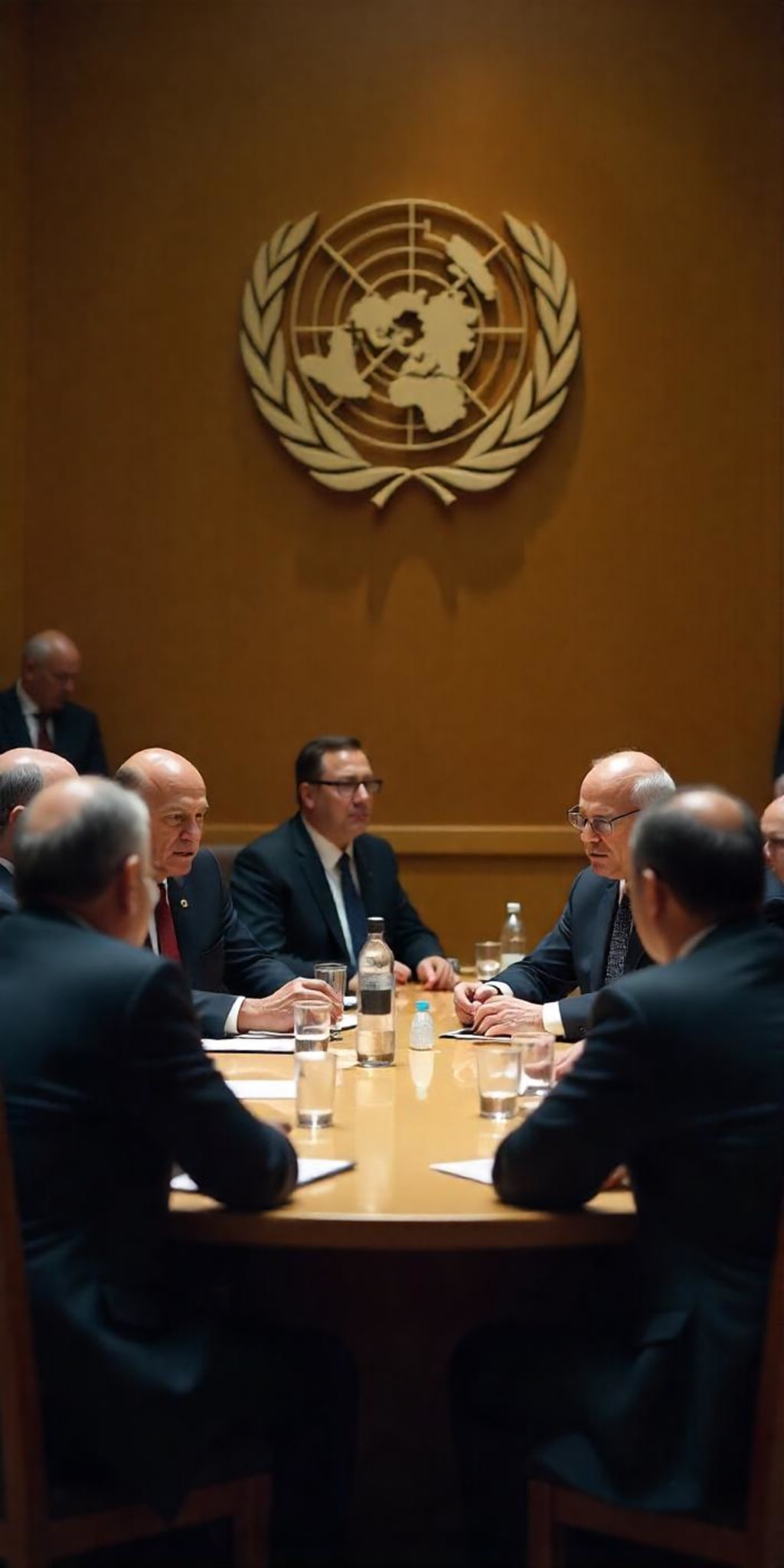
Foreign Policy of the United States – Description
The foreign policy of the United States refers to the strategies and decisions used by the U.S. government to interact with other nations, safeguard national interests, and promote global stability. Rooted in the principles of democracy, freedom, and security, U.S. foreign policy has evolved over time to address changing global dynamics.
The primary goals of U.S. foreign policy include:
• Protecting national security
• Promoting economic prosperity
• Supporting democratic values and human rights
• Maintaining global peace and stability
To achieve these objectives, the United States employs a combination of tools such as diplomacy, economic aid, military alliances, trade agreements, and strategic partnerships. U.S. foreign policy is shaped by the President, the State Department, Congress, and various intelligence and defense agencies.
Over the decades, America’s foreign policy has played a major role in shaping global events — from its leadership during the Cold War and involvement in the United Nations, to its role in conflicts such as Iraq and Afghanistan, and its current efforts to address global issues like climate change, terrorism, and cybersecurity.
In the modern era, U.S. foreign policy balances traditional alliances (like NATO), economic competition (especially with rising powers like China), and diplomatic engagement in conflict-prone regions. It continues to be a key driver of international politics and global governance.
Foreign Policy of the USA: 20 Key Points
1. National Security Focus
Protecting the U.S. homeland and citizens is a top priority, including counter-terrorism, cyber defense, and military readiness.
2. Promotion of Democracy and Human Rights
The U.S. often supports democratic movements and institutions abroad and advocates for human rights protections.
3. Global Military Presence
The U.S. maintains a vast network of military bases around the world and strong alliances like NATO to project power and deter threats.
4. Economic Interests and Trade
Securing favorable trade agreements, protecting U.S. businesses abroad, and promoting economic stability are central goals.
5. Alliances and Partnerships
Strategic alliances (e.g., NATO, QUAD, AUKUS) play a major role in American foreign policy, enhancing collective security and influence.
6. Leadership in International Institutions
The U.S. plays a leading role in institutions like the UN, IMF, World Bank, and WTO to shape global rules and norms.
7. Use of Sanctions and Diplomacy
Sanctions are commonly used to pressure adversaries (e.g., Iran, North Korea, Russia) alongside diplomatic negotiations.
8. Counterterrorism Strategy
Post-9/11, fighting global terrorism became a major focus, leading to wars in Afghanistan and Iraq and counter-ISIS operations.
9. Pivot to Asia
A recent strategic shift aims to counter China’s rise in the Indo-Pacific region through economic, military, and diplomatic means.
10. Middle East Engagement
Long-standing involvement includes support for Israel, managing relations with Arab states, and maintaining oil flow and stability.
11. Climate Change Diplomacy
The U.S. has re-engaged in international climate efforts (e.g., rejoining the Paris Agreement) under recent administrations.
12. Support for Ukraine
Since 2022, U.S. foreign policy has strongly supported Ukraine against Russian aggression through military aid and sanctions.
13. Immigration and Border Security
Foreign policy intersects with domestic concerns on immigration, particularly regarding relations with Latin America.
14. Nuclear Non-Proliferation
The U.S. works to prevent the spread of nuclear weapons, particularly in Iran and North Korea, through treaties and inspections.
15. America First Approach (Trump Era)
A shift toward unilateralism and nationalism, reducing commitments to global institutions and traditional alliances.
16. Humanitarian Aid and Global Health
The U.S. is a major provider of foreign aid, including disaster relief and health programs (e.g., PEPFAR for HIV/AIDS).
17. Cybersecurity and Tech Competition
Increasing focus on cyber threats, digital sovereignty, and tech rivalry, particularly with China and Russia.
18. Latin America Relations
U.S. policy includes addressing migration, counter-narcotics, and democratic governance (e.g., Venezuela and Cuba).
19. Space and Emerging Domains
Expansion into space policy and defense, including the creation of the U.S. Space Force and partnerships on space exploration.
20. Soft Power and Cultural Diplomacy
Promotion of American culture, values, and education abroad helps build goodwill and influence without military force.
Foreign Policy of the USA: Additional 20 Points
21. Monroe Doctrine (1823)
A foundational principle stating that European interference in the Americas would be viewed as a threat to U.S. interests.
22. Marshall Plan (1948)
Post-WWII U.S. initiative to rebuild Western Europe, showing how economic aid was used to counter Soviet influence.
23. Containment Strategy
A Cold War-era policy aimed at preventing the spread of communism, leading to interventions in Korea, Vietnam, and elsewhere.
24. Deterrence and Mutually Assured Destruction (MAD)
Key Cold War policy using nuclear capability to deter Soviet aggression.
25. Soft Power and Public Diplomacy
Through education, media, exchange programs (like Fulbright), and cultural promotion, the U.S. shapes global opinions.
26. CIA and Covert Operations
Intelligence operations have played major roles in foreign policy (e.g., coups in Iran 1953 and Chile 1973).
27. Global War on Drugs
A long-standing U.S. initiative to combat narcotics production and trafficking, particularly in Latin America.
28. UN Peacekeeping and Diplomacy
The U.S. supports (and sometimes critiques) UN missions, using them to influence conflict resolution and humanitarian response.
29. Defense Spending Dominance
The U.S. has the largest defense budget globally, shaping its capacity for global influence and rapid response.
30. Energy Security and Foreign Policy
Securing oil and energy supplies has influenced U.S. relationships with countries like Saudi Arabia and Venezuela.
31. Foreign Military Sales and Aid
The U.S. supplies weapons and military training to allies, reinforcing relationships and strategic influence.
32. Pivot from Isolationism to Interventionism
Transitioned from non-involvement in world affairs (pre-WWI/WWII) to active global leadership post-WWII.
33. Strategic Ambiguity (e.g., Taiwan)
The U.S. often uses ambiguous commitments to avoid escalation while deterring aggression (especially regarding China-Taiwan).
34. Promotion of Free Market Economics
U.S. foreign policy supports global capitalism and trade liberalization through institutions like the IMF and WTO.
35. Space Diplomacy and International Treaties
The U.S. engages in shaping rules on outer space usage and cooperation (e.g., Artemis Accords).
36. Humanitarian Interventions
At times, the U.S. intervenes for humanitarian reasons (e.g., Somalia, Kosovo, Libya), though these are often controversial.
37. Policy Toward Rogue States
Special focus on countries seen as destabilizing (e.g., Iran, North Korea), often using sanctions, isolation, or deterrence.
38. Shifting Policy with Administration Changes
U.S. foreign policy can shift significantly between presidents (e.g., Obama vs. Trump vs. Biden) due to different worldviews.
39. Criticism of Hypocrisy or Double Standards
Critics argue U.S. foreign policy sometimes supports dictatorships or violates its own stated values for strategic gain.
40. Influence of Lobbying and Interest Groups
Foreign policy decisions are often influenced by lobbying from interest groups (e.g., AIPAC, arms industry, Cuban exiles).
About the Creator
Kazi Mirajul Islam
I am expert in digital Marketing .I am also E- book writer & story writer. I am committed to delivering high-quality content.Also create social media account like Facebook,twitter account ,Instagram ,you tube account create and mained.
Keep reading
More stories from Kazi Mirajul Islam and writers in Education and other communities.
The Day Learning Spoke Back
The classroom had learned to be silent long before the students did. Its walls were pale, almost apologetic, as if they knew they were holding more than chalk dust and old posters. They held unfinished thoughts. Forgotten questions. The kind of curiosity that once burned brightly and then learned, slowly, to dim itself.
By Jhon smith3 days ago in Education


Comments
There are no comments for this story
Be the first to respond and start the conversation.