

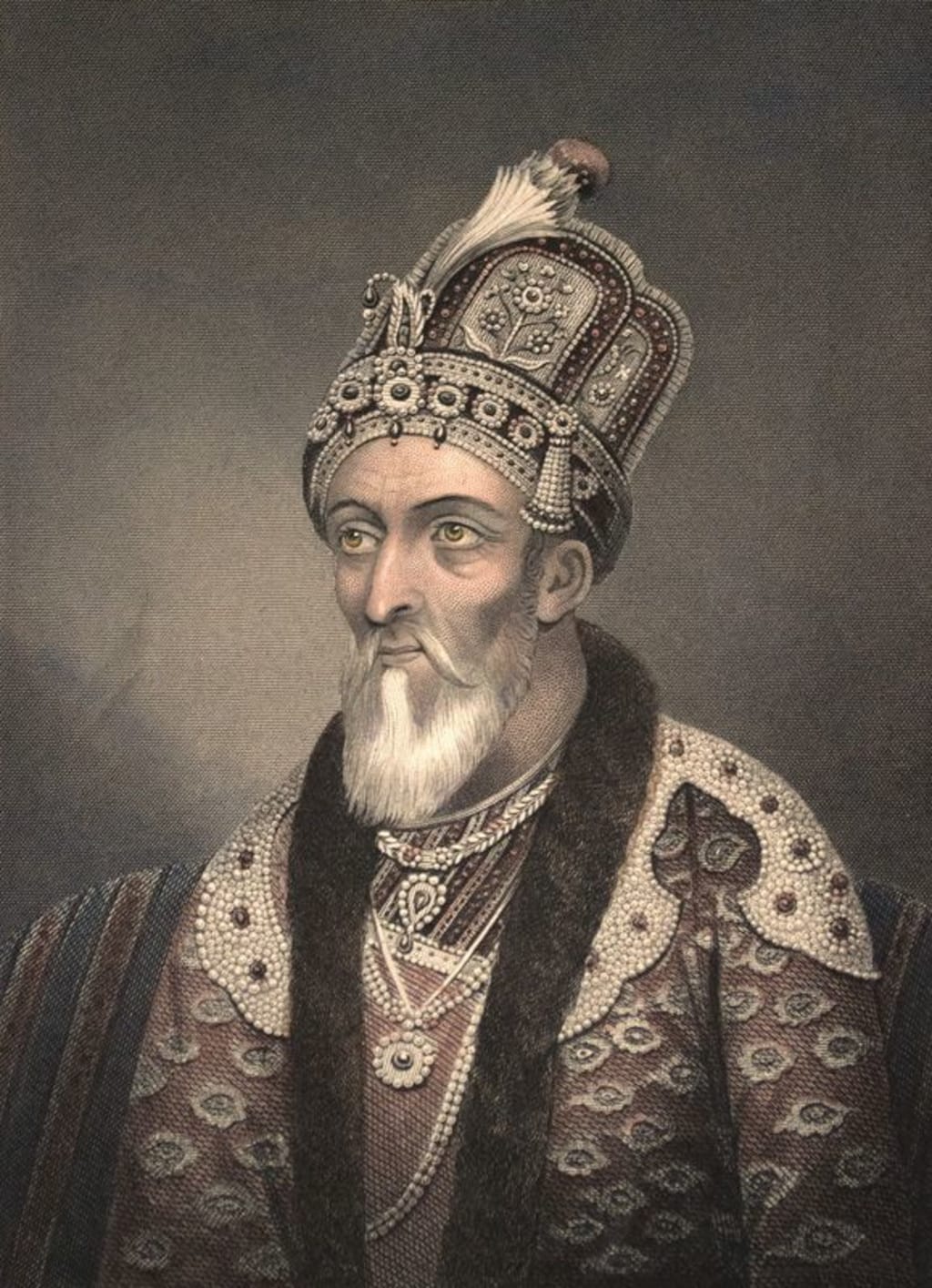
Bahadur Shah Zafar was the last Mughal emperor of India who ruled from 1837 until the Indian Rebellion of 1857, which marked the end of the Mughal Empire. Zafar was not only an emperor but also a poet, calligrapher, and a patron of the arts. Despite the challenges he faced during his reign, he is remembered as an important figure in Indian history who symbolizes the struggles of the Indian people against colonialism.
Zafar was born on October 24, 1775, in Delhi, India, and was the second son of Emperor Akbar Shah II. He ascended to the throne in 1837 after the death of his father. However, Zafar's reign was marked by political instability and economic decline. By the time he became emperor, the Mughal Empire was already in a state of decline, and the British East India Company had begun to assert its power over the Indian subcontinent.
During his reign, Zafar attempted to modernize his kingdom and to reform the administration. He abolished the practice of forced labor and established a new currency system. However, his efforts were largely unsuccessful due to the political and economic turmoil of the time.
In 1857, a widespread revolt erupted against British rule in India, which became known as the Indian Rebellion of 1857. The rebellion was triggered by a number of factors, including the introduction of new British policies that angered Indian soldiers, farmers, and traders. Zafar, who was then 82 years old, initially tried to stay neutral, but eventually joined the rebels.
The rebellion was ultimately suppressed by the British, and Zafar was captured and exiled to Rangoon, Burma (now Myanmar), where he died in 1862 at the age of 87. His death marked the end of the Mughal Empire, which had ruled India for more than three centuries.
Despite his relatively short reign and his ultimate defeat, Zafar is remembered as an important figure in Indian history. He was a poet and a calligrapher, and his poetry has remained popular among the Indian people. Zafar was a patron of the arts and supported the work of many artists and musicians during his reign. He is also remembered for his resistance against British colonialism and for his role in the Indian Rebellion of 1857.
In recent years, there has been renewed interest in Zafar's legacy. In 2007, the Indian government declared Zafar a national hero, and a memorial was erected in his honor in Delhi. The Indian government has also named a number of institutions after Zafar, including the Bahadur Shah Zafar National Urdu University in Hyderabad.
Despite the recognition and respect that Zafar has received in recent years, his life and legacy remain controversial. Some historians argue that he was a weak and ineffective ruler who was unable to prevent the decline of the Mughal Empire. Others argue that he was a visionary leader who attempted to modernize his kingdom and who resisted British colonialism to the best of his abilities.
Regardless of one's views on Zafar, it is clear that his life and legacy continue to inspire the Indian people today. He is remembered as a symbol of resistance against colonialism and as a champion of the arts and culture. His poetry continues to be read and recited, and his legacy remains an important part of Indian history.
About the Creator
munib
world history,edution about AD and BC
Keep reading
More stories from writers in Education and other communities.
E-Invoicing as a Catalyst for Digital Taxation and Business Efficiency in this Digital Era
Introduction In today’s rapidly evolving digital economy, businesses and governments are increasingly turning to technology to improve efficiency, transparency, and compliance. One of the most significant developments in this transformation is electronic invoicing, commonly known as e-invoicing. E-invoicing refers to the generation, exchange, validation, and storage of invoices in an electronic format between suppliers and buyers, often through government-mandated platforms or standardized systems.
By Bobby Yadav2 days ago in Education
Innovation Without Compassion: How the Absence of Empathy Undermines Modern Healthcare
Healthcare innovation promises efficiency, accuracy, and expanded access to care. New technologies, digital platforms, and streamlined systems continue to reshape medicine. However, when innovation moves forward without empathy, it often fails the very people it intends to serve. Patients feel disconnected, clinicians feel overwhelmed, and organizations struggle to achieve meaningful results.
By Mark Bouzyk5 days ago in Education



Comments (1)
Wao it's a great story