
Back to School: Finding Balance Between Excitement and Nerves
A fresh start, a chance to grow, and little lessons that last a lifetime

The smell of sharpened pencils, the weight of new notebooks, and the nervous excitement of seeing familiar faces in the hallways—there’s something universally nostalgic about the phrase “back to school.” Whether you are a student, a parent, or even a teacher, this season represents both a return to routine and a fresh chapter filled with possibility. The truth is, back to school is not just about schedules, grades, and new supplies; it’s about the emotional reset that comes with endings and beginnings. For many, the weeks leading up to the first day can feel like standing at the edge of a diving board. Some dive in joyfully, ready to embrace the splash, while others hesitate, anxious about the unknown beneath the surface. And that’s perfectly human. Returning to school is as much about mental adjustment as it is about academics.
Back-to-school season often comes with a swirl of emotions. Students might feel excitement about reuniting with friends but also dread the early mornings and heavy workloads. Parents might experience relief at the return of structure but also guilt about whether they’ve prepared their children well enough. Teachers juggle their own nerves, too—eager to inspire yet aware of the responsibility resting on their shoulders. It’s important to remember that these emotions don’t cancel each other out. Excitement can coexist with worry. Motivation can live alongside fear. Acknowledging this complexity helps make the transition smoother. Instead of forcing a picture-perfect return, it’s healthier to accept the ups and downs as part of the process.
When we think “back to school,” our minds often go straight to the shopping list: backpacks, sneakers, lunchboxes, highlighters. And while those tools do matter, they aren’t what truly prepare someone for the months ahead. The real essentials are less visible. Resilience, for example, is a must-have. No matter how organized a planner is, there will always be forgotten assignments, group projects that test patience, or surprise quizzes that make the stomach flip. Teaching students to adapt, recover, and keep moving is far more valuable than any expensive set of pens. Another essential is kindness. The first days back are often filled with silent comparisons—who looks different, who seems more confident, who’s wearing the “right” clothes. A kind word or simple smile can completely change someone’s day. In fact, years after graduating, most people don’t remember the details of every lesson, but they do remember how someone made them feel.
One of the biggest challenges of back-to-school season is adjusting routines. After a summer of late nights, spontaneous plans, or family trips, suddenly waking up at 6:30 a.m. feels like a shock to the system. For students, parents, and teachers alike, structure must be rebuilt. This adjustment isn’t just about alarm clocks. It’s also about creating habits that support learning and well-being. Setting aside time for homework, but also for rest. Balancing screen time with real conversations. Finding moments to slow down in a world that often demands constant productivity. A routine doesn’t have to be rigid to be effective. In fact, flexibility often leads to better results. Maybe a student concentrates better after a short walk. Maybe a parent finds that preparing lunches the night before saves both time and stress in the morning. Small shifts can make the school year feel less overwhelming.
Education is, of course, the foundation of school, but the social experience shapes students just as much as academics do. Back-to-school season means navigating friendships, peer pressure, and social media, all while trying to figure out who you are and who you want to become. For many, friendships are the bright spots of the year—the laughter during lunch, the shared secrets, the group projects that turn into bonding experiences. For others, however, school can feel isolating. Being left out or misunderstood can make even the brightest classroom seem dim. This is why empathy is so crucial during this time. Teachers who take the time to ask about a student’s day, parents who listen without judgment, and peers who show compassion can create an environment where everyone feels they belong.
Every school year is a story waiting to be written. There will be chapters filled with victories—aces on tests, personal achievements, breakthrough moments in learning. But there will also be challenges: subjects that don’t come easily, mistakes that sting, and disappointments that feel bigger than they are. Yet, these challenges aren’t setbacks—they’re opportunities. Learning how to solve a difficult math problem, speaking up in class even when your voice shakes, or recovering from a poor grade teaches resilience and courage. These are the real life lessons hidden inside the textbooks.
The beauty of “back to school” is that it doesn’t just happen once in childhood. Life offers us many “first days”—a new job, a move to a new city, the start of a new project. Each time, we carry with us the little lessons from those classroom years: the importance of preparation, the power of kindness, the need for flexibility, and the value of perseverance. This is why, even long after graduation, the back-to-school season stirs something inside us. It reminds us that beginnings, though daunting, are also full of hope.
So as the school year begins, let’s embrace the sharpened pencils, the morning routines, the nervous smiles, and even the mistakes waiting to happen. Let’s remember that learning isn’t just about grades or tests but about growing into the best version of ourselves. Back to school is not just a return—it’s a renewal, a reminder that every day is a chance to start again, to learn something new, and to connect with the people around us in meaningful ways. And that is a lesson worth carrying far beyond the classroom.
About the Creator
A New Era in Heart Care: Cutting-Edge Diagnostic Tools in Modern Cardiology
Cardiovascular disease continues to be a major health concern across the United States, affecting millions of individuals each year. Early and accurate diagnosis is essential for preventing life-threatening events such as heart attacks, strokes, and heart failure. Over the past few decades, cardiology has experienced tremendous technological growth, shifting from basic clinical assessments to highly advanced imaging and diagnostic systems that provide detailed insights into the heart’s structure and function.
By Nishi Patelabout 5 hours ago in Education
Teaching with Insight: How Emotional Intelligence Transforms Classroom Outcomes
In education, academic expertise and subject mastery often receive the greatest attention. Curriculum standards, assessment frameworks, and instructional strategies dominate professional development conversations. Yet one factor consistently influences student achievement, classroom culture, and long-term growth: emotional intelligence. While often categorized as a soft skill, emotional intelligence produces measurable, lasting results in educational settings.
By Thomas Kuriakose, MDabout 5 hours ago in Education
A Historic Declaration
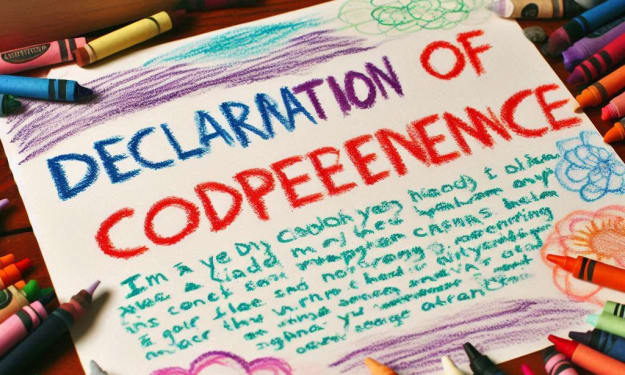
We the People of the Husbands of the United States of America, in Order to form a more perfect Union, and I mean you...with me...establish Justice, insure domestic Tranquility, provide for the common defence, promote the general Welfare, and secure the Blessings of Liberty to ourselves, after Puberty, do ordain and establish this Declaration of Co-Dependence.
By Gerard DiLeo5 days ago in Humans


Comments
There are no comments for this story
Be the first to respond and start the conversation.