
Autonomous Vehicles
The feature of Automobiles
I. Introduction
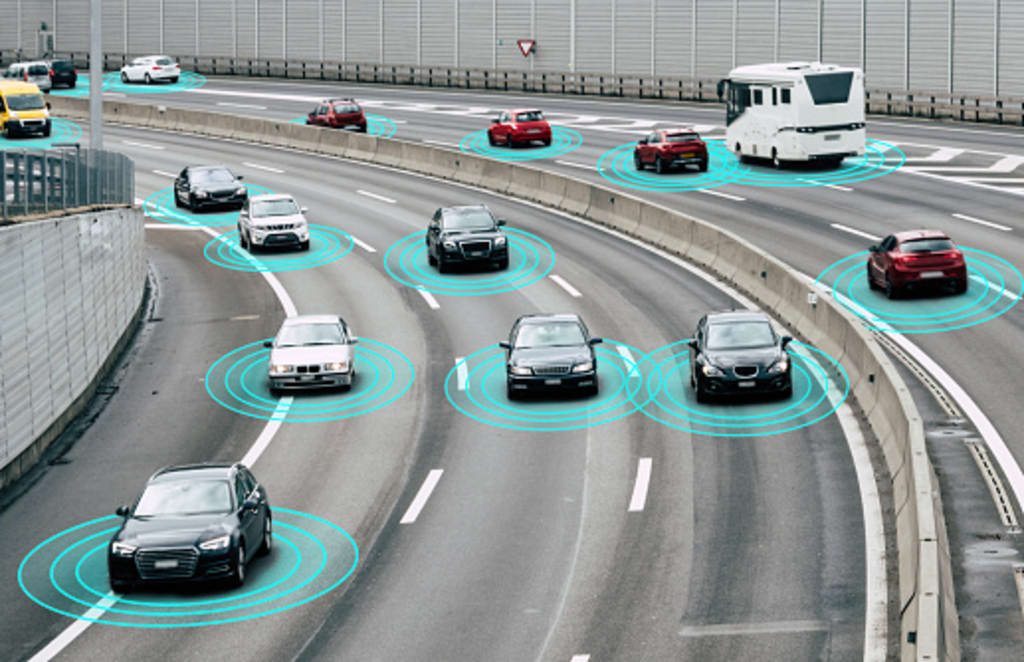
Autonomous vehicles are vehicles that are capable of sensing their environment and navigating without human input. They use a variety of sensors and technologies, such as radar, lidar, and computer vision, to perceive their surroundings and make decisions about where to go and how to avoid obstacles. Autonomous vehicles are also equipped with onboard computers that allow them to process and interpret sensor data, plan a course of action, and execute that plan. Autonomous vehicles can operate in a variety of environments, including on roads, in the air, and in water. They are designed to perform a wide range of tasks, such as the transportation of people or goods, search and rescue, and exploration. There are many different types of autonomous vehicles, including:
Self-driving cars: These are vehicles that are capable of driving themselves without human input. They use a variety of sensors and technologies, such as radar, lidar, and computer vision, to perceive their surroundings and make decisions about where to go and how to avoid obstacles. Some self-driving cars are fully autonomous, meaning that they can handle all aspects of driving without any human intervention, while others are semi-autonomous, meaning that they can assist the driver but still require some human input.
Drones: Drones are unmanned aircraft that are capable of flying autonomously. They use a variety of sensors, such as GPS and inertial measurement units, to navigate and avoid obstacles. Drones can be used for a wide range of applications, including surveillance, delivery of goods, mapping, and search and rescue.
Robots: Robots are machines that are capable of performing tasks autonomously or with limited human supervision. There are many different types of robots, including ground-based robots that can move around on wheels or legs, and aerial robots that can fly. Robots can be used for a wide range of applications, including manufacturing, inspection, exploration, and search and rescue.
Autonomous boats and ships: These are watercraft that are capable of navigating and performing tasks without human input. They use a variety of sensors, such as GPS and sonar, to perceive their surroundings and make decisions about where to go and how to avoid obstacles. Autonomous boats and ships can be used for a wide range of applications, including the transportation of goods, search and rescue, and monitoring of aquatic environments.
II. Benefits of autonomous vehicles Autonomous vehicles have the potential to enhance accessibility for people who are unable to drive due to age, disability, or other factors. Some of the ways in which autonomous vehicles could enhance accessibility include:
Providing mobility: Autonomous vehicles could provide a reliable and convenient means of transportation for people who are unable to drive due to age, disability, or other factors. This could help to improve access to work, healthcare, and other important services for these individuals.
Improving safety: Autonomous vehicles are designed to be safer than human-operated vehicles, as they are less prone to accidents caused by human error. This could make them a particularly appealing option for people who are concerned about their safety when driving or riding in a vehicle.
Increasing independence: Autonomous vehicles could also help to increase independence for people who are unable to drive due to age, disability, or other factors. By providing a convenient and reliable means of transportation, autonomous vehicles could help these individuals to live more independently and to participate more fully in their communities.
Enhancing mobility options: Autonomous vehicles could also enhance mobility options in areas that are underserved by traditional forms of transportation, such as rural areas or areas with limited public transportation. By providing a reliable and convenient means of transportation, autonomous vehicles could help to improve access to important services and opportunities in these areas.
III. Challenges to the development and deployment of autonomous vehicles
Technical issues (e.g. reliability, sensor performance)
There are a number of technical issues that need to be addressed in order for autonomous vehicles to be reliable and safe. Some of the key issues include:
Sensor performance: Autonomous vehicles rely on a range of sensors to gather data about their environment and to navigate roads safely. These sensors include cameras, lidar, radar, and other technologies. Ensuring that these sensors are reliable and accurate is a key technical challenge, as any errors or failures in the sensor data could compromise the safety of the vehicle.
Machine learning: Autonomous vehicles use machine learning algorithms to analyze sensor data and make decisions about how to navigate roads safely. Ensuring that these algorithms are reliable and accurate is a key technical challenge, as any errors or failures in the algorithms could compromise the safety of the vehicle.
Vehicle control systems: Autonomous vehicles use complex control systems to process sensor data and make decisions about how to operate the vehicle. Ensuring that these control systems are reliable and accurate is a key technical challenge, as any errors or failures in the control systems could compromise the safety of the vehicle.
Cybersecurity: Autonomous vehicles are vulnerable to cyber attacks, which could potentially compromise the safety of the vehicle and its occupants. Ensuring that autonomous vehicles are secure and resistant to cyber attacks is a key technical challenge.
Mapping: Autonomous vehicles rely on accurate and up-to-date maps to navigate roads safely. Ensuring that these maps are accurate and up-to-date is a key technical challenge, as any errors or omissions in the maps could compromise the safety of the vehicle.
Regenerate response
Regulatory challenges (e.g. developing standards and laws for autonomous vehicles)
There are a number of regulatory challenges that need to be addressed in order to enable the widespread deployment of autonomous vehicles. Some of the key issues include:
Developing standards: There are currently no established standards for the development and deployment of autonomous vehicles. This makes it difficult for companies to know what is expected of them, and it also makes it difficult for regulators to ensure that autonomous vehicles are safe and reliable. There is a need to develop standards for autonomous vehicles that cover a range of areas, including performance, safety, cybersecurity, and data privacy.
Developing laws: Another regulatory challenge is the need to develop laws and regulations that specifically apply to autonomous vehicles. This will require governments to address a range of complex issues, such as liability in the case of accidents, insurance, and privacy.
Ensuring safety: One of the main priorities for regulators when it comes to autonomous vehicles is ensuring that they are safe. This will require the development of robust testing and certification processes, as well as the creation of rules and guidelines to ensure that autonomous vehicles are operated safely.
Managing cybersecurity risks: Autonomous vehicles are vulnerable to cyber attacks, which could potentially compromise the safety of the vehicle and its occupants. Regulators will need to develop rules and guidelines to ensure that autonomous vehicles are secure and to minimize the risk of cyber attacks.
Managing data privacy: Autonomous vehicles generate a large amount of data, including data about the vehicle's location, speed, and other factors. This data could be used to track an individual's movements and could raise privacy concerns. Regulators will need to develop rules and guidelines to ensure that data collected by autonomous vehicles is used in a way that is respectful of people's privacy.
Social and ethical considerations (e.g. liability in case of accidents, job displacement)
There are a number of social and ethical considerations that are associated with autonomous vehicles. Some of the key issues include:
Liability in case of accidents: One of the major social and ethical considerations with autonomous vehicles is the issue of liability in the case of accidents. If an autonomous vehicle is involved in an accident, it is not clear who would be held responsible: the manufacturer of the vehicle, the owner of the vehicle, or the person who was operating the vehicle (if there was one). This issue will need to be addressed through a combination of legal and regulatory frameworks, as well as through the development of new insurance models.
Job displacement: Another social and ethical consideration with autonomous vehicles is the potential for job displacement. Autonomous vehicles have the potential to replace human drivers in a variety of roles, including truck drivers, taxi drivers, and delivery drivers. This could lead to significant job losses in these industries, which could have a negative impact on the economy.
Privacy: Autonomous vehicles generate a large amount of data, including data about the vehicle's location, speed, and other factors. This data could be used to track an individual's movements and could raise privacy concerns.
Equity: Autonomous vehicles have the potential to provide mobility to people who are unable to drive due to age, disability, or other factors. However, there is also a risk that autonomous vehicles could exacerbate existing inequalities if they are not deployed in a way that is equitable and accessible to all members of society.
Cybersecurity: Autonomous vehicles are vulnerable to cyber attacks, which could potentially compromise the safety of the vehicle and its occupants. This is a major concern and will require ongoing efforts to secure the systems that control autonomous vehicles.
IV. Current state of the industry
Overview of major companies and technologies involved in the development of autonomous vehicles
There are a number of major companies and technologies involved in the development of autonomous vehicles. Some of the key players in the industry include:
Waymo: Waymo is a subsidiary of Alphabet, Inc. and is one of the leading developers of autonomous vehicle technology. Waymo has developed a self-driving car system that uses a combination of sensors, machine learning, and other technologies to enable vehicles to navigate roads safely.
Tesla: Tesla is a manufacturer of electric vehicles and is also actively involved in the development of autonomous vehicle technology. Tesla has developed its own self-driving car system, which is currently available as an option on some of its vehicles.
GM Cruise: GM Cruise is a subsidiary of General Motors and is focused on the development of autonomous vehicle technology. The company has developed an autonomous vehicle platform that it plans to use to launch a ride-hailing service in the coming years.
Uber Advanced Technologies Group: Uber Advanced Technologies Group is the self-driving vehicle division of Uber. The company is developing autonomous vehicle technology that it plans to use to launch a ride-hailing service using self-driving vehicles.
Apple: Apple is also believed to be actively working on autonomous vehicle technology, although the company has not publicly disclosed much information about its efforts.
In addition to these companies, there are many other startups and established firms that are involved in the development of autonomous vehicle technology. These companies are working on a range of technologies, including sensors, machine learning algorithms, and other technologies that are required to enable autonomous vehicles to operate safely.
Examples of real-world deployments of autonomous vehicles
There are a number of examples of real-world deployments of autonomous vehicles, including:
Autonomous shuttles: Autonomous shuttles are being deployed in a number of cities around the world to provide first- and last-mile transportation solutions. These shuttles are typically smaller vehicles that operate at slow speeds and are designed to transport people within a defined area, such as a campus or a neighborhood.
Autonomous delivery vehicles: Autonomous delivery vehicles are being used by a number of companies to deliver goods in both urban and rural areas. These vehicles can operate on roads and sidewalks, and are often used to deliver packages, groceries, and other items.
Autonomous taxis: Autonomous taxis are being tested in a number of cities around the world, with the goal of providing on-demand transportation services using autonomous vehicles. These taxis are typically operated by companies that have developed their own autonomous vehicle technology, and are designed to pick up and drop off passengers at pre-determined locations.
Autonomous trucks: Autonomous trucks are being tested and deployed in a number of countries for long-haul trucking. These trucks are designed to operate on highways and are equipped with sensors and other technology to allow them to navigate and avoid obstacles.
Autonomous buses: Autonomous buses are being tested and deployed in a number of cities around the world, with the goal of providing efficient and cost-effective public transportation services. These buses are typically larger vehicles that are equipped with sensors and other technology to allow them to operate safely in urban environments.
V. Conclusion
Summary of the potential benefits and challenges of autonomous vehicles
Improved safety: Autonomous vehicles are designed to reduce the number of accidents caused by human error, which is a major factor in most traffic accidents.
Increased efficiency: Autonomous vehicles can communicate with each other and with traffic infrastructure to optimize routes and reduce traffic congestion. This can lead to reduced fuel consumption and travel time.
Enhanced mobility: Autonomous vehicles could provide mobility for people who are unable to drive due to age, disability, or other factors.
Economic benefits: The development and deployment of autonomous vehicles could create new job opportunities and industries, as well as reduce the need for personal vehicle ownership.
There are also a number of challenges that need to be addressed in order for autonomous vehicles to be widely adopted. These include:
Technical challenges: Developing and deploying autonomous vehicles at scale is a complex technical challenge that involves advances in sensors, machine learning, and other areas.
Legal and regulatory issues: There are many legal and regulatory issues that need to be addressed in order for autonomous vehicles to be deployed safely and effectively, including issues related to liability, insurance, and privacy.
Public acceptance: There is some public scepticism and concerns about the safety and reliability of autonomous vehicles, and it will be important to address these concerns in order to gain widespread acceptance of the technology.
Infrastructure: Autonomous vehicles rely on accurate and up-to-date maps, as well as reliable connectivity and other infrastructure. Developing and maintaining this infrastructure will be a significant challenge.
The future outlook for the industry
It is difficult to predict the exact future outlook for the autonomous vehicle industry, as it is a rapidly evolving field that is influenced by a wide range of factors. However, it is generally expected that autonomous vehicles will play an increasingly significant role in the transportation sector in the coming years and decades.
One key factor that will shape the future of the autonomous vehicle industry is the rate at which the technology advances. As autonomous vehicle technology continues to improve and become more reliable, it is likely that the deployment of autonomous vehicles will increase.
Another important factor is the development of supportive policy and regulation. Governments around the world are beginning to put in place the legal and regulatory frameworks that will enable the deployment of autonomous vehicles on a large scale. As these frameworks are put in place and refined, it is likely that we will see more widespread deployment of autonomous vehicles.
Finally, the adoption of autonomous vehicles by consumers and businesses will also be a key factor in the future of the industry. As people become more familiar with the technology and its benefits, and as the cost of autonomous vehicles comes down, it is likely that we will see increased demand for these vehicles.
Overall, it is likely that autonomous vehicles will play an increasingly important role in the transportation sector in the coming years and decades, and that they will bring significant benefits to individuals and society.
About the Creator
Keep reading
More stories from Hemanth Kumar Avisi and writers in Education and other communities.
Why Certification Protects Transcription Careers in the Age of AI
Artificial Intelligence has rapidly transformed the transcription industry. Speech-to-text tools now promise instant results, lower costs, and effortless productivity. For businesses focused purely on speed, AI often appears to be the perfect solution. However, beneath this promise lies a critical reality: speed without accuracy creates risk.
By Mahesh Kumar4 days ago in Education
How Japan saved its biggest city from collapse
400 years ago, modern-day Tokyo was known as Edo, and it was already one of the biggest cities in the world, with a population approaching 1 million. However, it was on the verge of ecological collapse. Years of intense logging had led to massive deforestation. The city now faced timber shortages and the impacts of severe erosion and frequent flooding that threatened food supplies. But over just a few decades, Edo will transform and become one of the most sustainable and efficient cities in history.
By Munesh Yadav2 days ago in Education




Comments
There are no comments for this story
Be the first to respond and start the conversation.