
Automation Control Panels
Define Automation Control Panels

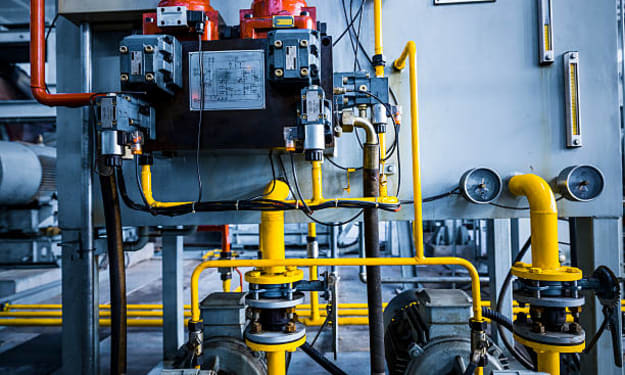
Industrial devices and processes are controlled and monitored via Automation Control Panels. Based on pre-programmed directives, they make decisions and take actions using input from sensors and other devices. Manufacturing machinery, conveyors, and process control systems are just a few of the functions and appliances that automation control panels may operate. They may also monitor and manage environmental factors like humidity and temperature. Thanks to automation control panels' typically user-friendly design, operators can quickly monitor and operate the equipment or process they are in charge of.
What are the types of Automation Control Panels?
There are several types of automation control panels, including:
PLC (Programmable Logic Controller) panels: These employ a collection of pre-programmed instructions to manage industrial machinery and processes. They are frequently used in production and process control systems.
HMI (Human-Machine Interface) panels: These panels give operators a graphical interface for monitoring and managing commercial machinery and processes. Typically, they have a touch screen, input buttons, and a display screen.
SCADA (Supervisory Control and Data Acquisition) panels: These panels are used to monitor and control industrial processes and machines over long distances, such as across a plant or facility. They use a network of sensors and other devices to collect data and transmit it to a central control panel for monitoring and control.
MCC (Motor Control Center) panels: Electric motors in industrial machines and processes are managed by MCC (Motor Control Center) panels. They frequently contain starters, fuses, and other parts required for motor maintenance.
DCS (Distributed Control System) panels: These are used to operate sophisticated, massive industrial machinery. They use a distributed network of controllers and input/output devices to gather data and carry out control operations.
What are The Basic Features Of Automation Control Panels?
The following fundamental attributes are frequently seen in automation control panels:
Modules for input/output (I/O): These modules enable the control panel to regulate outputs like actuators or other process variables while receiving input from sensors and other devices.
Programmable logic: This is the set of guidelines that the control panel uses to decide what to do and how to do it based on the information it receives.
Display screen: This visual interface lets users keep an eye on the machine or process they are controlling. In order to provide information to the operator, it could contain text, graphics, or other visual components.
Input buttons or touch screens: These enable the operator to enter instructions and adjust the machine or process under control.
Interfaces for communication: These allow the control panel to communicate with other system components, such as sensors, actuators, or other control panels.
Power supply: The control panel's and its parts' electrical power source.
Protective enclosures: The control panel and its components are shielded from the environment from which it is installed.
What are the Differences Between Automation Panels and PLCs?
Automation panels and PLCs control industrial processes and equipment, but there are some significant distinctions between the two.
Automation panels typically operate several machines or processes, whereas PLCs only handle one device or process. As they are made to manage a larger number of inputs and outputs and carry out more complicated control duties, automation panels are frequently more complex and feature-rich than PLCs.
Another distinction is that automation panels frequently have input buttons, touch screens, and displays. That enables operators to monitor and operate the machine or process from the panel. On the other hand, PLCs are normally operated and programmed using a different computer or device and do not typically have a display or input buttons.
Automation panels are more thorough control systems that supervise numerous machines or processes. On the other hand, PLCs are specialist controllers intended to manage a specific device or process. Keep reading.
About the Creator
Keep reading
More stories from Adam Smith and writers in Education and other communities.
The Power of Service Beyond the Uniform in Everyday Life
Service reaches far beyond the moments spent in uniform, shaping lives long after formal duties end. Veterans, first responders, and public servants carry lessons that extend into workplaces, families, and communities. Their values of discipline, compassion, teamwork, and integrity influence how they interact with others and how they continue serving in new ways. As they go about their everyday lives, their actions show that service is not defined by a role but by a mindset. Because of that mindset, countless communities benefit from their leadership and steady presence.
By Eric Schnabelabout 9 hours ago in Education
Importance of Technology in Learning Islamic Education
Islamic education has always been rooted in knowledge, reflection, and understanding. From handwritten manuscripts to traditional madrasa systems, learning has continuously evolved with time. Today, technology is shaping a new chapter in how Islamic education is taught, accessed, and understood. Rather than replacing traditional learning, technology enhances it, making Islamic knowledge more accessible, structured, and engaging for learners of all ages.
By Arslan Shahbazabout 8 hours ago in Education


Comments
There are no comments for this story
Be the first to respond and start the conversation.