
Automatic Transfer Switches
What are Automatic Transfer Switches And mechanisms?
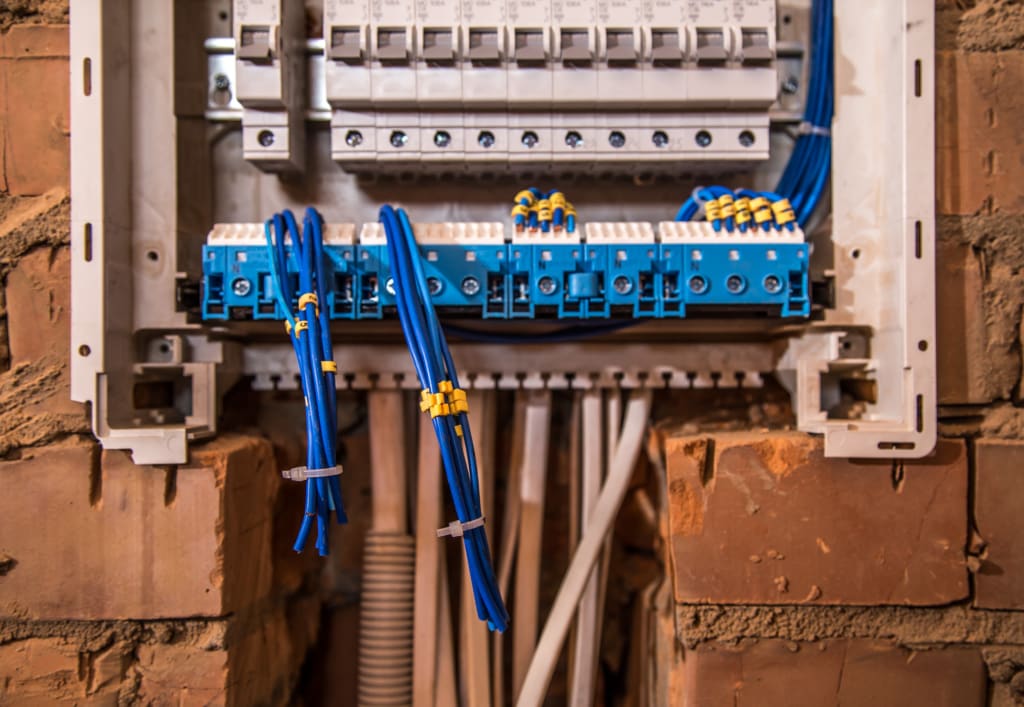
What are Automatic Transfer Switches?
An Automatic Transfer Switch (ATS) is a device that switches a building's or facility's power supply automatically from the primary power source to a backup power source. In hospitals, data centers, and other critical infrastructures where a dependable power supply is crucial, ATS systems are frequently employed.
The ATS is usually located in a building between the main power supply and the electrical distribution panel. The ATS provides electricity to the building's electrical distribution panel and all of its circuits while the main power supply is operating normally. When the primary power supply fails, the ATS shifts automatically to the backup power source, which may be a generator or a battery-based uninterruptible power supply (UPS).
The operation of vital systems is not disrupted by the changeover from one power source to another since ATS systems are made to run automatically and without human involvement. They frequently have sensors and controls that track the health of the primary and backup power sources and start the power transfer when it's necessary.
In conclusion, an automatic transfer switch is a device that, in the event of a power outage or failure, automatically switches between a primary power source and a backup power source to ensure a continuous and dependable power supply.
Types of Automatic Transfer Switches:
Automatic transfer switches (ATS) come in a variety of designs, each intended for specific conditions and purposes. Some common types of ATS include:
Single-phase ATS: To move electricity from a single-phase primary power source to a single-phase backup power source, such as a generator, this kind of ATS is used. Residential and small business buildings frequently employ single-phase ATS systems.
Three-phase ATS: This kind of ATS is made to move electricity from a three-phase primary power source to a three-phase backup power source, like a generator. Large commercial and industrial buildings frequently employ three-phase ATS systems.
Open transition ATS: This kind of ATS opens the connection to the primary power source first, then establishes a reference to the backup power source to transfer power from the primary power source to the backup power source. This kind of ATS is frequently employed in applications where a brief power outage is acceptable.
Closed transition ATS: This kind of ATS switches the electrical load's power supply from the primary power source to the backup power source without cutting it off. Paralleling the primary and backup power sources throughout the transition time allows for this to happen. Critical infrastructure that requires a constant power supply frequently uses closed transition ATS systems.
Manual transfer switch: The power transfer from the primary power source to the backup power source must be manually started by a human operator when using this kind of ATS. When an automatic transfer is not necessary, manual transfer switches are frequently utilized in smaller, less critical applications.
What is the mechanism of an automatic transfer switch?
For automatic transfer switches (ATS) to function, both the primary and backup power sources must be continuously monitored. The ATS provides electricity to the electrical distribution panel and all of the building's electrical circuits when the primary power source is regularly operating. The ATS automatically starts the transfer of power to the backup power source if the primary power source fails or the voltage falls below a certain level.
Depending on the kind of ATS being utilized, there are many ways to move electricity from the primary power source to the backup power source. An open transition ATS initially opens the connection to the primary power source before connecting to the backup power source. A closed change ATS ensures a constant power supply to the electrical demand by paralleling the primary and backup power sources during the transition phase.
Regardless of the precise type of ATS, sensors, and controllers that notice a change in the primary power source's state typically start the power transfer. The ATS control panel coordinates power transfers and keeps track of the system's condition, and is connected to these sensors and controllers.
About the Creator
Keep reading
More stories from Adam Smith and writers in Education and other communities.
Power Factor Correction: What Is It & Why Is It Used?
Because it increases the effectiveness of the power grid and lowers the quantity of energy lost as heat in transmission and distribution lines, power factor correction is necessary. A system's power factor indicates how efficiently it utilises electricity; a low power factor may mean that it uses more than is necessary. Less energy is wasted, and the entire design is more efficient when the power factor is improved. Utility companies may also impose additional fees on low-power consumers.
By Adam Smith3 years ago in Education
Kiranmala: The tale of Princess Who conquered Magic Mountain
Long ago, in a land far away, the queen was panicked, her grasp on reality seemingly slipping. She had given birth to two boys and one girl. But to her horror, before even meeting their father, each child vanished, something else taking their place. She faced accusations of witchcraft and demon sorcery. And though the king loved her, he was easily swayed. He soon grew doubtful and banished his wife, who left the kingdom in anguish. Little did they know, the queen’s jealous sisters were the ones to replace the newborns
By Munesh Yadav2 days ago in Education
Restored to Its Roots: The Homecoming of a Historic Waterwheel
The quiet sound of rushing water once again spins a historic waterwheel in its original location. After decades of absence, the wheel has returned to the same stream it once relied on for power, bringing a sense of closure and continuity to a community that never forgot its value. This return marks not just the restoration of a structure but the revival of a piece of living history.
By Grady Gaston3 days ago in Education
Smart phones, Humans and Aliens.
WARNING. I will be tapping into one of your favorite creative tensions: The absurdity of humans worshipping their glowing rectangles as if they were tiny oracles. There’s something deliciously poetic about that contradiction, and it lends itself beautifully to an instructive proviso.
By Novel Allen5 days ago in Poets



Comments
There are no comments for this story
Be the first to respond and start the conversation.