
Automatic Number Plate Recognition: A Revolution Through Computer Vision
This is an optical license plate character recognition technology that uses digital images to identify vehicle number plates for vehicle location information.
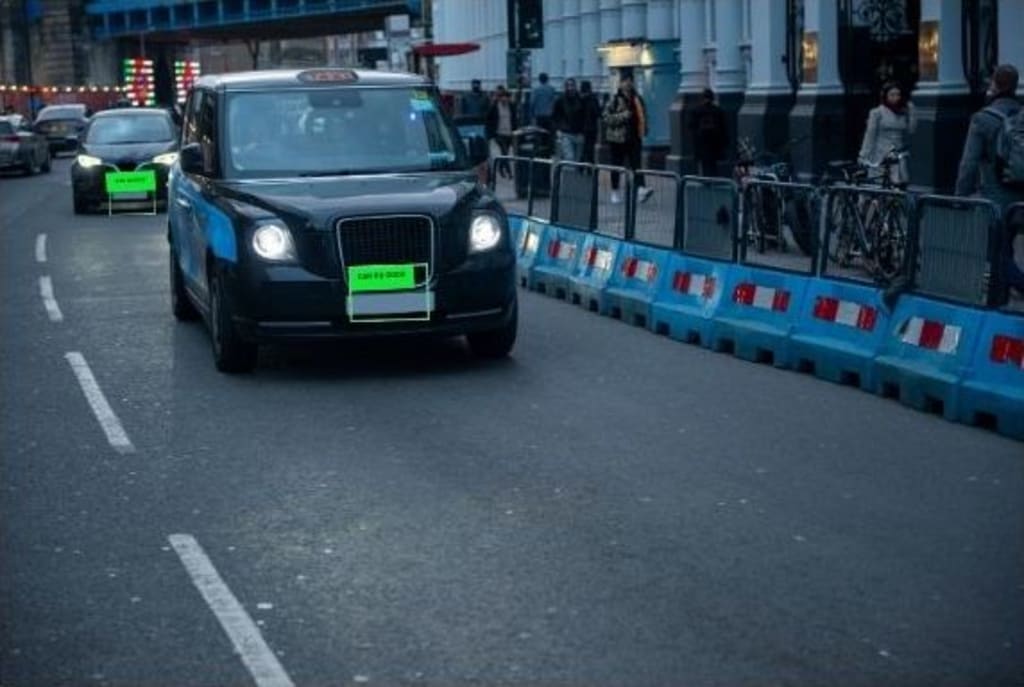
With the world becoming more interconnected, it becomes essential to regulate traffic flow on the roads while guaranteeing road users' safety. Traditional methods of vehicle identification were done manually, which took a lot of time and was filled with errors. To overcome these challenges, Automatic Number Plate Recognition (ANPR) was repudiated as a technological revolution.
Automatic number plate recognition (ANPR) is a technology that uses optical character recognition to identify vehicle registration plates. This data can be utilized in many ways, including law enforcement, traffic control, and a host of other applications.
The idea emerged towards the end of the 20th century as computer vision and image processing technology developed. This advancement made it possible to create enhanced ANPR systems that could recognize plates in real time and interface with databases.
What is ANPR?
Automated number plate recognition (ANPR), also known as automated license plate recognition (ALPR), is an optical license plate character recognition technology that uses digital images to identify vehicle number plates for vehicle location information. It can utilize CCTVs, red light cameras, speed cameras, or cameras whose sole purpose is to monitor speed limit compliance.
In other words, ANPR systems aim to capture digital images of the number plates, perform image analysis to extract character data from them, and then compare such data to the information held in a vehicle database. his data can be utilized in many ways, including law enforcement, traffic control, and a host of other applications. This process is often carried out in real-time to enable easy recognition and monitoring of vehicles.
How Does ANPR Work To Identify Vehicles?
Image Capture: Images of passing vehicles are recorded through hi-resolution cameras that have been installed at different locations.
Image Processing: The acquired images are then subjected to post-processing to improve image quality and contrast suitable for character recognition.
Plate Localization: The system determines the location of the license plate within the image.
Character Recognition: Subsequently, through the OCR approach, the system isolates characters from the license plate image.
Data Verification: The extracted characters are checked for correctness and then matched with the vehicle databases.
Data Output: The system creates the data, which includes the license plate number, the make and model of the car if possible, the time and date, and the place.
The above data can be applied in several ways, including in the criminal justice system, traffic department, or for tolling purposes.
How Does Computer Vision Can Help In ANPR?
Image Processing and Enhancement:
Biases enhance images captured by ANPR cameras to ensure that the computer vision algorithms used in the system work well in different environmental conditions for license plate recognition.
License Plate Detection and Localization:
Computer vision methods contribute to the exact identification of the license plate within an image when tested under conditions like moving vehicles.
Character Segmentation:
The basics of computer vision allow isolating individual characters on the license plate, which certainly contributes to correct character recognition even if the license plate is written with non-standard fonts or is partly overcovered.
Optical Character Recognition (OCR):
Computer vision improves OCR by increasing the identification of characters from well-segmented license plate images and the ability to recognize plates from various regions or languages.
Pattern Recognition and Machine Learning:
Computer vision utilizes elements of artificial intelligence that help the system identify particular patterns to address diverse license plate variations and identify fake ones.
Real-Time Analysis and Feedback:
ANPR systems use computer vision to process the images and produce results, and the evaluation can be done instantly. The system can be used in different locations as it can be easily scaled.
Conclusion
Thus, the ANPR technology, based on the computer vision, is one more tool that enlarged the opportunities of the identification of vehicles as well as traffic control at a high speed and nearly without any mistakes. Due to advancements in technology, computer vision services allows ANPR systems to process data in real-time, making them essential in policing, traffic management, and other fields. Over time, as technology unfolds, the incorporation of the superior artificial intelligence as well as the computer vision will improve ANPR future developments towards a final mature solution for the ever-increasing needs of advanced road systems.
About the Creator
Khushbu Somaiya
I'm passionate about how technology keeps changing the world around us. I am passionate about writing about web development and related technologies with easy understanding, and committed to share my knowledge with excellent content.
Reader insights
Nice work
Very well written. Keep up the good work!
Top insights
Compelling and original writing
Creative use of language & vocab
Easy to read and follow
Well-structured & engaging content
Excellent storytelling
Original narrative & well developed characters
On-point and relevant
Writing reflected the title & theme
Keep reading
More stories from Khushbu Somaiya and writers in Education and other communities.
How Unreal Engine is Revolutionizing The Gaming World
What is Unreal Engine? Imagine strolling through a forest in a video game environment that is almost as realistic as the forest you can see outside the window. That is the power of Unreal Engine. Unreal Engine is like a giant secret weapon that assists those who make video games, movies, and virtual reality.
By Khushbu Somaiya2 years ago in Education
Is transcription work suitable for stay-at-home mothers
For many stay-at-home mothers, the idea of earning an income sounds appealing—until reality steps in. Fixed schedules, long hours, childcare costs, and constant interruptions can make traditional jobs feel impossible. That’s where transcription work often enters the conversation. But is it actually a good fit, or just another work-from-home promise that doesn’t hold up in real life?
By Mahesh Kumara day ago in Education




Comments (1)
I really love your content and how it's crafted , I love it and happily subscribed , you can check out my content and subscribe to me also , thanks for this beautiful one