
Augmented Reality(AR)Technology
The Future of Immersive Experience
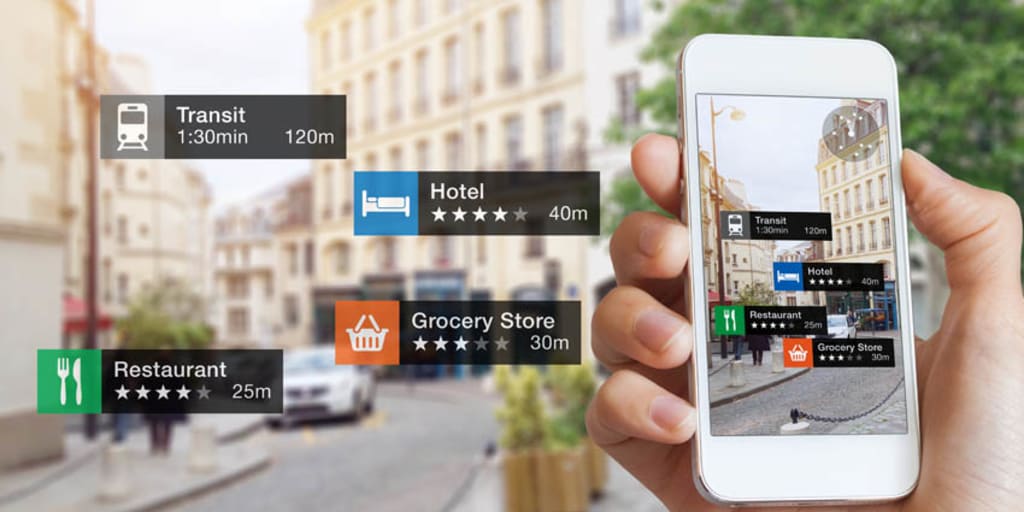
Augmented Reality (AR) Technology:
The Future of Immersive Experience
INTRODUCTION :
Augmented Reality (AR) technology has been gaining immense popularity in recent years as it has become more accessible and affordable. AR refers to the integration of digital information and virtual objects with the real world, enhancing the user's perception of reality. AR technology enables users to interact with digital objects in a real-world environment, creating a highly immersive experience.
In this article, we will explore the various aspects of AR technology, its applications, and its potential impact on various industries.
WHAT IS AR TECHNOLOGY?
AR stands for Augmented Reality, which is a technology that allows the blending of digital information or virtual content with the real-world environment. AR technology uses sensors, cameras, and displays to overlay digital information onto physical objects or spaces, creating an interactive experience for the user.
AR technology is a technology that overlays digital information or virtual objects onto the real world. AR can be experienced through various devices, including smartphones, tablets, headsets, and smart glasses. AR technology works by using computer vision, object recognition, and tracking technologies to identify and overlay digital objects onto the real world.
HOW DOES AR TECHNOLOGY WORK?
AR technology works by using the camera and sensors of the device to track the position and movement of the user's head and adjust the digital information accordingly. The device's software combines the real-world view with the digital information to create an augmented reality experience.
I. Capturing the Real World : AR technology starts by capturing the real-world environment using a camera, either on a smartphone or a dedicated AR device. The camera sends the images to the AR software for processing.
II. Tracking: The AR software uses sensors such as gyroscopes, accelerometers, and GPS to track the user's movement and the orientation of the device.
III. Overlaying Digital Content: Once the AR software has captured the real-world environment and tracked the user's movements, it overlays digital content on top of the real world. This digital content can include images, text, videos, or 3D models.
IV. Displaying the Result : The final step is to display the result to the user. This can be done using a screen or a headset that shows the real world with the overlaid digital content.
AR technology can be used in a variety of applications, including gaming, education, marketing, and industrial design. By combining digital content with the real world, AR technology creates a unique and immersive experience that can enhance many different fields.
APPLICATIONS OF AR TECHNOLOGY :
AR technology has a wide range of applications, including:
• Gaming: AR technology has been widely used in gaming to create highly immersive and interactive gaming experiences. Games like Pokemon Go, Ingress, and Harry Potter: Wizards Unite have leveraged AR technology to create highly engaging games.
• Retail: AR technology has been used in retail to provide customers with an immersive shopping experience. It allows customers to try out products virtually and see how they look before making a purchase.
• Education: AR technology has been used in education to create highly interactive and immersive learning experiences. It can be used to provide students with virtual field trips, 3D models, and simulations.
• Healthcare: AR technology has been used in healthcare to provide doctors with real-time information about patients. It can be used to overlay information about a patient's vital signs, medical history, and treatment options onto the real world.
• Real Estate: AR technology has been used in real estate to provide customers with virtual tours of properties. It allows customers to see how a property would look with different furnishings and designs.
4. Potential Impact of AR Technology on Industries: AR technology has the potential to revolutionize various industries. It can provide a highly immersive and interactive experience that can enhance customer engagement and satisfaction. It can also improve efficiency and productivity by providing workers with real-time information and data.
AR technology has the potential to transform industries such as healthcare, education, retail, and manufacturing. AR technology can help healthcare professionals provide better patient care by providing them with real-time information about patients. AR technology can also help educators provide students with highly immersive and interactive learning experiences.
CONCLUSION :
AR technology is a highly promising technology that has the potential to transform various industries. It can provide users with highly immersive and interactive experiences that can enhance customer engagement and satisfaction. It can also improve efficiency and productivity by providing workers with real-time information and data. As It continues to evolve and become more accessible, we can expect to see more innovative applications of this technology in the future.
About the Creator
Keep reading
More stories from writers in Education and other communities.
What Vloggers Must Know!
YouTube has always evolved alongside its creator community, and with the rapid growth of vlogging content, the platform has recently updated its policies to better define quality, originality, and monetization standards. These updates are especially important for vlog channel owners, as vlogs rely heavily on personal storytelling, daily life content, and real-world experiences. Understanding the new policy is essential for staying compliant, growing safely, and maintaining monetization eligibility.
By Bilal Mohammadia day ago in Education
Instructions Included Challenge Winners
For the Instructions Included challenge, we asked writers to tell a story through instructions and to trust the form to carry what could not be said outright. Across the top entries, that trust paid off in many different ways.
By Vocal Curation Team3 days ago in Resources
Off the Book
It ended like every other stupid idea. Badly, and alone. I’m researching digital confession ethics, he said. A tech ethicist. He gestured at floating data I couldn’t see then pulled out a physical notebook. Actual paper, fountain pen. He held it up like he was showing me scripture.
By Nicky Franklya day ago in Fiction


Comments
There are no comments for this story
Be the first to respond and start the conversation.