
Artificial Intelligence: Transforming the Future
Exploring the Benefits and Real-World Applications of AI Across Industries

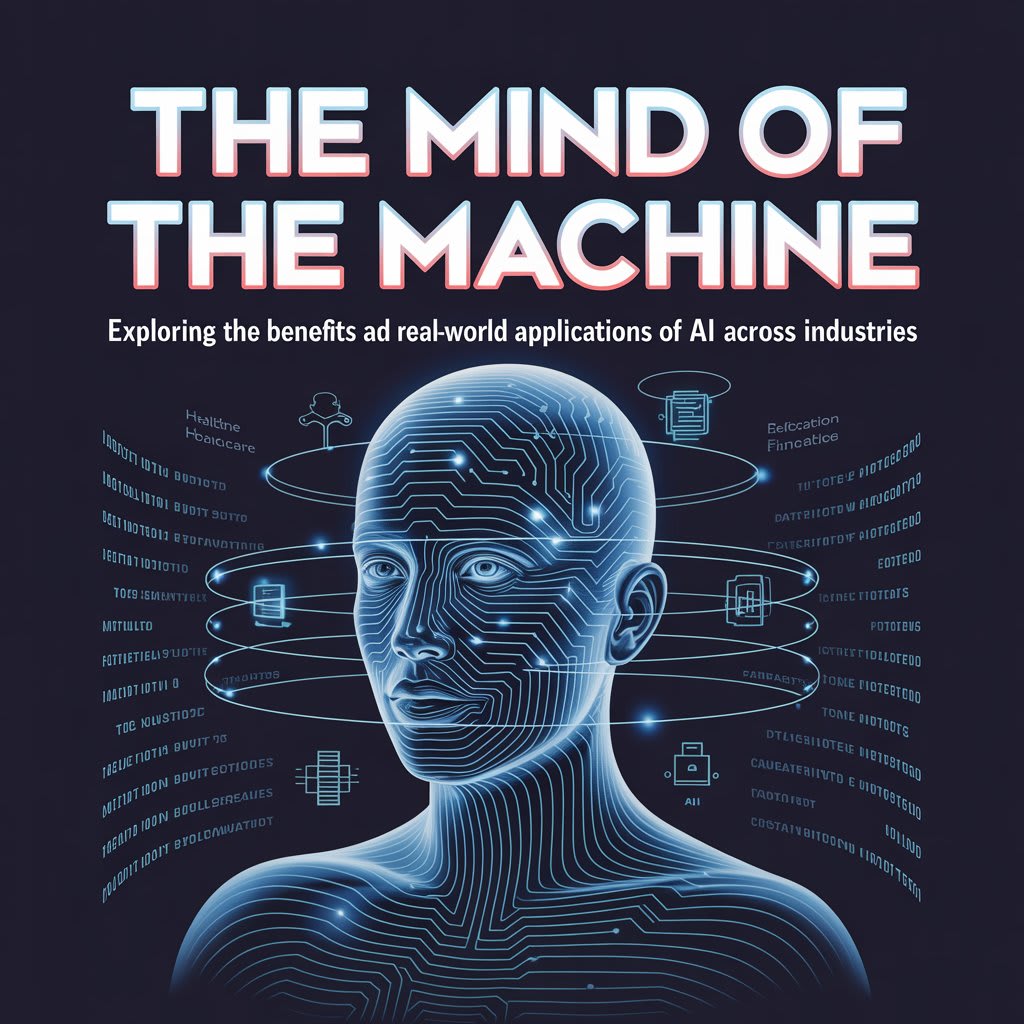
Artificial Intelligence (AI) is one of the most transformative and rapidly growing technologies of the 21st century. It refers to the simulation of human intelligence in machines that are programmed to think, reason, learn, and solve problems. AI has grown far beyond science fiction and academic theory—today, it is embedded in many aspects of our daily lives, from smartphones to healthcare systems. As AI continues to evolve, it promises to reshape industries, improve efficiency, and enhance human capabilities in profound ways.
What is Artificial Intelligence?
Artificial Intelligence encompasses a range of technologies that enable machines to perform tasks typically requiring human intelligence. These include:
Machine Learning (ML) – Systems that learn and improve from experience without being explicitly programmed.
Natural Language Processing (NLP) – Understanding and generating human language (e.g., chatbots, virtual assistants).
Computer Vision – The ability of machines to interpret and understand visual data.
Robotics – Machines capable of physical interaction with the world, often using AI to perform tasks.
Let’s explore the numerous benefits and uses of AI across different sectors.
Benefits of AI
1. Automation of Repetitive Tasks
One of the most prominent benefits of AI is automation. Repetitive and mundane tasks that once required human labor can now be handled more efficiently by AI systems. This reduces human error, increases productivity, and allows employees to focus on more creative or complex tasks.
For example, in manufacturing, robots equipped with AI assemble products faster and more accurately than humans. In offices, AI can automate data entry, customer support, and scheduling.
2. Improved Decision Making
AI can process large volumes of data at incredible speed, revealing patterns and insights that may not be visible to humans. Businesses use AI-powered analytics tools to make smarter decisions, forecast trends, and optimize operations.
Healthcare providers, for instance, can use AI to analyze medical data and suggest accurate diagnoses or treatment options. Financial institutions use it to assess risk and detect fraud in real time.
3. Enhanced Customer Experiences
AI plays a crucial role in personalizing the user experience. Through recommendation engines (like those used by Amazon or Netflix), AI helps tailor products, content, or services to individual preferences.
Chatbots and virtual assistants, such as Siri or Google Assistant, can handle customer inquiries 24/7, improving responsiveness and satisfaction.
4. Cost Reduction
By reducing the need for manual labor and minimizing errors, AI helps businesses lower operational costs. In logistics, for example, AI can optimize delivery routes, reducing fuel usage and improving delivery times.
Over time, AI systems become more efficient, resulting in long-term cost savings for organizations across various industries.
5. Availability and Scalability
AI systems can work round the clock without fatigue, making them ideal for environments that demand continuous operation. Furthermore, AI applications can be scaled up quickly to meet increased demand, something not always feasible with human labor.
Uses of AI Across Industries
1. Healthcare
AI is revolutionizing healthcare in multiple ways:
Diagnosis and Treatment: AI-powered systems can analyze medical images (like X-rays or MRIs) to detect diseases such as cancer with greater accuracy.
Drug Discovery: AI helps accelerate the process of developing new medications by simulating how drugs will interact with the human body.
Personalized Medicine: AI can tailor treatments based on a patient’s genetic makeup and history.
Robotic Surgery: Robots powered by AI assist in delicate surgeries, offering greater precision.
2. Finance
The financial industry relies heavily on AI for:
Fraud Detection: Monitoring transactions for suspicious patterns.
Credit Scoring: Evaluating loan applications more accurately.
Algorithmic Trading: Making stock trades at lightning speed based on market trends.
Customer Service: AI chatbots help banks serve customers without human agents.
3. Retail and E-commerce
AI transforms the shopping experience by:
Recommendation Engines: Suggesting products based on user behavior.
Inventory Management: Predicting demand to manage stock effectively.
Visual Search: Allowing users to search for products using images.
Chatbots: Providing 24/7 customer support and sales assistance.
4. Transportation
AI is at the core of the transportation revolution:
Self-driving Cars: Autonomous vehicles use AI to navigate roads, detect obstacles, and make real-time decisions.
Traffic Management: AI systems monitor traffic conditions to reduce congestion.
Fleet Management: Optimizing routes and maintenance schedules for logistics companies.
5. Education
AI is personalizing learning and administration:
Adaptive Learning Platforms: These adjust lessons based on a student’s pace and understanding.
Automated Grading: Saving teachers time by scoring multiple-choice tests or even essays.
Virtual Tutors: Providing help to students outside the classroom.
Administrative Automation: Streamlining tasks like admissions and scheduling.
6. Agriculture
AI is helping farmers increase productivity and sustainability:
Precision Farming: AI analyzes soil and crop data to optimize planting.
Pest Detection: Drones with AI identify pest outbreaks.
Weather Forecasting: Helping plan irrigation and harvests more efficiently.
7. Entertainment and Media
AI influences content creation and consumption:
Content Recommendation: Streaming services use AI to suggest music or shows.
Game Development: NPCs (non-player characters) now act more realistically thanks to AI.
Content Moderation: Platforms like YouTube use AI to detect and filter inappropriate content.
Ethical Considerations and Challenges
Despite its benefits, AI comes with challenges:
Job Displacement: Automation can lead to job losses in certain sectors.
Bias in Algorithms: AI can inherit biases from training data, leading to unfair outcomes.
Privacy Issues: AI systems that analyze personal data must be carefully regulated.
Security Risks: AI can be used maliciously, such as in deepfakes or autonomous weapons.
Ethical AI development involves transparency, fairness, accountability, and the creation of policies that prevent misuse.
Conclusion
AI is not just a futuristic concept—it is already reshaping how we live, work, and interact. From improving healthcare and financial services to transforming education and entertainment, the benefits of AI are immense. However, like all powerful technologies, it must be developed and used responsibly. As we move forward, striking the right balance between innovation and ethical considerations will be key to unlocking AI’s full potential.
About the Creator
Whispers of Yousaf
Where words breathe,
and emotions speak the truth.
I write about love, silence,
and the stories we’re too afraid to tell. ✨
Keep reading
More stories from Whispers of Yousaf and writers in Education and other communities.
Firefly Aerospace’s Blue Ghost Mission 1: A Big Step for Private Space Travel
In early 2025, something amazing happened in space history. A company called Firefly Aerospace successfully landed its spacecraft, named Blue Ghost, on the Moon. This event wasn’t just another Moon mission—it was the first fully successful lunar landing by a private company. That’s a big deal!
By Whispers of Yousaf10 months ago in Education
7 Online Skills That Can Change Your Financial Future in 2026
7 Online Skills That Can Change Your Financial Future In today’s digital world, one skill can completely transform your life. Just a decade ago, making money online sounded unrealistic to many people. Today, thousands of people are building careers, businesses, and even financial freedom using only their laptops and internet connections. The truth is simple: the internet has created opportunities that never existed before. But the biggest mistake most people make is waiting for the “perfect moment” to start learning. The reality is that learning just one valuable online skill can open doors to income streams you never imagined. Here are seven powerful online skills that can truly change your financial future. 1. Content Writing Content writing is one of the easiest online skills to start with. Every website, blog, and online business needs high-quality content to attract readers and customers. If you can write helpful, interesting, or informative articles, you already have the foundation for this skill. Content writers earn money by writing: Blog posts Website content Product descriptions News articles Platforms like freelance marketplaces, blogging websites, and digital publications are always looking for good writers. With practice, many writers turn this skill into a full-time career. 2. Graphic Design In the online world, visuals matter. Businesses need logos, social media graphics, advertisements, and brand designs to attract attention. Graphic design allows creative people to turn their imagination into income. Even beginners can start by learning simple tools and gradually improving their skills. Graphic designers can work with: Small businesses Online brands Content creators Marketing agencies A single well-designed logo or brand package can sometimes earn more than weeks of traditional work. 3. Video Editing Video is the most powerful form of content on the internet today. From social media platforms to online courses, videos dominate the digital world. But most creators don’t have the time or skill to edit their own videos. This is where video editors come in. If you learn how to cut clips, add music, create smooth transitions, and improve video quality, you can become extremely valuable. Video editors are needed by: YouTubers Businesses Online educators Social media influencers The demand for video editing continues to grow every year. 4. Social Media Management Millions of businesses rely on social media to reach customers. But many business owners don’t know how to grow their pages, create content, or engage with their audience. Social media managers help brands: Plan content Post regularly Respond to followers Grow their audience With the right strategy, social media managers can manage multiple accounts and earn steady monthly income. This skill combines creativity with marketing knowledge, making it highly valuable. 5. Digital Marketing Digital marketing is one of the most powerful online skills you can learn. It involves promoting products, services, or brands through online channels such as search engines, social media, and email. Digital marketers help businesses get: More website visitors More customers More sales Companies are willing to pay well for people who can increase their revenue. Learning digital marketing can open doors to freelance work, remote jobs, or even your own online business. 6. Web Development Every business needs a website. But building a professional website requires technical skills. Web developers create and maintain websites using coding languages and development tools. Although this skill takes more time to learn than others on this list, it is also one of the highest-paying online skills. Many web developers work remotely and build websites for clients all around the world. Once you gain experience, the opportunities become endless. 7. AI Content Creation Artificial intelligence is rapidly changing the online world. Many creators and businesses now use AI tools to produce content faster and more efficiently. AI content creators use technology to generate: Articles Images Videos Marketing content People who understand how to use AI tools effectively have a huge advantage in the modern digital economy. Instead of replacing creativity, AI often amplifies it. Those who learn how to combine creativity with technology will be ahead of the curve. Final Thoughts The internet has made it possible for anyone, anywhere in the world, to build valuable skills and create new income opportunities. But knowledge alone is not enough. The real difference comes from taking action. Pick one skill from this list and start learning today. Practice consistently. Improve a little every day. Over time, that single skill could become the foundation of a completely different financial future. Because sometimes, all it takes is one skill to change everything.
By Baseer Shaheen 2 days ago in Education



Comments
There are no comments for this story
Be the first to respond and start the conversation.