
ARTIFICIAL INTELLIGENCE - THE FUTURE?
ARTIFICIAL INTELLIGENCE AND ITS IMPACT ON SOCIETY

Artificial intelligence, or AI, is a rapidly growing field of computer science that involves the development of intelligent machines capable of performing tasks that typically require human cognition, such as visual perception, speech recognition, decision-making, and language translation. AI has been used to create a wide range of products and services, from chatbots and virtual assistants to self-driving cars and medical diagnosis systems.
While AI has the potential to revolutionize many aspects of society, it also raises concerns about its impact on jobs, privacy, and ethics. In this essay, we will explore the various ways in which AI is already affecting society, and discuss some of the potential benefits and risks of this technology.

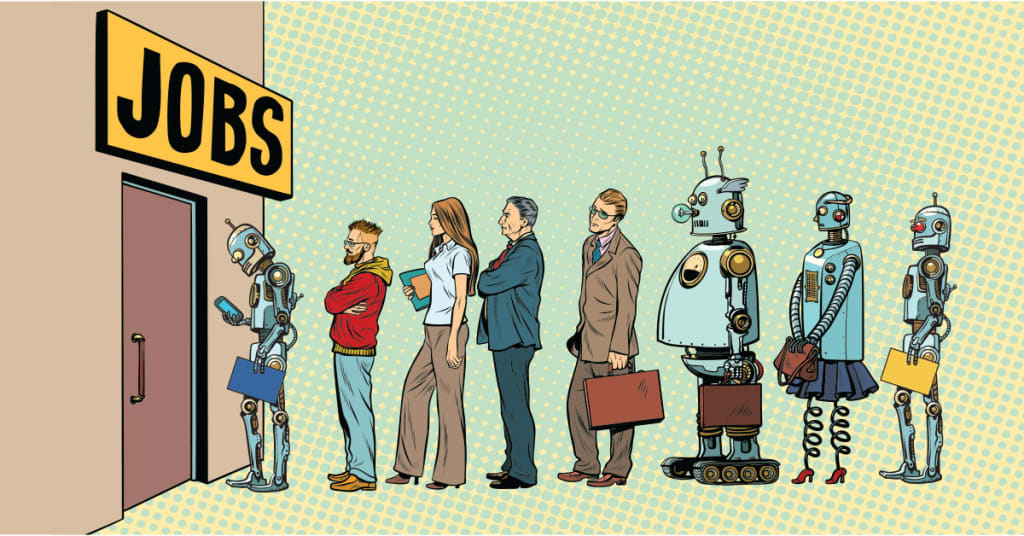
One of the most significant impacts of AI on society is its effect on the workforce. As machines become more intelligent and capable of performing tasks that were previously done by humans, many jobs are at risk of becoming automated. This includes jobs in manufacturing, transportation, customer service, and even white-collar professions such as accounting and law. Some experts predict that as many as 47% of jobs in the US could be automated within the next few decades.
While this may lead to increased efficiency and productivity, it also raises concerns about unemployment and income inequality. Without new jobs being created to replace those that are lost to automation, many workers may struggle to find work and support themselves and their families. This could lead to social unrest and political instability.
Another impact of AI on society is its potential to enhance privacy and security. AI-powered systems can monitor and analyze vast amounts of data, such as social media posts, online activity, and even biometric data such as facial recognition. This can be used to identify potential threats and prevent crime, but it also raises concerns about privacy and civil liberties. For example, facial recognition technology has been criticized for its potential to be used for mass surveillance and racial profiling.
AI also has the potential to revolutionize healthcare. Machine learning algorithms can analyze large datasets to identify patterns and predict outcomes, which could lead to earlier diagnoses, more personalized treatments, and improved patient outcomes. AI-powered robots can also assist with surgeries and other medical procedures, reducing the risk of human error and improving patient safety.
However, there are also concerns about the ethical implications of using AI in healthcare. For example, who is responsible if an AI-powered system makes a mistake or gives an incorrect diagnosis? How do we ensure that these systems are not biased or discriminatory? These are complex issues that will require careful consideration and regulation.
Another impact of AI on society is its potential to improve transportation. Self-driving cars and trucks powered by AI could greatly reduce accidents and traffic congestion, as well as make transportation more accessible for people with disabilities or those who are unable to drive. This technology could also reduce the need for parking spaces and garages, freeing up valuable urban space.
However, there are also concerns about the safety and reliability of self-driving vehicles. While AI-powered systems can analyze vast amounts of data and make decisions quickly, they are still vulnerable to unexpected events and conditions that may not be accounted for in their programming. There are also concerns about the ethical implications of self-driving cars, such as how they should prioritize the safety of their passengers versus the safety of other drivers and pedestrians.
CONCLUSION:
AI is a rapidly advancing field with the potential to revolutionize many aspects of society. However, it also raises significant concerns about its impact on jobs, privacy, and ethics. It is crucial that we approach this technology with caution and foresight, and work to ensure that its benefits are maximized while its risks are minimized. As we continue to develop and deploy AI-powered systems, it is essential that we engage in thoughtful and informed conversations about their impact on society and how we can ensure that they are used for the greater good.
About the Creator
NAVEEN KAILASH B
Welcome to my Vocal Media page, where you'll find thought-provoking content on the hottest topics of the day. From politics and current events to entertainment and lifestyle, my page is dedicated to keeping you informed and entertained.
Keep reading
More stories from NAVEEN KAILASH B and writers in Education and other communities.
DISCOVERY OF NEW ORGAN IN HUMAN BODY!!
Introduction : For centuries, the human body has been a subject of fascination for scientists and medical professionals. Despite centuries of study, there are still many mysteries surrounding the human body, and new discoveries continue to be made to this day. One such discovery was made in October 2020, when a group of researchers in the Netherlands identified a new set of salivary glands in the upper part of the throat. This blog post will explore the discovery of the tubarial salivary glands in detail, including their location, structure, and potential implications for medical science.
By NAVEEN KAILASH B3 years ago in Education



Comments
There are no comments for this story
Be the first to respond and start the conversation.