

Artificial intelligence (AI) is one of the most exciting and important technological advancements of our day. Its mechanical origins as well as its amazing capacity to duplicate and even excel cognitive abilities found in humans leave us in awe. This ability has had a profound impact on the landscape of industries and our way of life.
Artificial intelligence's ability to imitate human intellect through techniques like machine learning and neural networks is what gives it its magic. These developments provide AI systems the ability to learn from data, spot complex patterns, and respond based on what they have learned. It is astonishing in and of itself to think that a computer might progressively increase its performance by ingesting and analysing data. Innovations that were previously only imaginable in science fiction have been made possible by this capacity.
The most amazing uses of AI are in image and speech recognition. Convolutional neural networks allow AI to efficiently comb through vast volumes of visual input, reliably identifying objects, faces, and minute details. The ability of recurrent neural networks to recognise human speech and even create natural-sounding speech has completely changed how people interact with technology, leading to the emergence of virtual assistants and language translation services.
Furthermore, the finance and healthcare sectors have been transformed by AI's predictive abilities. By studying medical imaging, machine learning algorithms may diagnose patients and potentially assist in the creation of new medications. AI in finance evaluates massive information to anticipate market trends, manage risks, and choose which investments to make. The amount of data that can be managed and understood at this scale and complexity is nothing short of incredible.
AI is also capable of producing music and art thanks to deep learning techniques. Generative Adversarial Networks (GANs) are capable of stretching the conventional bounds of human creativity to produce beautiful compositions and works of art. This fusion of human creativity and machine learning algorithms is transforming how we view creative expression.
Artificial intelligence is truly distinguished by its capacity for continual learning and adaptation. By using a process known as "machine learning," AI systems may enhance their performance in response to new data and experience. The thought of an organism with the potential to freely evolve and enhance its capabilities piques our curiosity since it mirrors the basic processes of biological evolution.
As AI's capabilities develop, substantial societal changes are about to occur. Autonomous vehicles promise to entirely revolutionise transportation, while AI-driven diagnostics may radically transform healthcare accessible. However, this ability for change also sparks discussions about the boundaries of machine consciousness, the morality of decision-making, and the potential implications for the job market, which surprise and challenge us.
In conclusion, I am amazed by the technology and revolution of science that is increasing by the day and making human life easier by providing more facilities, what genuinely astounds is AI's capacity to imitate human intelligence as well as the revolutionary transformations it has sparked in a number of sectors. Its ability to learn, adapt, foresee, and create has opened up possibilities that were previously unimaginable. While AI continues to fascinate us with its achievements, it also causes us to stop and think about the bigger implications and ethical dilemmas surrounding this technology.
About the Creator
Keep reading
More stories from Laiba Javed and writers in Education and other communities.
SOCIAL MEDIA VS BOOKS
SOCIAL media these days tells us to make the lie big; make it simple; hold repeating it until it in the end devours the truth. One of my pals lately requested me to sign up for the Twitter area at the triumphing financial state of affairs in Pakistan. I truly instructed him I did now no longer have an account. He was puzzled about how I become get ready for an upcoming aggressive exam if I become now no longer following tendencies on social media. I was puzzled if his phrases had any logic. It is nice to apply social media to get oneself updated, however, it isn't always sufficient to compete with the hastily reworking world. That is why many influential personalities and billionaires, or even human beings in growing countries, spend their time analyzing books.
By Laiba Javed3 years ago in Art
How Gamified Learning Platforms Are Transforming Modern Education
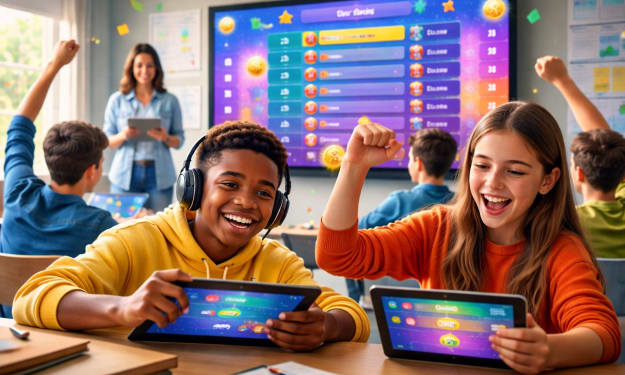
Education has entered a new digital era where traditional classroom methods are being supported by innovative technologies. Instead of relying solely on textbooks, lectures, and written exams, educators are now exploring interactive tools that make learning more engaging and effective. One of the most important innovations in modern education is the concept of gamified learning, which blends academic content with elements commonly found in digital games.
By Backlinks Cartabout 19 hours ago in Education
Tufts University Acceptance Rate, Ranking and Admission Requirements
Tufts University Acceptance Rate, Ranking and Admission Requirements Choosing the right university is one of the most important decisions for students planning to study abroad. Among the top institutions in the United States, Tufts University stands out for its academic excellence, global outlook, and strong research programs. Every year thousands of students apply to this prestigious university, making the Tufts University acceptance rate an important factor for prospective applicants.
By OffPage SEO5 days ago in Education



Comments
There are no comments for this story
Be the first to respond and start the conversation.