
Artificial intelligence
The Impact of Artificial Intelligence on Everyday Life: Opportunities and Challenges
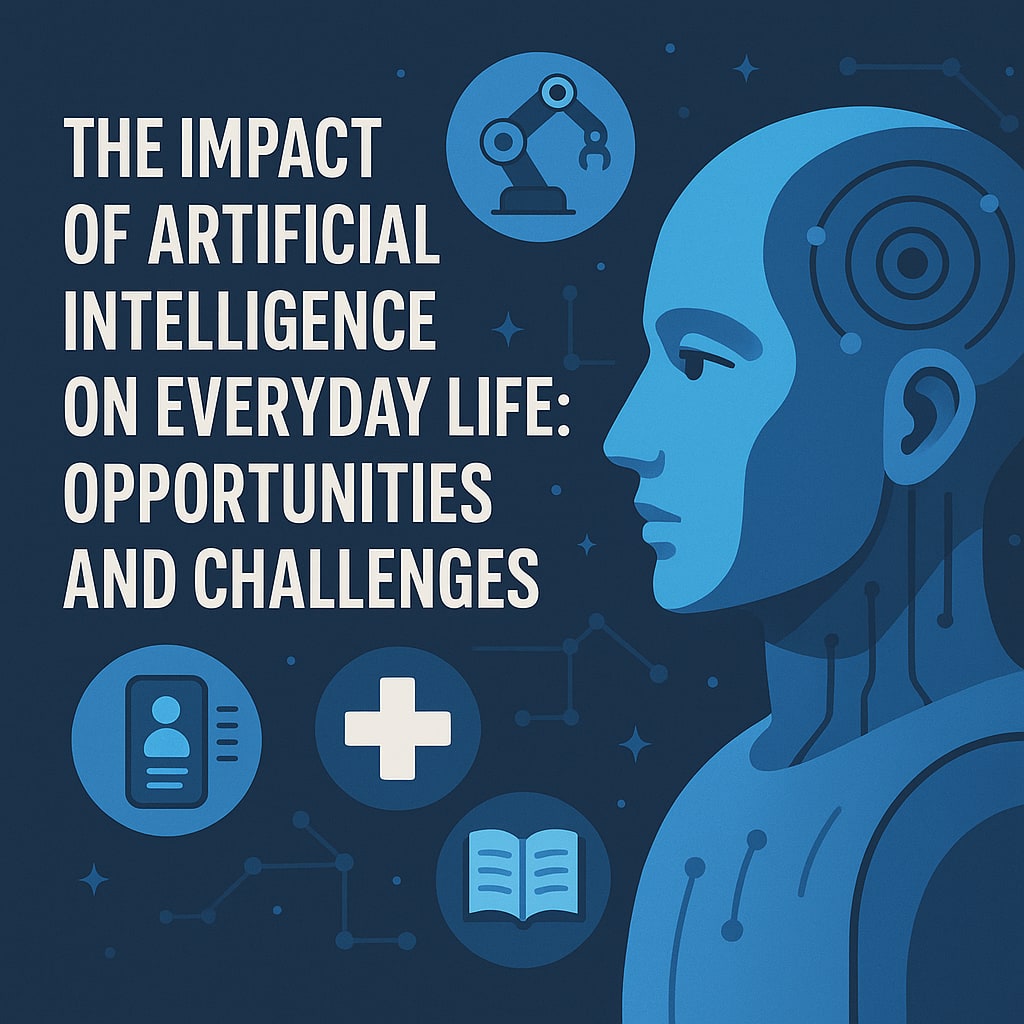
Artificial Intelligence (AI) is no longer a concept confined to science fiction; it has seamlessly integrated into our daily lives, transforming the way we live, work, and interact. From personalized recommendations on streaming platforms to smart assistants managing our schedules, AI has made technology more intuitive and accessible. But with its rapid adoption come important questions about its long-term implications. In this article, we will explore the various ways AI is influencing everyday life, highlighting both the opportunities it presents and the challenges it introduces.
How AI is Shaping Daily Life
1. Smart Assistants and Automation
One of the most visible applications of AI in our lives is through smart assistants like Siri, Alexa, and Google Assistant. These voice-activated tools use natural language processing (NLP) to understand commands, perform tasks, and respond in human-like ways. They help manage our calendars, answer questions, control smart home devices, and even tell jokes — making daily routines more convenient.
2. AI in Healthcare
AI has become an essential tool in healthcare, improving diagnosis accuracy, patient monitoring, and treatment planning. Machine learning algorithms can now detect diseases like cancer or diabetic retinopathy with accuracy comparable to — or sometimes better than — human doctors. AI-powered chatbots provide 24/7 health advice and mental health support, increasing accessibility to care, especially in remote or underserved areas.
3. Personalized User Experience
Whether you’re shopping on Amazon, watching Netflix, or scrolling through social media, AI algorithms are constantly working behind the scenes to personalize your experience. Recommendation engines analyze your behavior to suggest products, movies, or content you're more likely to engage with. This customization boosts user satisfaction and keeps users engaged for longer periods.
4. Education and Learning
AI is also reshaping how education is delivered. Intelligent tutoring systems adapt to individual learning styles, helping students progress at their own pace. Platforms like Duolingo or Khan Academy use AI to personalize content, assess performance, and provide instant feedback. In classrooms, AI can help teachers identify students who are struggling and suggest interventions, making education more inclusive and effective.
5. Transportation and Navigation
AI powers GPS systems, ride-sharing apps like Uber, and autonomous vehicles. It optimizes routes, predicts traffic, and improves safety through advanced driver-assistance systems (ADAS). Self-driving cars, while still in development, promise a future with fewer accidents and more accessible transportation for people who cannot drive.
---
Opportunities Created by AI
1. Increased Efficiency and Productivity
AI automates repetitive tasks, freeing up human workers to focus on more complex and creative activities. In industries like manufacturing, logistics, and finance, AI can handle large volumes of data quickly and accurately, reducing errors and operational costs.
2. Innovation in Science and Research
AI accelerates scientific discovery by analyzing massive datasets faster than any human could. In drug discovery, for instance, AI models are being used to identify potential treatments and vaccines in a fraction of the time. This has been especially evident during the COVID-19 pandemic, where AI was instrumental in tracking the spread and developing predictive models.
3. Enhanced Decision-Making
Organizations use AI for data-driven decision-making. From predicting customer behavior to managing supply chains, AI helps leaders make informed choices based on real-time analysis. It also plays a key role in financial forecasting, fraud detection, and risk management.
4. Greater Accessibility
AI-powered tools can help individuals with disabilities live more independently. Text-to-speech, voice recognition, and image recognition software allow people with visual or hearing impairments to interact with digital environments. AI is also improving accessibility in communication through real-time translation services and captioning.
---
Challenges and Concerns
Despite its benefits, AI brings along a host of concerns that cannot be overlooked.
1. Job Displacement
Automation is expected to replace many low-skill jobs, especially in sectors like manufacturing, transportation, and customer service. While AI creates new roles — particularly in tech and AI-related fields — there is a significant skills gap that needs to be addressed. Governments and institutions must invest in reskilling and upskilling programs to prepare the workforce for the future.
2. Data Privacy and Security
AI systems require massive amounts of data to function effectively. This raises questions about how data is collected, stored, and used. Improper handling of personal information can lead to data breaches, identity theft, and surveillance concerns. Ensuring transparency and accountability in AI systems is critical to maintaining user trust.
3. Bias and Discrimination
AI systems are only as unbiased as the data they are trained on. If training datasets contain historical biases, the AI can perpetuate or even amplify them. For example, facial recognition technologies have shown higher error rates for people of color, raising concerns about racial discrimination. Addressing bias requires diverse datasets, ethical AI practices, and regular auditing of AI systems.
4. Loss of Human Interaction
As AI increasingly replaces human touchpoints in areas like customer service, education, and healthcare, some worry that the loss of real human connection may impact mental well-being and social skills. It's essential to strike a balance where AI enhances rather than replaces human interactions.
5. Regulation and Ethics
AI development is advancing faster than the regulations needed to govern it. Questions about AI’s role in warfare, surveillance, and decision-making in critical situations remain largely unanswered. Establishing clear ethical guidelines and international standards is essential to ensure AI is used responsibly.
---
Conclusion
Artificial Intelligence is a powerful force that is reshaping the world in profound ways. Its integration into daily life has brought about unprecedented convenience, efficiency, and innovation. However, it also presents serious challenges that must be thoughtfully addressed.
To ensure that AI continues to be a force for good, a collaborative effort is needed — involving technologists, policymakers, educators, and the public. By embracing its opportunities and mitigating its risks, we can build a future where AI enhances human potential and serves the common goo
About the Creator
Keep reading
More stories from writers in Education and other communities.
Fascinating Facts About Mosquitoes
Mosquitoes, which we often consider ordinary insects, are actually among the most dangerous creatures on Earth. They are responsible for more human deaths each year than any other animal, making them the deadliest species on the planet. Legend even suggests that mosquitoes contributed to the death of Alexander the Great.
By Sudais Zakwan6 days ago in Education
The Discipline Line That Protects Every Serious Trader
A lack of opportunity rarely destroys long-term trading success. A single uncontrolled loss far more often destroys it. Markets move quickly, emotions react faster, and hesitation at the wrong moment can erase months or years of progress. Pre-defined stop losses are in place to prevent that outcome.
By Agast Mishra6 days ago in Education




Comments
There are no comments for this story
Be the first to respond and start the conversation.