
Are Solar Panels Worth it?
During the spring of 1954, Bell Laboratories unveiled a groundbreaking invention—the silicon-based solar cell. This innovation, capable of efficiently converting solar energy into electrical current, garnered immense attention from the press. Reporters hailed it as the start of a new era, with claims that solar power would soon become the primary energy source for civilization. However, there was a significant hurdle: the initial commercially available solar cell cost a staggering $300 per watt, making it unaffordable for most people. To power a single home, one would need to spend well over a million dollars. Fast forward to today, and solar energy has become the most cost-effective form of power generation in many countries, surpassing fossil fuel alternatives like coal and natural gas. Countless homes now boast rooftop solar installations, with most units paying for themselves within 7 to 12 years and continuing to generate savings thereafter. So, how did solar energy become so affordable?
The turning point in solar's affordability can be traced back to Germany's parliament in 2000. Herman Scheer introduced the Renewable Energy Sources Act, which laid out a vision for the country's future in solar and wind energy. This legislation incentivized citizens to invest in rooftop solar panels by guaranteeing payment for the renewable energy they generated and sold to the grid. The electricity's pay rate was highly subsidized, at times reaching four times the market price. Inspired by Germany's example, several other countries implemented similar policies and incentives, leading to unprecedented global demand for solar panels. Manufacturers responded by scaling up production and innovating in ways that reduced costs. As a result, solar panel prices dropped, and their efficiency improved significantly.
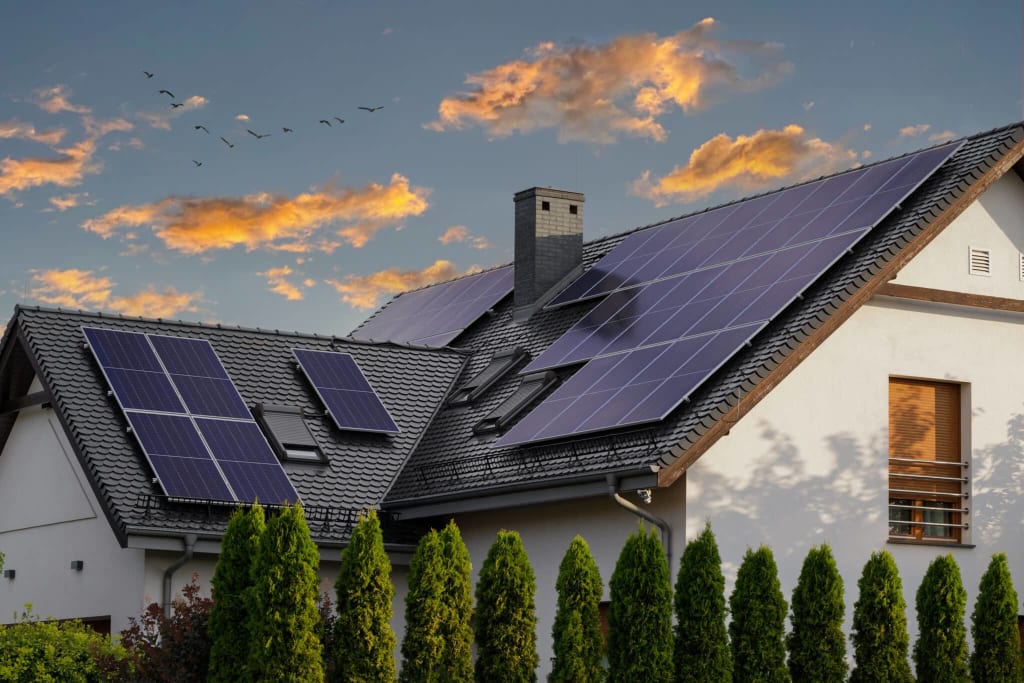
Today, a 46-square-meter rooftop solar unit can often generate enough power to fully sustain a home. Furthermore, the cost of residential solar units has plummeted. In the United States, for instance, the average consumer cost of a rooftop solar unit in 2022 ranged from approximately $17,000 to $23,000. These prices decreased by over 60% between 2010 and 2020 alone. By switching to solar, homeowners equipped with solar panels in the US can save around $1,500 per year on their energy bills, resulting in a net lifetime savings of $10,000 to $30,000. Monthly savings may vary based on factors such as panel exposure to sunlight, local weather conditions, and electricity prices.
However, it's important to note that not everyone can easily adopt solar energy. Renters and individuals who don't own their homes face difficulties in implementing solar solutions. Moreover, specific requirements related to roof orientation and tilt must be met for solar to be a worthwhile investment. While the long-term savings from offsetting energy costs often compensate for the initial purchase and installation expenses, the upfront cost of going solar can still be high. To address this, some companies offer solar leasing models, financing material costs, installation, and system maintenance. Homeowners can then purchase the electricity generated by the panels at a fixed rate, typically lower than the local utility's price.
Efforts are underway to explore community-based solutions, allowing entire neighborhoods to benefit from solar energy. In Europe, over 7,000 community energy associations exist, where local members collectively invest in wind turbines and solar panels to power their local grids. Wolfhagen, a German town, serves as an inspiring example. In 2005, its 800-member citizens' co-op invested $2.84 million to acquire 25% of the local energy company and expand its renewable energy program. Today, the town's turbines and panels generate enough energy to meet its needs and even sell the surplus to neighboring communities. The profits are reinvested back into the community.
Beyond the financial savings, solar energy offers additional advantages. Homes equipped with solar installations are more resilient
About the Creator
Miss Persephone's Manual to a Seemingly Ordinary Life
Miss Persephone was found at the dining table, her blue eyes swollen, her tears arriving and retreating like the tides of the ocean. Earlier that day, her family had visited her in the retirement home where she had lived for eight years. It was her eightieth birthday.
By Imola Tóth3 days ago in Fiction




Comments
There are no comments for this story
Be the first to respond and start the conversation.