
API Testing: Building Reliable Backends Before Users Feel the Bugs
How modern teams test APIs early to ship faster and avoid production failures
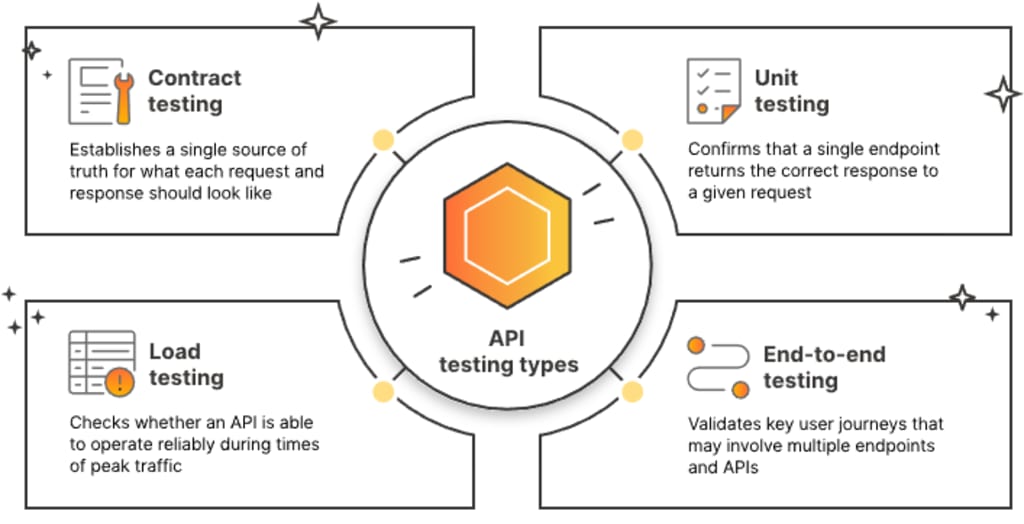
Let’s explore more about how this works.
I work closely with APIs almost every day. They silently power logins, payments, dashboards, and integrations. When they fail, users usually don’t see a clear error—but businesses feel the impact fast. That’s where API testing becomes critical.
What API Testing Means in Real Projects
API testing is about checking whether an API behaves exactly the way it should. I focus on requests, responses, status codes, headers, and data accuracy. There is no UI involved, which makes API testing faster and more reliable than UI-based testing.
In most teams, APIs are tested before the frontend is even ready. This helps catch bugs early and saves release time.
Why I Prefer API Testing Over UI-Only Testing
From my experience, UI tests fail often because of small UI changes. API tests fail only when something is actually broken.
At scale, this matters a lot.
Companies like Netflix and Amazon heavily rely on backend services. Their engineering blogs often talk about validating APIs early to avoid cascading failures in production.
When APIs are stable, teams move faster.
Common Things I Test in APIs
- I keep my checks simple and direct:
- Status codes (200, 400, 401, 500)
- Response time and performance
- Correct request and response schema
- Authentication and authorization
- Edge cases with invalid or empty inputs
Skipping these basics usually leads to silent failures in production.
Tools That Actually Work in Practice
For manual and exploratory testing, I’ve used tools like Postman and Insomnia. They are easy to start with and good for debugging.
For automation, teams often move to code-based frameworks or AI-assisted tools. Modern teams want tests that don’t break on every small change.
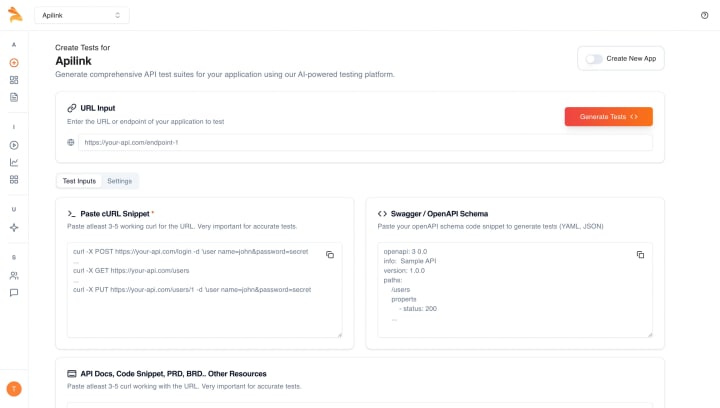
This is where tools like Keploy stand out. It records real API traffic and generates tests automatically. I’ve seen teams reduce flaky tests because they validate real production-like behavior instead of mock data.
On the other hand, I’ve also seen failures when teams rely only on mock-based API tests. The tests pass, but production behaves differently. Many engineering blogs from Stripe explain why testing with real scenarios is critical for APIs handling money and sensitive data.
API Testing in CI/CD Pipelines
API testing fits naturally into CI/CD. I usually run API tests on every pull request and again before deployment.
If an API breaks, the pipeline should fail immediately.
Companies like GitHub and Google publicly share how automated API checks help them ship multiple times a day without breaking core services.
Skipping API tests in CI/CD is one of the fastest ways to introduce regressions.
Real Success and Failure I’ve Noticed
Teams that invest in API testing early ship faster with fewer rollbacks. Teams that treat it as optional usually debug issues late at night.
I’ve seen releases delayed just because one API returned a different field name and no test caught it. That’s a small issue, but at scale, these small issues become expensive.
Final Thoughts
API testing is not an optional layer anymore. It’s a foundation. When APIs are tested well, everything built on top of them becomes easier to maintain.
I’ve learned that strong API tests don’t slow development, they protect it.
About the Creator
keploy io
Keploy is AI based test case and stubs/mocks generator for integration and unit testing. 90% test coverage in minutes with open source testing tool
How Community Service Strengthens You and the Place You Call Home
Community service is more than simply giving your time—it’s a powerful way to build stronger connections, improve local spaces, and create positive change that lasts. Whether you volunteer once a month or every weekend, your efforts can make a meaningful difference for both you and the people around you.
By Kevin Knaselabout 14 hours ago in Education
Why BIM Coordination Is Critical for Boston’s Dense Urban Construction Projects?
Boston’s construction landscape is unlike most U.S. cities. With its dense urban fabric, historic buildings, narrow streets, underground utilities, and strict regulatory environment, even small construction errors can cause major delays and cost overruns. In such a complex environment, BIM coordination is no longer optional—it is essential.
By Matt Sharonabout 11 hours ago in Education


Comments
There are no comments for this story
Be the first to respond and start the conversation.