
Ants: Masters of Teamwork
Unraveling Their Fascinating Societies! (Note: While not technically insects, spiders are often included)

1. Introduction to Ants and Spiders:
Ants and spiders, while belonging to different taxonomic orders, both exhibit remarkable social behaviors that have captivated scientists and enthusiasts alike. Ants are eusocial insects belonging to the order Hymenoptera, while spiders are arachnids of the order Araneae. Despite their taxonomic differences, both ants and spiders demonstrate intricate forms of cooperation and communication within their colonies. In this exploration, we unravel the fascinating societies of ants and spiders, shedding light on their mastery of teamwork and the complex dynamics that govern their social structures.
2. Ant Societies:
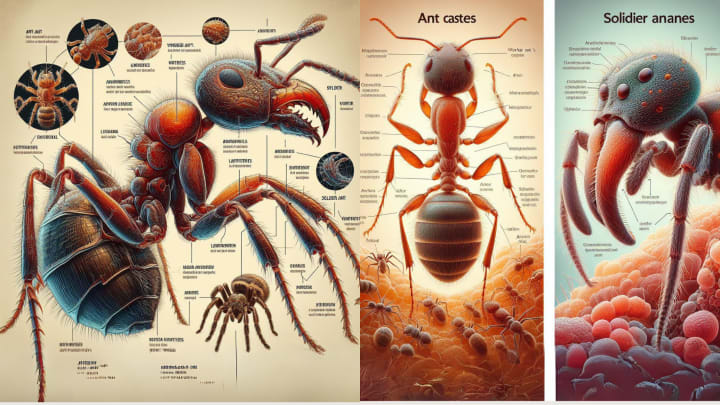
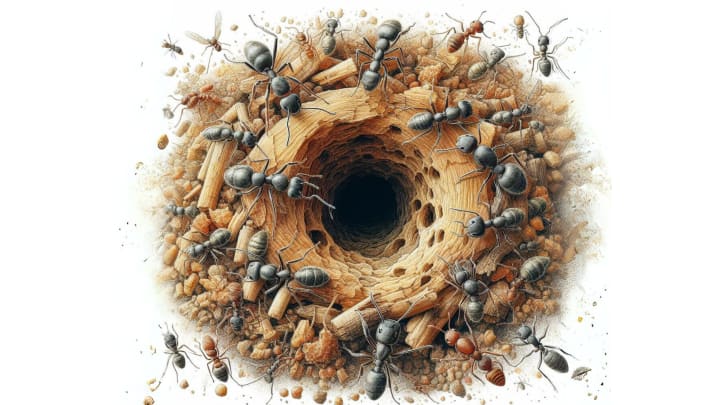
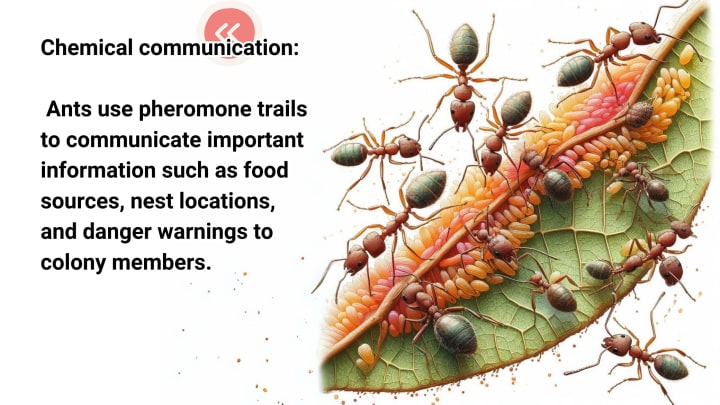
Ant colonies are renowned for their highly organized and cooperative societies. Within a colony, individuals are divided into distinct castes, each with specialized roles and responsibilities. The queen, typically the sole reproductive female, lays eggs and governs the colony's activities. Worker ants, sterile females, undertake various tasks such as foraging, caring for the young (larvae), and defending the nest. Male ants, known as drones, emerge solely for mating purposes. Communication among ants is predominantly chemical, facilitated by pheromones released through specialized glands. Through intricate communication networks and division of labor, ant colonies efficiently gather resources, defend territory, and ensure the survival and reproduction of their species.
3. Spider Societies:
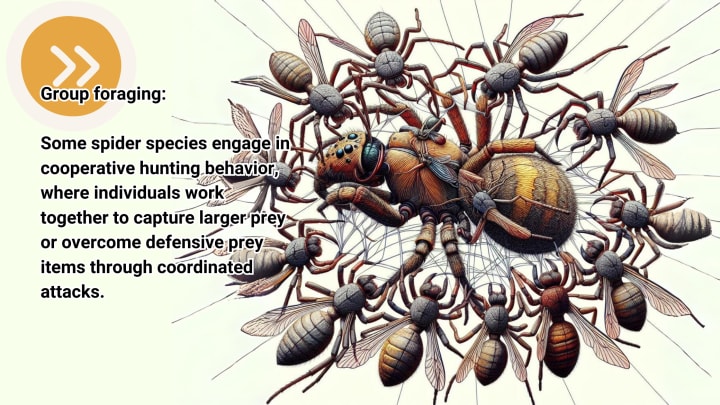
While spiders are often perceived as solitary creatures, certain species exhibit fascinating social behaviors. Colonial spiders, such as those belonging to the genus Anelosimus, form cooperative groups where individuals collaborate in various activities. These societies are characterized by shared webs, communal prey capture, and cooperative brood care. In some species, cooperative hunting strategies allow spiders to capture larger prey than they could individually. Additionally, communal nesting provides protection against predators and environmental stressors. Despite their social tendencies, spider colonies often maintain hierarchies, with dominant individuals exerting control over resources and reproductive opportunities. Understanding the dynamics of spider societies offers insights into the evolution of social behavior beyond traditional eusocial insects.
4. Cooperation and Division of Labor:
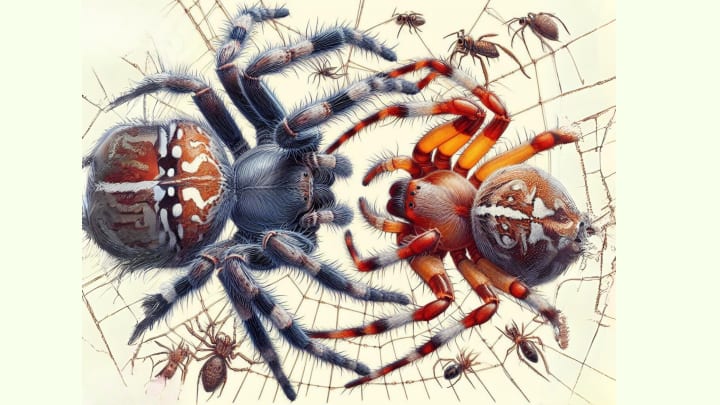
Both ants and spiders demonstrate impressive levels of cooperation and division of labor within their societies. Cooperative tasks, such as foraging, nest construction, and brood care, are efficiently carried out through coordinated efforts among colony members. Division of labor ensures that each individual contributes to the overall functioning of the colony, maximizing efficiency and productivity. In ant colonies, tasks are allocated based on age, experience, and physiological characteristics, while in spider colonies, dominance hierarchies and individual traits influence task allocation. Through mutual cooperation and specialization, ant and spider societies thrive in diverse ecological niches, demonstrating the adaptive benefits of social organization.
5. Communication and Information Transfer:
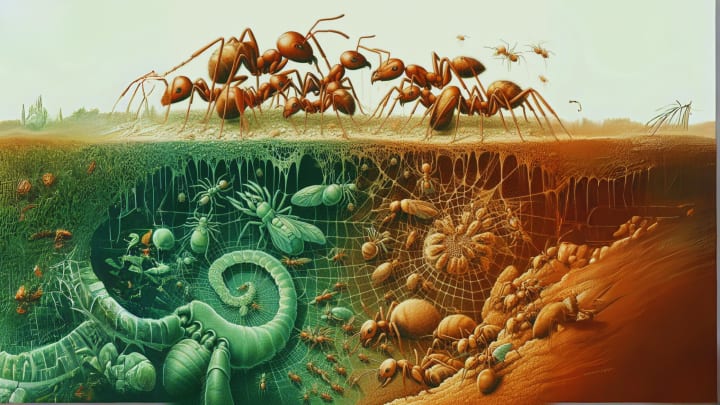
Communication is fundamental to the cohesion and success of both ant and spider societies. Ants employ a variety of communication mechanisms, including chemical signals (pheromones), tactile cues, and auditory signals (stridulation). Pheromones play a crucial role in coordinating collective behaviors, such as trail-following, alarm response, and mating rituals. In spider colonies, communication occurs primarily through vibratory signals transmitted through the substrate or web. These vibrations convey information about prey capture, mating readiness, and territorial disputes. Effective communication networks enable rapid information transfer and coordination of group activities, enhancing the adaptive capacity of ant and spider societies.
6. Evolutionary Significance and Conservation Implications:
The study of ant and spider societies offers valuable insights into the evolution of social behavior and cooperative strategies in animals. From the division of labor to communication systems, these organisms have evolved sophisticated mechanisms to navigate social complexities and thrive in dynamic environments. Understanding the ecological roles and conservation needs of ant and spider societies is essential for preserving biodiversity and ecosystem functioning. Habitat destruction, climate change, and invasive species pose significant threats to these social organisms and their habitats. Conservation efforts aimed at safeguarding their populations and habitats are crucial for maintaining the ecological balance and resilience of terrestrial ecosystems. By unraveling the secrets of ant and spider societies, we gain a deeper appreciation for the marvels of nature and the interconnectedness of life on Earth.
This article was previously published on Medium.
About the Creator
The Human Heart of EdTech: My Week at Bett 2026 as a Microsoft Expert
There is a specific kind of hum you only hear at the ExCeL London during the third week of January. It’s a mix of the low-frequency thrum of thousands of devices and the high-pitched energy of educators who have finally found "their people."
By Teacher Ami - Amizur Nachshonia day ago in Education


Comments
There are no comments for this story
Be the first to respond and start the conversation.