

In the shadowy halls of ancient temples and the scorching sands along the Nile, one creature reigned supreme—not lion, nor crocodile, but the cat. Sleek, enigmatic, and revered beyond reason, cats in ancient Egypt weren’t just pets—they were sacred beings, messengers of the divine, and, tragically, sometimes victims of devotion taken too far.
From colossal stone statues to delicate jewelry glittering with gold and gems, feline imagery adorned the kingdom of the pharaohs. Their affection for cats was so profound that entire cemeteries were filled with mummified felines—some wrapped with care, others draped in beaded and iron collars. One such cemetery, nearly 2,000 years old, stands as a solemn testament to this fascination. But why such reverence?
According to the ancient Greek historian Herodotus, Egyptians mourned their cats so deeply that they would shave off their eyebrows when one died. This was no mere pet loss—it was a spiritual wound. Cats, the Egyptians believed, embodied traits found in their most powerful gods and goddesses. They were at once nurturing and dangerous, graceful yet deadly—a perfect duality. A 2018 Smithsonian exhibition revealed how Egyptians saw their deities in these animals: fierce protectors, independent spirits, guardians of life and death.
The monumental Sphinx of Giza, with its human face and lion’s body, looms as an eternal symbol of this belief. And goddesses like Sekhmet, with the head of a lioness and the body of a woman, stood watch over transitions between day and night, life and the afterlife. Bastet, the beloved cat-headed goddess, was seen not only as a guardian but as a divine force to be worshipped. To honor her, families didn’t just keep cats—they named their children after them. Girls were even called "Mitt," meaning “cat,” a name that echoed both love and sacredness.
Cats were also cherished for practical reasons. They were silent hunters, protectors of grain stores from rats and snakes, and companions to the living. Archaeologists have uncovered feline burials dating back to 3800 B.C., showing that this bond stretched across millennia.
But beneath this golden admiration lurks a darker truth.
Starting around 700 B.C., a more sinister industry took root in Egypt—one dedicated not to loving cats, but to breeding them for death. Millions of kittens were raised for one chilling purpose: to be sacrificed, mummified, and buried alongside humans as offerings to the gods. In recent years, scientists using micro-CT scans examined one such mummified cat. What they found was haunting.
Beneath the wrappings—once thought to cover a full-grown animal—was the fragile skeleton of a kitten less than five months old. Its neck had been deliberately broken. “It was a bit of a shock,” said Richard Johnston, a materials research professor at Swansea University. “We had no idea how young it was until we saw the scans.”
This was not an isolated case. Entire cat farms operated solely to provide these sacrificial animals. "They were often reared for that purpose," Johnston added. "It was fairly industrial." The cats were not pets, but products—living offerings to appease the gods in exchange for blessings, protection, or favor in the afterlife.
Mary-Ann Pouls Wegner, an archaeologist at the University of Toronto, noted that such sacrifices were meant to complement prayers—votive gifts meant to win divine attention. But at what cost?
The line between veneration and obsession had long been crossed. What began as spiritual awe twisted into mass sacrifice. The cat—once honored as a reflection of divinity—was reduced to a commodity, a ritual token in the hands of a devout, and at times desperate, people.
In ancient Egypt, cats ruled as gods. But as in many tales of worship, even the divine are not spared from the cruelty of devotion.
About the Creator
Keep reading
More stories from Carlos Rechy and writers in Education and other communities.
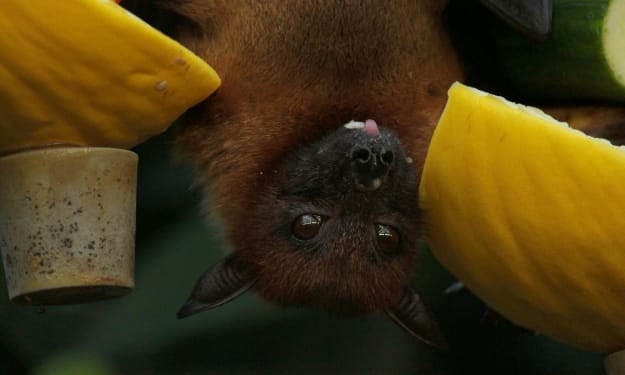
Why Bats Don't Get Sick- But We Do
Ebola, rabies, SARS, and COVID-19 are not just viral diseases — they are zoonotic diseases, meaning they’re caused by viruses transmitted from animals to humans. While many animals can be carriers, one stands out as a viral “super host”: bats.
By Carlos Rechy6 months ago in Education
The Power of Service Beyond the Uniform in Everyday Life
Service reaches far beyond the moments spent in uniform, shaping lives long after formal duties end. Veterans, first responders, and public servants carry lessons that extend into workplaces, families, and communities. Their values of discipline, compassion, teamwork, and integrity influence how they interact with others and how they continue serving in new ways. As they go about their everyday lives, their actions show that service is not defined by a role but by a mindset. Because of that mindset, countless communities benefit from their leadership and steady presence.
By Eric Schnabelabout 9 hours ago in Education
Importance of Technology in Learning Islamic Education
Islamic education has always been rooted in knowledge, reflection, and understanding. From handwritten manuscripts to traditional madrasa systems, learning has continuously evolved with time. Today, technology is shaping a new chapter in how Islamic education is taught, accessed, and understood. Rather than replacing traditional learning, technology enhances it, making Islamic knowledge more accessible, structured, and engaging for learners of all ages.
By Arslan Shahbazabout 8 hours ago in Education


Comments
There are no comments for this story
Be the first to respond and start the conversation.