
AI vs. Human Creativity
Can Robots Really Replace Us?

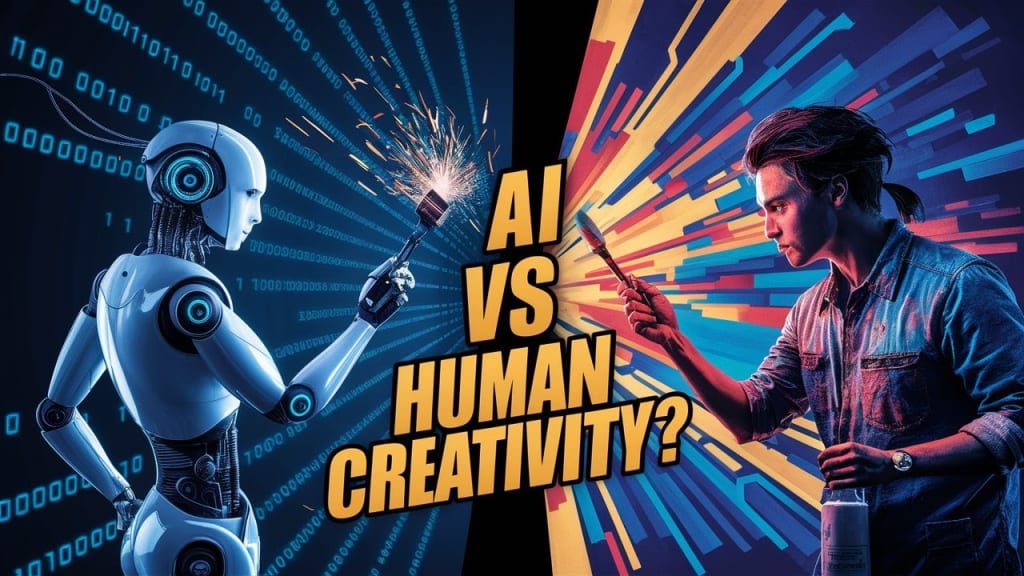
In the last few years, artificial intelligence (AI) has been making headlines, transforming everything from healthcare to finance. But one question lingers in the minds of artists, writers, musicians, and creators: can AI replace human creativity? This question isn't just about technology. It’s deeply personal, emotional, and touches on what it means to be human.
**The Rise of AI in Creative Fields**
Picture this: a computer composing a symphony, painting a portrait, or even writing poetry. A few years ago, this might have sounded like science fiction, but today it’s our reality. AI tools can analyze vast amounts of data, recognize patterns, and produce content that looks and sounds pretty similar to what a human might create. It can write a catchy jingle, generate beautiful art, or even pen a story that keeps readers hooked.
AI-generated art has gained recognition and even sold for thousands of dollars at auction. Machine learning models can analyze millions of songs and create a new melody that resonates with listeners. AI can write scripts, jokes, and novels. It can mimic famous painters or create images that are visually stunning. To some, this is exciting. But to many, it’s unsettling. It feels like a challenge to the essence of human creativity.
**What Makes Human Creativity Unique?**
Creativity isn’t just about producing something new. It’s about emotion, experience, and the connection between the creator and the audience. When a writer pours their heart into a story, it carries a piece of their soul. When a painter captures a sunset on canvas, they’re expressing not just what they see but what they feel. A song written in the depths of heartbreak resonates because it comes from a real place of pain and longing.
AI can mimic this—up to a point. It can generate words, notes, and colors based on what it’s been trained on. It can even produce work that makes us feel something. But it lacks a fundamental ingredient: the lived human experience. AI doesn’t know what it’s like to sit in silence, staring at a blank page, feeling the pressure to create. It doesn’t understand the thrill of a new idea or the frustration of writer’s block. It doesn’t feel joy, sorrow, or the quiet satisfaction that comes from bringing an idea to life.
**The Emotional Connection Between Creator and Audience**
Think about your favorite book or song. Chances are, it’s not just the words or melody that make it special. It’s the way those words made you feel, the way the melody echoed your own emotions. Human creations have a way of speaking directly to our hearts because they come from a place of shared experience. It’s the reason we find solace in a sad song or feel inspired by a powerful speech.
AI, for all its capabilities, lacks this emotional depth. It can produce a beautiful painting, but it doesn’t have a story behind it. It can write a poem, but it doesn’t know the ache of unspoken love or the warmth of a sunrise. This is where human creativity shines—our ability to convey emotion, to tell stories that matter, and to create art that is deeply, uniquely personal.
**The Role of AI in Enhancing Human Creativity**
This doesn’t mean that AI has no place in the creative world. In fact, many artists and creators are finding ways to collaborate with AI, using it as a tool rather than a competitor. AI can help with the technical aspects of creation, like editing, mixing, or even generating initial ideas. It can serve as a source of inspiration or a way to push boundaries that human minds might not naturally reach.
For example, an artist might use AI to generate thousands of design variations, then select and refine the ones that resonate most with their vision. A writer might use AI to overcome writer’s block, generating plot ideas or brainstorming new directions for their story. Musicians can experiment with AI-generated beats or melodies, adding their own unique touch to make it truly theirs.
In this way, AI becomes a partner, not a replacement. It’s like having an assistant who can handle the heavy lifting, freeing up the creator to focus on what they do best—infusing their work with heart, soul, and humanity.
**Will AI Ever Truly Replace Human Creativity?**
It’s natural to fear that AI could one day replace human creators entirely. After all, if a machine can paint, write, and compose, what’s to stop it from taking over? But the truth is, creativity is about more than just producing content. It’s about the journey, the struggle, and the triumph that comes with creating something new.
AI may be able to mimic the outcome, but it can’t replicate the process. It doesn’t know what it’s like to wrestle with an idea, to face rejection, or to pour everything into a project only to start over again. It doesn’t understand the joy of creating something that truly matters to someone else. And that is where human creativity will always have the edge.
In the end, AI is a tool—powerful, yes, but still just a tool. It can make the creative process easier, faster, and more efficient. But it can’t replace the spark that makes us human. It can’t replicate the connection between a creator and their audience, the emotions that drive us to express ourselves, or the passion that fuels our desire to create.
**Embracing the Future: A New Era of Creativity**
Instead of fearing the rise of AI, perhaps we should see it as an opportunity. It challenges us to think differently, to push our creative boundaries, and to explore new ways of expressing ourselves. It’s a chance to redefine what it means to be creative in a world where machines can assist, but never truly replace, the human spirit.
So, can robots really replace us? Maybe they can replicate our output, but they can’t replace the heart behind it. And as long as there are stories to tell, emotions to share, and dreams to chase, human creativity will continue to thrive. AI may be able to paint a picture, but it’s up to us to color the world with meaning. And that, no matter how advanced technology becomes, will always be our unique gift.
About the Creator
Keep reading
More stories from simora akter and writers in Education and other communities.
The Loneliness Epidemic
We live in a world where technology allows us to be more connected than ever before, yet a growing number of people feel isolated, cut off from real human connection. It seems almost ironic that in this age of social media, instant messaging, and video calls, a loneliness epidemic has quietly taken root, affecting millions across the globe. It's a silent cry for help that we often don't hear—until it's too late.
By simora akterabout a year ago in Education
Breaking Down Private and Commercial Pilot Licenses
Taking flight is more than just a thrill; it can be a lifestyle or a full-fledged career. But before you can soar through the skies, you need to earn the appropriate pilot license. Two of the most common paths for aspiring aviators are the private pilot license (PPL) and the commercial pilot license (CPL). While both enable you to fly aircraft, they serve very different purposes and require varying levels of commitment. If you're deciding between the two, understanding the distinctions can help you make the right choice for your future in aviation.
By Jett Harris of Arkansasa day ago in Education



Comments
There are no comments for this story
Be the first to respond and start the conversation.