
AI
The Rise of Artificial Intelligence: Shaping Our Future, One Algorithm at a Time
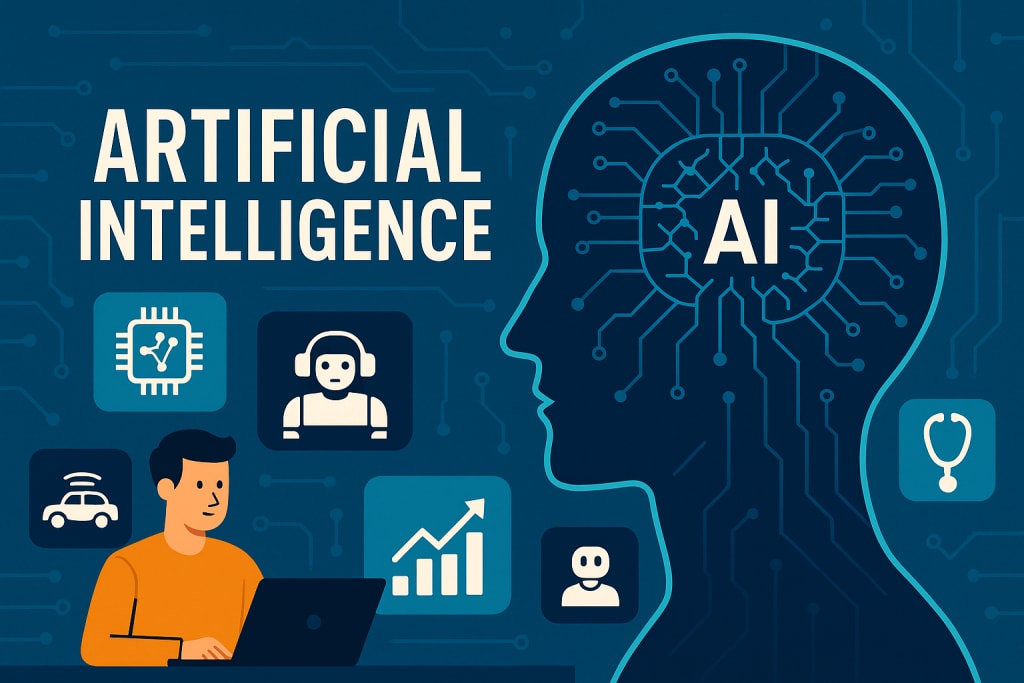
In recent years, artificial intelligence (AI) has transformed from a futuristic concept into a powerful force that is reshaping nearly every aspect of our daily lives. From voice assistants and smart homes to personalized recommendations and self-driving cars, AI has moved from the realm of science fiction to real-world implementation at astonishing speed.
But what exactly is AI, how does it work, and why is it so important to the future of society?
What Is Artificial Intelligence?
Artificial Intelligence refers to the simulation of human intelligence processes by machines, especially computer systems. These processes include learning (acquiring information and rules for using it), reasoning (using the rules to reach approximate or definite conclusions), and self-correction.
AI can be broadly divided into two categories:
Narrow AI: This type of AI is designed to perform a narrow task, such as facial recognition, internet searches, or driving a car. Most of the AI we use today falls under this category.
General AI: A still theoretical form of AI, general AI would possess the ability to perform any intellectual task that a human can do. It remains a subject of research and speculation.
How AI Works
AI systems work by processing large amounts of data and identifying patterns or trends that a human might overlook. Machine learning, a subset of AI, involves training algorithms on massive datasets so they can make predictions or decisions without being explicitly programmed for every task.
For example, when you use a streaming service like Netflix, the AI behind it learns your viewing habits and suggests shows you’re likely to enjoy. The more you interact with it, the more accurate it becomes.
Deep learning, a more advanced branch of machine learning, mimics the neural networks in the human brain to process information. This is the technology behind voice recognition, image classification, and even creative applications like AI-generated art and music.
AI in Everyday Life
AI is already integrated into many facets of our lives:
Healthcare: AI is helping doctors diagnose diseases faster and more accurately. Algorithms can analyze medical images, predict patient risks, and even assist in robotic surgeries.
Transportation: Self-driving cars use AI to detect objects, make decisions, and navigate roads safely. Ride-sharing apps like Uber use AI to optimize routes and pricing.
Finance: AI detects fraud, manages investment portfolios, and offers personalized banking services.
Retail and E-commerce: Personalized shopping experiences, chatbots, and inventory management are all powered by AI.
Education: AI-driven platforms offer personalized learning, automate grading, and provide intelligent tutoring systems.
The Ethical Challenges of AI
As AI grows more powerful, it raises important ethical and societal questions:
Bias and Discrimination: AI systems are only as good as the data they are trained on. If the data reflects human biases, the AI can perpetuate or even amplify them.
Privacy: With AI collecting and analyzing vast amounts of personal data, privacy becomes a major concern. Where is the line between helpful and invasive?
Job Displacement: Automation through AI is expected to displace many traditional jobs. While new jobs will also be created, there is uncertainty about the transition.
Control and Accountability: Who is responsible when AI makes a mistake? How do we ensure transparency in decision-making processes?
Addressing these concerns requires cooperation between technologists, ethicists, policymakers, and the public to ensure that AI is developed and used responsibly.
The Future of AI
Looking ahead, the potential of AI is both exciting and daunting. Developments in natural language processing (like ChatGPT), robotics, and quantum computing could accelerate AI’s capabilities in ways we can hardly predict.
One promising frontier is Artificial General Intelligence (AGI)—AI systems that can understand, learn, and apply knowledge across a broad range of tasks, much like a human being. While AGI remains speculative, its realization would mark a profound leap in human history.
At the same time, AI is likely to become more human-centric. Rather than replacing people, the focus will shift toward using AI to enhance human abilities, making us more efficient, creative, and connected.
Conclusion
Artificial intelligence is not just a buzzword or a tech trend—it is a defining force of the 21st century. As it continues to evolve, it will touch every aspect of our lives, from the mundane to the monumental. The challenge for society is to harness this powerful tool responsibly and ensure that its benefits are shared by all.
By staying informed, asking critical questions, and participating in the conversation about AI’s role in our future, we can help guide it in a direction that enriches humanity rather than diminishes it.
About the Creator
Keep reading
More stories from Jamal khan and writers in Education and other communities.
The Diamond Fish
The Diamond Fish In the quiet town of Sabra, nestled between the mountains and the sea, legends were a part of daily life. They were told in hushed voices around fires, in the corners of dusty bookstores, and whispered through the cracks in ancient wooden doors. But there was one legend that captivated everyone, and that was the legend of the Diamond Fish.
By Jamal khan9 months ago in Art
Why Certification Protects Transcription Careers in the Age of AI
Artificial Intelligence has rapidly transformed the transcription industry. Speech-to-text tools now promise instant results, lower costs, and effortless productivity. For businesses focused purely on speed, AI often appears to be the perfect solution. However, beneath this promise lies a critical reality: speed without accuracy creates risk.
By Mahesh Kumar6 days ago in Education
How Japan saved its biggest city from collapse
400 years ago, modern-day Tokyo was known as Edo, and it was already one of the biggest cities in the world, with a population approaching 1 million. However, it was on the verge of ecological collapse. Years of intense logging had led to massive deforestation. The city now faced timber shortages and the impacts of severe erosion and frequent flooding that threatened food supplies. But over just a few decades, Edo will transform and become one of the most sustainable and efficient cities in history.
By Munesh Yadav4 days ago in Education



Comments
There are no comments for this story
Be the first to respond and start the conversation.