
AI’s Role in Education: Revolution or Risk?
Revolution or Risk? AI

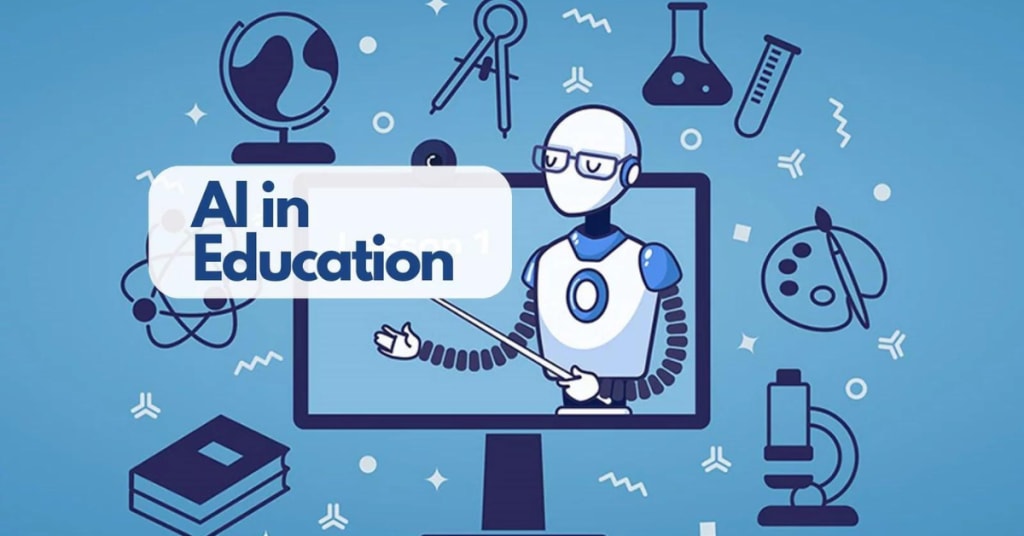
AI’s Role in Education: Revolution or Risk?
Subtitle: How Artificial Intelligence is Reshaping Classrooms, Teaching, and the Future of Learning
In the last few years, Artificial Intelligence (AI) has moved from science fiction to real-world application. From smartphones to self-driving cars, AI is everywhere — and one of the most significant areas it's transforming is education.
Teachers, students, and schools around the world are now beginning to see the power of AI tools in making education more personalized, faster, and more accessible. But like any technology, it comes with both opportunities and challenges. So, what exactly is AI’s role in education today, and what could it look like tomorrow?
🧠 What is AI in Education?
AI in education means using intelligent software systems and tools that can think, analyze, and learn from data to improve teaching and learning. It doesn’t mean replacing teachers with robots — but rather enhancing the learning experience with smart solutions.
From apps that can solve math problems step-by-step, to platforms that detect student emotions during online classes, AI is becoming an invisible assistant in the classroom.
📚 1. Personalized Learning for Every Student
One of the biggest advantages of AI in education is personalization. Traditional classrooms often follow one pace and style of teaching. But not all students learn the same way. Some grasp concepts quickly, others need time. Some are visual learners, others are better with words or hands-on practice.
AI tools like adaptive learning platforms can track a student’s progress and adjust lessons according to their strengths and weaknesses. For example, if a student is struggling with fractions, the AI system can slow down, offer simpler explanations, or provide extra practice — while moving faster through topics the student already understands.
This way, every child gets a custom learning path, similar to having a personal tutor — but at scale.
👩🏫 2. Supporting Teachers, Not Replacing Them
Some people fear that AI will replace teachers. That’s far from the truth. AI can’t replace the human connection, emotional intelligence, or mentorship a teacher provides. What it can do is support teachers by taking over repetitive tasks.
For example:
Grading multiple-choice questions or short answers
Tracking student attendance and performance
Creating quizzes and assignments based on individual progress
Detecting plagiarism
By automating these tasks, teachers can save time and focus more on what matters — teaching, mentoring, and understanding their students.
🌍 3. Making Education More Accessible
AI is also helping bridge the gap between students from different backgrounds, languages, and abilities.
Language translation tools like Google Translate or Duolingo’s AI allow students to learn across language barriers.
Speech-to-text and text-to-speech tools help students with learning disabilities, such as dyslexia.
AI tutors like ChatGPT can answer questions 24/7, even when a teacher isn’t available.
Students in remote or rural areas can now learn from the same digital platforms as those in major cities.
This kind of inclusivity means AI is helping to make education more fair and equal for everyone.
🔍 4. Smarter Feedback and Insights
In a traditional classroom, it can be hard for teachers to track how each student is doing — especially in large classes. But AI tools can provide detailed reports on student performance.
Teachers can now see:
Which topics a student is struggling with
How long a student spends on a task
Whether the student is engaged or losing interest
This kind of data-driven feedback helps teachers adjust their teaching methods and support students who need extra help — before they fall too far behind.
🛠️ 5. AI Tools Students Are Already Using
Students today are using AI without even realizing it. Here are some popular tools:
Grammarly: Checks grammar, suggests better phrasing, and improves writing.
Khan Academy’s AI tutor: Helps explain math and science concepts.
Photomath: Solves math problems by scanning them with your phone.
ChatGPT: Helps brainstorm, explain topics, write drafts, or practice questions.
These tools are not cheating — they are learning aids, just like calculators or textbooks. But it’s important to use them wisely.
⚠️ Challenges and Concerns of AI in Education
Despite the benefits, AI in education comes with risks we can’t ignore:
a) Overdependence
If students rely too much on AI to do their work, they may stop thinking critically or learning independently. For example, using ChatGPT to write essays without understanding the topic can lead to lazy learning.
b) Privacy Issues
AI tools collect data on student behavior, performance, and even emotions. If not protected, this data can be misused or lead to ethical concerns.
c) Bias in AI Systems
If AI tools are trained on biased or incomplete data, they may treat some students unfairly. For example, facial recognition systems may not work well for students with darker skin tones or different facial features.
d) Teacher Training Gaps
Not all teachers are trained to use AI tools effectively. Without proper guidance, these tools might be misused or ignored altogether.
💡 The Future of AI in Education
AI is still growing. In the next 5–10 years, we might see:
Virtual classrooms with AI avatars that teach in real time
Emotion-aware systems that detect when a student is bored, confused, or excited — and adjust the lesson
AI career counselors that suggest paths based on student interests and performance
Real-time translation and global classrooms with students from different countries learning together
But one thing will remain true: AI is a tool, not a teacher. The human heart, empathy, and creativity of real educators will always be at the center of learning.
✅ Final Thoughts: A Smarter, Kinder Future
AI has the power to revolutionize education, but it must be handled with care. The goal isn’t to turn students into machines — it’s to help them become better humans: more curious, creative, and confident.
As we move forward, we must use AI not to replace learning, but to deepen it. To build schools that are not just smart — but also kind, inclusive, and full of opportunity.
So whether you’re a teacher, student, or parent — the future is here. And with the right habits, tools, and wisdom, we can make it a better one for every learner in the world.
About the Creator
Ali Asad Ullah
Ali Asad Ullah creates clear, engaging content on technology, AI, gaming, and education. Passionate about simplifying complex ideas, he inspires readers through storytelling and strategic insights. Always learning and sharing knowledge.
Keep reading
More stories from Ali Asad Ullah and writers in Education and other communities.
AI Code Assistant: The Silent Partner That Changed Everything
AI Code Assistant: The Silent Partner That Changed Everything In the fast-moving world of technology, things are always evolving. New ideas are born every day, and with them, new tools to make our lives easier. One of the most exciting changes in recent years has been the rise of AI Code Assistants — smart tools powered by artificial intelligence that help developers write, fix, and understand code. For some, it’s just a productivity boost. For others, like Sarah, it was life-changing.
By Ali Asad Ullah9 months ago in Education
A Beginner’s Guide to Microsoft Advertising
When people talk about online advertising, one platform usually gets most of the attention. For a long time, I assumed that was the only real option. Later, while researching search marketing tools, I discovered another system called Microsoft Advertising.
By supun fernandoa day ago in Education
What Raquel Zamora Says She’ll Bring to LAUSD Board District 2
“LAUSD has some of the strongest special education services in the nation." — Raquel Zamora In the 2022 election, Dr. Rocío Rivas won the race to fill the Board District 2 seat that was held by Monica García, who was forced from office due to term limits. In her first attempt at re‑election, Rivas will face Raquel Zamora. With only two candidates on the ballot, the June 2, 2026, primary will be a winner‑take‑all contest.
By Carl J. Petersena day ago in Education


Comments
There are no comments for this story
Be the first to respond and start the conversation.