
AI in Smart Cities: Efficiency or Control in 2025?
How Tech Shapes Urban Life Globally

Introduction
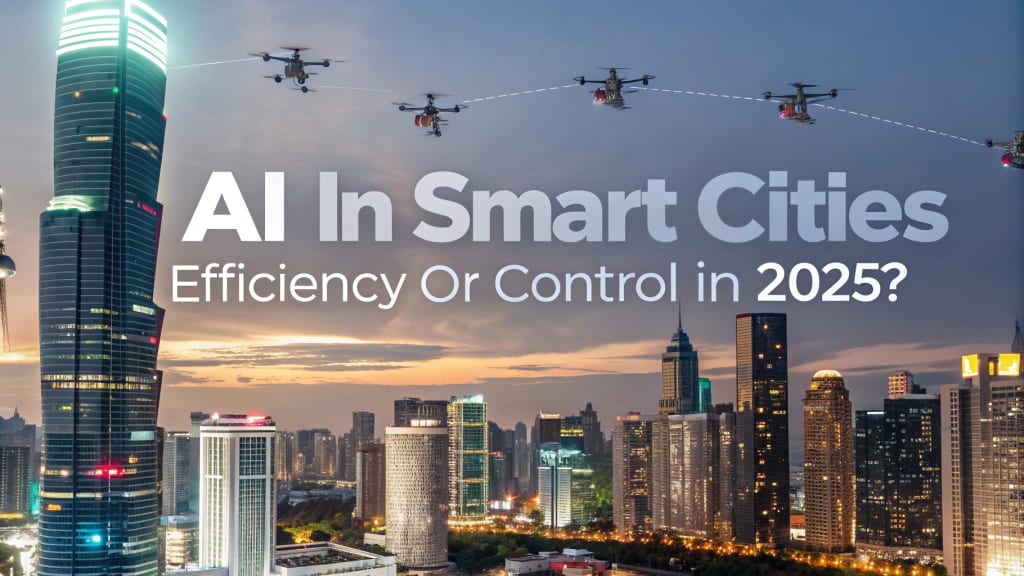
As we step into 2025, the role of artificial intelligence (AI) in urban environments is poised for a revolutionary shift。AI-driven technologies are transforming cities into smarter, more sustainable environments that enhance the quality of life for residents。However, this rapid advancement also raises critical questions about data privacy, algorithmic transparency, and the potential for unintended consequences。This article explores the role of AI in smart cities, its potential benefits, and the challenges it presents in the context of global market trends.
The Benefits of AI in Smart Cities
Enhanced Efficiency and Sustainability
AI-driven systems are optimizing urban operations, from traffic management to energy consumption and public safety。For example, AI-powered traffic management systems can dynamically adjust traffic light timings based on real-time data, reducing congestion and improving air quality。Similarly, AI can optimize energy usage in buildings, reducing waste and promoting sustainability。
Predictive Analytics and Proactive Planning
By 2025, predictive analytics powered by AI will be indispensable in urban planning。Cities can forecast traffic congestion, energy demand, and environmental hazards, enabling proactive measures to prevent disruptions。For example, London is already using AI-based predictive models to manage traffic flow, adjusting transport services and policies based on predictive insights。
Improved Quality of Life
Smart cities aim to enhance the well-being of residents by providing more efficient, sustainable, and inclusive urban environments。AI-driven systems can improve public services, such as healthcare and waste management, and create safer, more livable spaces。
Challenges and Ethical Considerations
Data Privacy and Security
The use of AI in smart cities requires the collection and processing of vast amounts of sensitive data。Ensuring the privacy and security of this data is crucial to maintaining public trust and compliance with regulations。Cities must implement robust frameworks to protect user data and ensure ethical use。
Algorithmic Bias and Fairness
AI algorithms are only as good as the data they are trained on. If the training data is biased, the resulting AI models can perpetuate or even exacerbate existing inequalities。Ensuring fairness and transparency in AI decision-making processes is essential to prevent discrimination。
Ethical Innovation and Public Trust
The rise of autonomous AI systems brings endless potential but also stirs political and social debates。Concerns about privacy, accountability, and potential biases will lead some municipalities to adopt a “smart pause” approach, implementing higher standards for AI auditing, transparency, and bias reduction。Addressing societal concerns upfront could position such cities as leaders in responsible innovation。
Future Outlook
Hyper-Personalization and Inclusive Development
Future AI systems will deliver hyper-personalized experiences, considering granular user attributes like mood, time of day, and real-time interactions to suggest content。Smart cities will emphasize inclusive development by integrating feedback mechanisms that allow citizens to participate in urban planning and decision-making processes。
Integration with Emerging Technologies
The future of smart cities lies in the integration of AI with emerging technologies such as quantum computing, digital twins, and the Internet of Medical Things (IoMT)。These advancements will enhance the capabilities of AI-driven platforms, making them more connected and data-driven。
Policy and Implementation Frameworks
As AI continues to evolve, robust regulatory frameworks and ethical guidelines are essential to protect user privacy and ensure data security。Policymakers must work with healthcare providers and technology companies to create an ecosystem that fosters innovation while safeguarding against potential risks。
Conclusion
AI-driven technologies have the potential to revolutionize smart cities by enhancing efficiency, sustainability, and quality of life。However, addressing challenges related to data privacy, algorithmic bias, and ethical considerations is crucial to ensuring that these technologies benefit all residents。By fostering collaboration between stakeholders and implementing robust regulatory frameworks, we can harness the full potential of AI to create smarter, more sustainable urban environments。
Recommended books
Genesis: Artificial Intelligence, Hope, and the Human Spirit

As Artificial Intelligence (AI) becomes more dynamic and ubiquitous, it is dramatically empowering people in all walks of life while also giving rise to urgent questions about the future of humanity—a historic challenge whose contours and consequences are revealed by three eminent thinkers in Genesis.
About the Author: With over a decade of experience as an internet product architect, I’ve spent my career crafting innovative application solutions that bridge technology and real-world needs. Now, as a passionate advocate for artificial intelligence, I focus on exploring its transformative applications. I’m committed to pushing the boundaries of AI to empower lives and shape a smarter future. Join me on this exciting journey as we uncover the endless possibilities of intelligent technology.
About the Creator
roc chiang
I'm a tech enthusiast and entrepreneur based in Vancouver. I share original articles on technology, business and other related topics on social media to showcase my passion and insights.
Editor-in-Chief:fengtou.ca
Keep reading
More stories from roc chiang and writers in Education and other communities.
AI in Streaming Services: Personalized or Predictable?
Introduction The integration of artificial intelligence (AI) into streaming services has transformed how content is delivered and consumed. While AI-driven personalization aims to enhance user experience by tailoring recommendations to individual preferences, it also raises questions about whether this technology limits the diversity of content users are exposed to。
By roc chiang8 months ago in Education
Rewiring Wellness: How Neuroscience Is Redefining the Mind-Body Connection in Therapy
In recent years, neuroscience has reshaped the understanding of how emotional and physical processes interact, offering therapists new insight into healing. The mind-body connection, once viewed as more philosophical than scientific, now has clear biological explanations. Studies show that thoughts, emotions, and physical sensations are deeply intertwined, influencing everything from stress responses to overall wellbeing. This knowledge is transforming modern therapeutic practices by providing clinicians with evidence-based tools that support integrated healing.
By Debra Bailey PHD2 days ago in Education
Was Alexander the great really that great?
Order, order! Who do we have on the stand today? Alexander... the Great, eh? Well, what’s so great about him? Your honor, the better question is, what's not great about him? He was the King of Macedon and considered a living demigod by Egyptians and Greeks alike. He conquered Persia when it was one of Earth's largest empires. And he was a thoughtful student of Aristotle, creative enough to untie the impossibly tight Gordian knot by cutting it in half. The Gordian knot is a myth— just like the countless other stories invented to enhance Alexander’s legend!
By Munesh Yadav2 days ago in Education
Smart phones, Humans and Aliens.
WARNING. I will be tapping into one of your favorite creative tensions: The absurdity of humans worshipping their glowing rectangles as if they were tiny oracles. There’s something deliciously poetic about that contradiction, and it lends itself beautifully to an instructive proviso.
By Novel Allen5 days ago in Poets


Comments
There are no comments for this story
Be the first to respond and start the conversation.