
AI in Mental Health: Help or Harm?
Can Machines Truly Understand Human Emotions?

Introduction
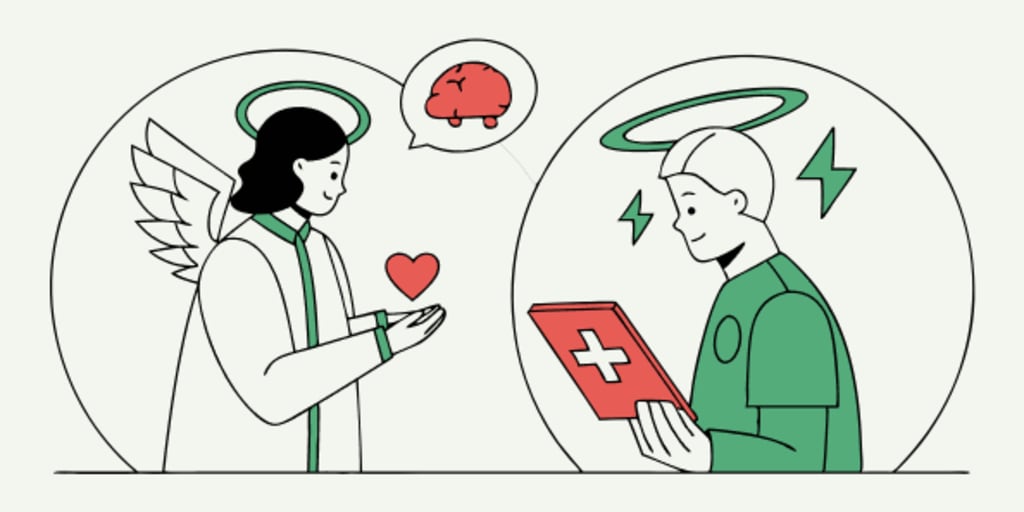
The integration of artificial intelligence (AI) into mental health care has sparked intense debate about its potential benefits and ethical challenges. While AI offers unprecedented opportunities for early intervention, personalized support, and increased accessibility, it also raises critical questions about its ability to truly understand human emotions and the ethical implications of its use. This article explores the role of AI in mental health, examining its promises, limitations, and the ethical considerations that must be addressed.
AI's Role in Mental Health Diagnosis
AI is being increasingly utilized for mental health diagnosis, leveraging advanced algorithms to analyze vast amounts of data and identify patterns that may be missed by human clinicians. For example, AI-powered tools can detect early signs of conditions like schizophrenia and cognitive decline through speech and text analysis. These technologies have shown promise in identifying at-risk individuals, enabling timely intervention and potentially improving treatment outcomes. However, the accuracy and reliability of these diagnoses remain a concern, as AI systems can sometimes generate false positives or miss critical nuances in patient behavior.
Emotional Support Through AI
AI-powered chatbots and virtual assistants are providing new avenues for emotional support in mental health care. These tools offer 24/7 accessibility, breaking down barriers related to time, location, and availability. For individuals in underserved or remote areas, AI can serve as a critical resource when human support is unavailable. Studies have shown that AI-driven chatbots can effectively deliver psychoeducation, coping strategies, and referrals to professional help, enhancing user engagement and satisfaction. However, these systems lack genuine emotional understanding and empathy, which are crucial elements of human therapeutic relationships.
Limitations in Emotional Understanding
Despite advancements in affective computing, AI still struggles to fully grasp the complexity of human emotions. While AI can recognize patterns in facial expressions, vocal tones, and text, it often fails to understand the context and depth of these emotions. For instance, cultural differences in emotional expression can lead to misinterpretations by AI systems. Additionally, AI lacks the capacity for true empathy, as it cannot experience or relate to human suffering in the way a trained therapist can. This limitation raises questions about the ethical implications of relying on AI for emotional support and diagnosis.
Ethical Considerations
The use of AI in mental health care raises significant ethical concerns, particularly regarding data privacy and algorithmic bias. AI systems require access to vast amounts of sensitive patient data, creating risks of data breaches and unauthorized use. Furthermore, biases in training data can lead to discriminatory outcomes, disadvantaging certain demographic groups. Ensuring transparency, accountability, and ethical oversight in AI development and deployment is essential to address these challenges and protect patient well-being.
The Future of AI in Mental Health
The future of AI in mental health lies in finding a balanced approach that leverages its strengths while acknowledging its limitations. AI can serve as a valuable adjunct to human care, providing support and insights that enhance traditional therapeutic practices. However, it should not replace the irreplaceable human connection and empathy that form the foundation of effective mental health treatment. By integrating AI tools with human expertise, we can create a more comprehensive and responsive mental health care system.
Conclusion
AI has the potential to revolutionize mental health care by offering new tools for diagnosis, support, and intervention. However, its limitations in understanding human emotions and the ethical challenges it presents cannot be overlooked. As AI continues to evolve, it is crucial to approach its integration into mental health care with caution, ensuring that it complements rather than replaces the human touch that is central to healing. The future of mental health care depends on a thoughtful blend of technological innovation and human compassion.
Recommended books
Genesis: Artificial Intelligence, Hope, and the Human Spirit
As Artificial Intelligence (AI) becomes more dynamic and ubiquitous, it is dramatically empowering people in all walks of life while also giving rise to urgent questions about the future of humanity—a historic challenge whose contours and consequences are revealed by three eminent thinkers in Genesis.
About the Author: With over a decade of experience as an internet product architect, I’ve spent my career crafting innovative application solutions that bridge technology and real-world needs. Now, as a passionate advocate for artificial intelligence, I focus on exploring its transformative applications. I’m committed to pushing the boundaries of AI to empower lives and shape a smarter future. Join me on this exciting journey as we uncover the endless possibilities of intelligent technology.
About the Creator
roc chiang
I'm a tech enthusiast and entrepreneur based in Vancouver. I share original articles on technology, business and other related topics on social media to showcase my passion and insights.
Editor-in-Chief:fengtou.ca
Keep reading
More stories from roc chiang and writers in Education and other communities.
AI in Healthcare: Savior or Privacy Invader?
Introduction The integration of artificial intelligence (AI) into healthcare has brought transformative potential, promising enhanced diagnostic accuracy, personalized treatment, and operational efficiency. However, this technological advancement also raises significant concerns about patient privacy. As AI systems collect and process vast amounts of sensitive patient data, the question arises: is the efficiency gained through AI worth the potential sacrifice of patient privacy?
By roc chiang9 months ago in Education
Can You Really Earn Money With Transcription? The Real Income Reality
The short answer is yes—you can earn money with transcription. But the more honest, useful answer is this: transcription only becomes worthwhile when you understand how the income actually works, not how it’s often presented online.
By Mahesh Kumar6 days ago in Education
A brief history of chess
The attacking infantry advances steadily, their elephants already having broken the defensive line. The king tries to retreat, but enemy cavalry flanks him from the rear. Escape is impossible. But this isn’t a real war– nor is it just a game. Over the roughly one-and-a-half millennia of its existence, chess has been known as a tool of military strategy, a metaphor for human affairs, and a benchmark of genius. While our earliest records of chess are in the 7th century, legend tells that the game’s origins lie a century earlier.
By Munesh Yadav2 days ago in Education


Comments (1)
It's crucial we balance innovation with ethical responsibility.