
AI in Everyday Life
The Silent Intelligence Behind Modern Living
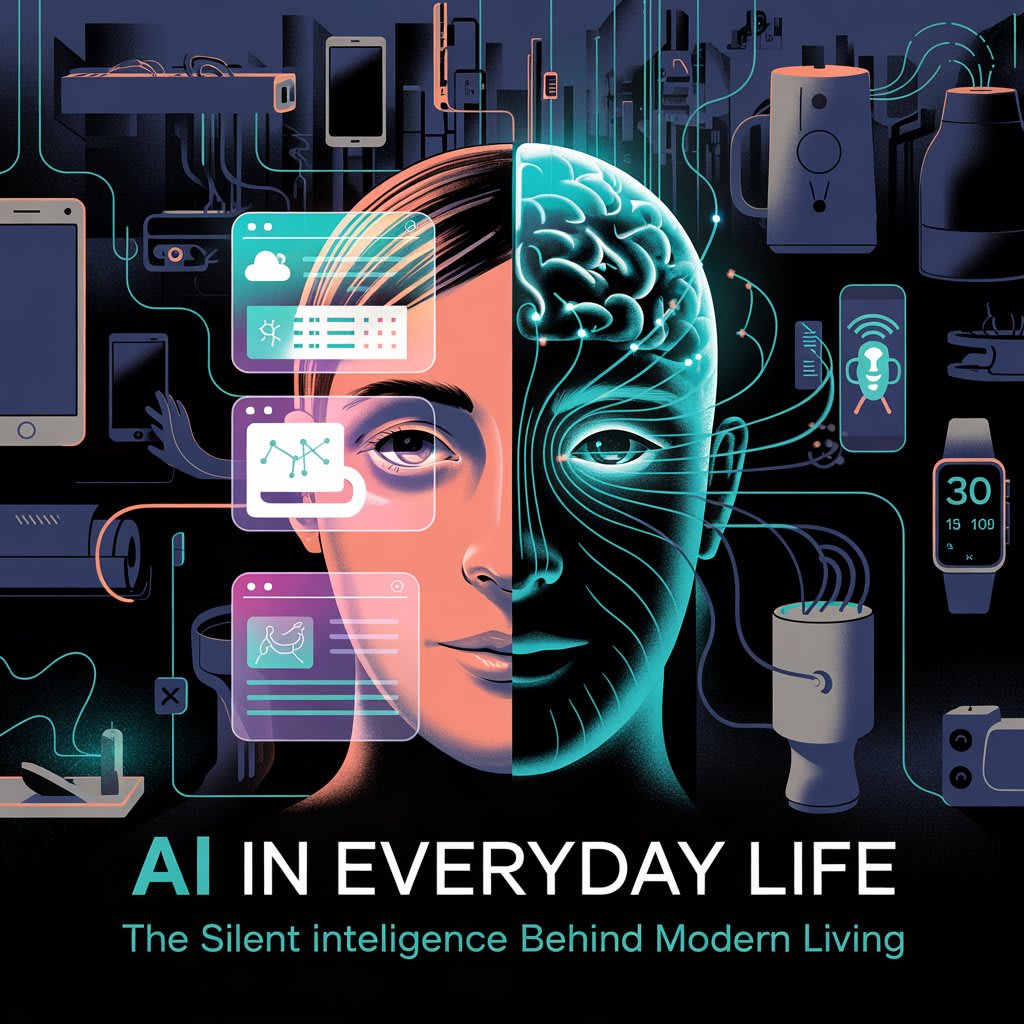
In the hustle of our daily routines, there’s a silent force working behind the scenes—predicting our next move, easing our burdens, and powering our preferences. This force is Artificial Intelligence (AI), and while it might seem like a futuristic concept, it’s already woven deeply into the fabric of modern life. From the moment we wake up to the moment we sleep, AI quietly orchestrates our experiences—often without us even realizing it.
Let’s explore how AI has become the invisible backbone of our everyday lives, changing the way we live, work, and interact.
Waking Up With AI
The day often starts with a gentle buzz from a smartphone alarm—one that learns your sleep cycle and picks the ideal moment to wake you up. This is not just a timer; it’s AI tracking your movements through wearable devices or phone sensors, optimizing your rest and readiness.
As you scroll through your notifications, AI has already curated your morning news feed. Whether you’re reading tech updates, sports highlights, or checking the weather, algorithms tailor your experience based on your past behavior, interests, and even your location. It’s personalized, predictive, and efficient—designed to save you time and keep you informed.
AI at Work and Home
AI doesn’t stop at your front door—it’s in your smart thermostat, adjusting the temperature to your comfort levels. It’s in your voice assistant, answering queries, playing your favorite songs, or reminding you of important meetings. What might appear to be simple voice recognition is backed by powerful natural language processing and machine learning that understand context, intent, and even sentiment.
At work, AI powers your productivity. Emails are sorted, spam is filtered, grammar is corrected, and meetings are transcribed—all automatically. Virtual assistants schedule appointments, recommend meeting times, and even join calls for you. In creative fields, AI tools now suggest design layouts, music tones, and content ideas, acting as intelligent collaborators rather than mere tools.
The AI Shopping Cart
Every purchase we make is touched by AI. E-commerce platforms analyze your browsing history, shopping patterns, and preferences to recommend products that you’re more likely to buy. Prices are dynamically adjusted based on demand, stock, and even your behavior—a practice known as dynamic pricing.
Grocery shopping has changed too. Apps predict your weekly needs and even suggest healthier alternatives. In some smart refrigerators, AI monitors expiration dates and suggests recipes based on what's inside—reducing waste and simplifying your life.
Smart Entertainment
Netflix knows what show to recommend next. Spotify curates playlists based on your mood. YouTube queues up videos that align with your interests. These platforms use AI-driven recommendation systems that learn from every click, watch, and skip. What once took minutes to search for is now instantly served.
AI even powers content creation itself. Music composition, video editing, and even storytelling can be AI-assisted. This democratizes creativity—allowing people with minimal technical skills to create professional-grade content.
Health, Fitness, and Wellbeing
Wearable devices like smartwatches and fitness trackers use AI to monitor heart rate, sleep, steps, and stress levels. Based on your data, they offer personalized recommendations—whether it's getting more sleep or staying active.
Healthcare providers use AI for early diagnosis and patient monitoring. Apps can detect irregularities in skin lesions, track mental health patterns, and even provide cognitive behavioral therapy through chatbots. AI is not replacing doctors, but it’s becoming a vital aid in enhancing preventive care and patient awareness.
AI on the Road
Commutes are becoming smarter. Navigation apps use AI to calculate real-time traffic data, predict congestion, and suggest alternative routes. Ride-hailing services like Uber use AI to match drivers with riders, estimate arrival times, and set surge pricing.
Self-driving cars are no longer just science fiction. Companies like Tesla and Waymo are developing AI-powered vehicles capable of navigating roads with minimal human input—making transportation safer and potentially reducing accidents in the long run.
The Invisible Impact
What makes AI truly fascinating is its invisibility. Unlike older technologies that demanded your attention, AI integrates seamlessly. It doesn’t interrupt; it adapts. It learns, evolves, and improves, all in the background—anticipating needs before we voice them, offering solutions before we think of them.
Yet, this convenience comes with a responsibility: to be aware of how our data is used, to demand transparency, and to ensure ethical AI development that respects privacy and fairness.
Conclusion: Intelligence That Listens, Not Speaks
AI is not the flashy robot with glowing eyes from movies. It’s the quiet intelligence helping your day run smoother, decisions feel easier, and connections grow stronger. It’s in your phone, your car, your workplace, your living room—and it’s here to stay.
As we continue integrating AI into every corner of life, the line between human intuition and machine intelligence becomes beautifully blurred. The future isn’t about humans vs. AI—it’s about how well they can work together.
In this silent partnership, AI doesn’t demand the spotlight—it earns it through consistency, speed, and personalization. And that, in itself, is revolutionary.
About the Creator
Keep reading
More stories from writers in Education and other communities.
The Power of Service Beyond the Uniform in Everyday Life
Service reaches far beyond the moments spent in uniform, shaping lives long after formal duties end. Veterans, first responders, and public servants carry lessons that extend into workplaces, families, and communities. Their values of discipline, compassion, teamwork, and integrity influence how they interact with others and how they continue serving in new ways. As they go about their everyday lives, their actions show that service is not defined by a role but by a mindset. Because of that mindset, countless communities benefit from their leadership and steady presence.
By Eric Schnabel5 days ago in Education
Importance of Technology in Learning Islamic Education
Islamic education has always been rooted in knowledge, reflection, and understanding. From handwritten manuscripts to traditional madrasa systems, learning has continuously evolved with time. Today, technology is shaping a new chapter in how Islamic education is taught, accessed, and understood. Rather than replacing traditional learning, technology enhances it, making Islamic knowledge more accessible, structured, and engaging for learners of all ages.
By Arslan Shahbaz5 days ago in Education
🅼🅸🅳🅽🅸🅶🅷🆃 🆂🅽🅰🅲🅺🆂
"It's 10 in Tuscon! We all know what that means... It's Time for Midnight Snacks with your man, Gerald Gee! Ready to spend the night together? Me too! I'm full of snacks and can't wait to regurgitate them all back into your hungry ears. Crack a brew! Pop some corn! Anything to get ready for one hell of a show where the talk maybe cheap but the words cut deep...
By Lamar Wiggins3 days ago in Fiction


Comments
There are no comments for this story
Be the first to respond and start the conversation.